Table of Contents >> Show >> Hide
- The Setup: One Engine Out, One Very Cold Dot on the Map
- Why This Engine Was “The World’s Largest” (and Why That Matters)
- The Real Challenge: Getting a Spare Engine to the Middle of Nowhere
- Welcome to 40-Below: When Metal Bites Back
- The Swap: A Dozen Steps, Thousands of Details
- Cold Weather Aviation Safety: Ice Is Not “Just a Little Extra Texture”
- What This Arctic Engine Swap Teaches About Modern Aviation
- From GE90 to GE9X: Bigger Engines, Bigger Expectations
- Conclusion: The Cold Can Be Brutal, but the Playbook Works
- Experience Add-On: The “Feels Like” Side of Replacing a Giant Jet Engine in Extreme Cold
There are hard jobs, and then there are “swap an 18,000-pound jet engine outdoors while your eyelashes are trying to unionize and quit” jobs. In early February, a SWISS Boeing 777-300ER found itself stranded at a remote Arctic airport after one of its General Electric GE90 engines shut down in flight. The fix wasn’t a quick reboot, a stern glance, or even a very expensive phone call. It was a full engine replacementperformed in conditions flirting with 40-below.
This is the story of how airlines, engine makers, and local support teams pull off the aviation equivalent of changing a semi-truck engine on the side of the highway except the “highway” is an 8,600-foot runway in the far north, the parts have to arrive on a cargo behemoth, and your tools can literally freeze to you. Along the way, it’s also a masterclass in cold-weather aviation maintenance, logistics, safety culture, and why redundancy is the quiet hero of long-haul flying.
The Setup: One Engine Out, One Very Cold Dot on the Map
SWISS flight LX40 departed Zürich for Los Angeles on a route that crosses the Atlantic and cuts over Canada. About five hours in, the left GE90 automatically shut down after the engine’s monitoring systems detected a problem. A Boeing 777 can fly on one engine, but standard procedure over water is simple: don’t tempt fate divert to the nearest suitable airport.
That “nearest suitable airport” was Iqaluit, Nunavutan Arctic community with a long runway and a history as a divert field, but without large hangars sized for a widebody. Passengers landed safely, applauded (because humans are wonderfully predictable), and then discovered the less glamorous part of remote diversions: limited hotels, bitter cold, and logistics that move at the speed of “we’re calling everyone we’ve ever met.”
SWISS ultimately flew passengers onward on another aircraftbut the 777 and its enormous engine problem stayed behind. After reviewing engine data and photos, the teams concluded the grounded turbofan wouldn’t be returning to service quickly. The solution: replace the engine on site.
Why This Engine Was “The World’s Largest” (and Why That Matters)
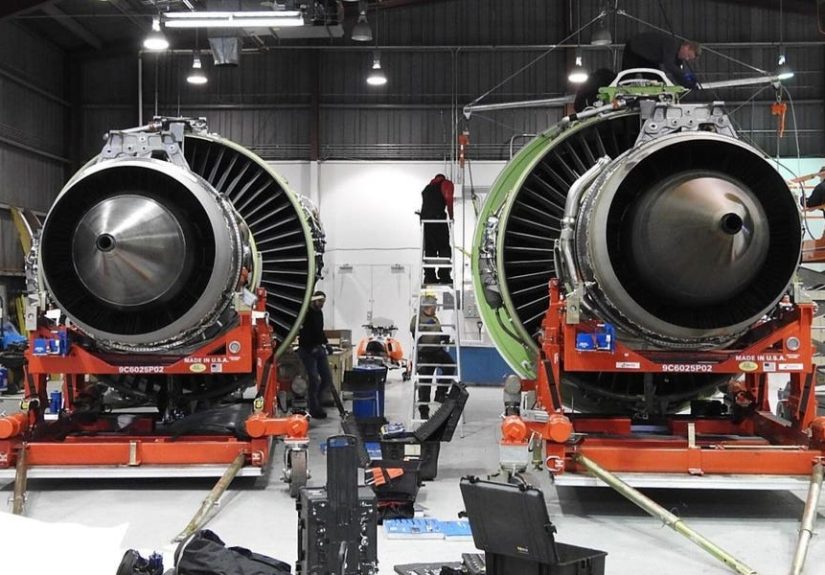
At the time, the GE90-115B was widely known as the world’s largest jet engine in airline servicean icon of “how did we even build that?” It’s roughly twelve feet long, weighs about 18,000 pounds, and its fan measures about 10 feet 8 inches across. It’s also brutally powerful: at maximum thrust, it can deliver around 115,000 pounds of thrust in service, with record-setting thrust demonstrated in testing.
The size is more than bragging rights. Bigger engines mean bigger tooling, heavier lifting equipment, larger clearances, specialized stands, and a tighter margin for improvisation. When you’re stranded somewhere without a widebody maintenance base, “just grab a spare” becomes “find a spare, move a spare, and bring the universe of gear required to install it.”
Today, the “largest” title often goes to GE’s newer GE9X (built for the Boeing 777X), with a fan diameter of 134 inchesbigger than the fuselage of a Boeing 737. But the moral stays the same: when engines get huge, the recovery plan has to be huge tooespecially when the weather is trying to delete your fingers.
The Real Challenge: Getting a Spare Engine to the Middle of Nowhere
Here’s where the story stops being “airline maintenance” and turns into “global supply chain speedrun.” In this case, GE reportedly didn’t have a spare engine positioned in the U.S. at the time; the closest was in London. SWISS did have a spare, but it was in Zürichover 3,000 miles away from the grounded 777.
Transporting a GE90 isn’t like shipping a guitar case with “FRAGILE” written on it. The engine’s size makes it too wide for many aircraft to carry conveniently. One aircraft that can move it is the Antonov An-124, a massive cargo lifter built for outsized loads.
SWISS contracted a charter to fly an An-124 loaded with the replacement engine and essential equipment to Iqaluit. Along with the engine came specialized stands, slings, and toolsand GE brought a “quick engine change” package, including an inflatable tent and consumables. In other words: when you can’t bring the airplane into the hangar, you bring a hangar to the airplane.
What “Quick Engine Change” Really Means
“Quick” is relative. In aviation, it usually means “the process is standardized, practiced, and supported by the right equipment,” not “this will be done before lunch.” Engine changes are planned like mini-campaigns:
- People: airline technicians, engine-maker field support, local ramp and ops support.
- Gear: engine stands, slings, lifts, torque tooling, access platforms, lighting, heaters.
- Process: documented steps, inspections, leak checks, system tests, and a controlled ground run.
- Safety: because nothing ruins a recovery like an injury, FOD (foreign object debris), or a rushed mistake.
Welcome to 40-Below: When Metal Bites Back
If you’ve ever heard someone say “-40 is the same in Fahrenheit and Celsius,” this is the kind of story where that trivia stops being cute and starts being personal. At those temperatures, everything behaves differentlyespecially humans.
Cold makes many materials stiffer and less forgiving. Lubricants thicken. Rubber seals lose flexibility. Batteries lose performance. Even routine tasks like removing panels, handling connectors, or tightening fasteners become slower because gloves reduce dexterity and bare skin is simply not invited to this party.
In Iqaluit, wind made conditions worse. Work had to pause at times when gusts made it unsafe to move large objects or when frostbite risk rose too high. The crew used an inflatable tent as a heated workspacereportedly holding around 50°F inside while the outside air dropped toward 40-below. That tent wasn’t comfort; it was survival and quality control.
The Swap: A Dozen Steps, Thousands of Details
Changing a massive turbofan is a choreography of careful disconnection, controlled lifting, and precise reassembly. In the Arctic engine swap, teams described roughly a dozen major stepsdisconnecting electrical, pneumatic, fuel, and hydraulic lines; removing and reinstalling cowls and panels; and completing leak checks and system verification.
Once the old engine came off the pylon, it was moved into available indoor space (including a hangar made available by local support) so technicians could transfer necessary components to the replacement engine. Meanwhile, some aircraft servicinglike dealing with systems that can freeze or behave poorly in deep cold still had to be handled outside, because large aircraft don’t magically become small just because you asked nicely.
Why the “After” Matters as Much as the “Off/On”
Installing the engine is only the headline. The “boring” steps are what earn the airplane its right to fly again:
- Leak checks: verifying fuel, hydraulic, and pneumatic integrity.
- Systems checks: confirming sensors, controls, and electrical interfaces behave as expected.
- Ground run: a controlled engine run to validate performance and detect anomalies before flight.
- FOD discipline: cold-weather gear, wind, and temporary facilities increase the need for meticulous tool and debris control.
After days of work and weather delays, the aircraft eventually taxied under its own power again, completed checks and a ground run, and then departed. The engine change itself might be a known procedurebut doing it in Arctic conditions is a different sport entirely.
Cold Weather Aviation Safety: Ice Is Not “Just a Little Extra Texture”
When temperatures plunge, aviation risk doesn’t only come from mechanical discomfort. Ice and snow change the rules. On the ground, even small amounts of frost or ice can affect performanceone reason regulators publish extensive guidance on ground deicing and anti-icing programs. In flight, icing conditions can alter airflow, add weight, and degrade handling, which is why icing guidance and ice protection certification are such serious business.
Even gigantic engines that generate massive internal heat can accumulate ice in places you might not expect. That’s why “world’s biggest engine” programs include cold testing and icing evaluations. For example, reporting on GE9X development has described dedicated cold-weather test efforts that expose the engine to freezing conditions and simulated cloud moisture, verifying it can tolerate icing scenarios encountered during ascent and descent.
The big takeaway: cold-weather readiness is not a vibeit’s engineering, training, checklists, and hard-earned operational discipline.
What This Arctic Engine Swap Teaches About Modern Aviation
1) Redundancy buys timeplanning buys solutions
The 777’s ability to fly safely on one engine gave the crew options. But the recovery required pre-existing planning between airlines and engine makers: practiced “stress test” scenarios, field support structures, and relationships that can scale from a normal hub to a remote Arctic airport.
2) Logistics is a safety system
The spare engine didn’t teleport. It arrived via a cargo aircraft capable of moving outsized loads, along with specialized stands and support kits. In extreme cases, logistics becomes a form of safety engineering: the right part, in the right place, with the right tools, before time and weather run out.
3) Human factors are not optional
Cold punishes attention spans and fine motor skills. Crews must manage fatigue, frostbite risk, and reduced dexterityall while maintaining precision. That’s why heated shelters, lighting, and structured work-rest cycles matter. In extreme cold, “comfort” is actually “error prevention.”
4) Community support can be the difference-maker
Remote airports operate with limited resources by definition. When a widebody diversion happens, local organizations and airport teams become part of the recovery network. Power, lighting, indoor space, vehicles, and practical know-how can determine whether the job is merely hardor impossible.
From GE90 to GE9X: Bigger Engines, Bigger Expectations
Aviation never stops iterating. Boeing’s materials and performance planning documents for the 777X describe the GE9X with a 134-inch fan and roughly 105,000 pounds of Boeing-equivalent thrust, along with efficiency and noise improvements designed to meet modern standards. GE, for its part, highlights advanced materials and manufacturing approaches aimed at durability across harsh environments.
Yet the Arctic engine swap reminds us that the most advanced engine in the world still has to be maintained by humans in the real world sometimes far from a major base, sometimes in weather that feels like the planet is personally offended by your project plan.
Conclusion: The Cold Can Be Brutal, but the Playbook Works
Replacing a “world’s largest” jet engine at 40-below isn’t just a flexit’s proof that modern aviation is built on layered safety: redundancy in the air, disciplined procedures on the ground, rigorous icing guidance, trained teams, and logistics that can move mountains (or at least 18,000 pounds of turbine).
The headline makes it sound like a miracle. The reality is better: it’s competencepracticed, documented, and executed under pressure. And if you ever need a reminder that teamwork is real, consider this: a stranded widebody in the Arctic flew again because a lot of people who’d never met before agreed on one thingdo it right, even if your wrench turns into a popsicle.
Experience Add-On: The “Feels Like” Side of Replacing a Giant Jet Engine in Extreme Cold
Imagine stepping out onto the ramp and realizing the air has weight. Not metaphorical weightactual, physical resistance that makes every breath feel sharpened, like the atmosphere is daring you to inhale too fast. Your boots squeak on snow that doesn’t crunch so much as complain. Somewhere nearby, a widebody sits quietly, looking perfectly normaluntil you remember it’s missing the one thing that makes it a widebody and not a very expensive museum exhibit: a functioning engine.
The first surprise in deep cold is how loud “small” becomes. A zipper sounds like it’s tearing the fabric of reality. A dropped bolt doesn’t just clinkit ricochets, skitters, and tries to disappear into the snow like it has a flight connection to make. Your gloves are thick enough to qualify as bedding, so every task becomes a strategy game: What can I do without removing them? What requires “bare hands for two seconds,” and do I like my fingers enough to avoid that?
Then there’s the equipment. In a warm hangar, tools feel obedient. In 40-below, tools feel… opinionated. Metal bites. Touch the wrong surface too long and you’ll understand, instantly, why people say you can “stick” to cold metalbecause you can. Even when you’re careful, everything takes longer: connectors resist, panels fight you, and fasteners seem to take personal offense at torque values. You don’t rush. You can’t. Rushing in the cold is how you miss a detail, and in aviation, details are the whole job.
If you’re lucky, there’s a heated shelter nearbysome kind of temporary tent or warmed workspace where the air stops attacking your face. You step inside and the relief feels comedic, like your body just remembered it used to be a mammal. The temptation is to relax, but the work still demands discipline. You warm your hands, check your checklist again, verify your tools, and head back out. In extreme cold, comfort isn’t a reward. It’s a reset button so you can keep thinking clearly.
Moving something as large as a jet engine doesn’t feel dramatic in the Hollywood sense. It feels methodical. Everyone talks a little more, not because they’re chatty, but because communication is safety. “Clear?” “Clear.” “Hold.” “Holding.” Wind shifts and suddenly everyone’s attention tightens, because wind plus heavy suspended equipment is the kind of math you don’t want to do twice. Sometimes you pausenot because the job is hard (it is), but because the environment is reminding you it gets a vote.
And when the new engine is finally on, that’s not the finish lineit’s the start of the part that proves you deserve to fly. Leak checks. System checks. One more look with a flashlight that keeps trying to dim because batteries hate winter as much as people do. Then, eventually, a controlled ground run. The engine comes alive with a sound that’s less “roar” and more “organized power,” and in that moment the cold feels slightly less personal. Not gonejust… negotiated.
By the end, you’re exhausted in a very specific way: physically tired, mentally wrung out, and weirdly proudnot because it was epic, but because it was precise. In 40-below, precision is a victory. And when that aircraft finally taxis under its own power, it doesn’t feel like a miracle. It feels like a job done correctly, in a place where “correctly” is the only thing that matters.