Table of Contents >> Show >> Hide
- What Is a Sandusky Paper Storage Cabinet?
- Why Paper Storage Still Matters in the Digital Age
- Key Features of the Sandusky Paper Storage Cabinet
- Sandusky Paper Storage Cabinet vs. Flat File Cabinet
- Best Uses for a Sandusky Paper Storage Cabinet
- How to Choose the Right Sandusky Cabinet
- Organization Tips for Better Paper Storage
- Maintenance and Care
- Is the Sandusky Paper Storage Cabinet Worth It?
- Practical Experience Notes: What It Feels Like to Use a Sandusky Paper Storage Cabinet
- Conclusion
A Sandusky Paper Storage Cabinet is not the kind of office furniture that begs for attention. It does not spin, glow, talk back, or promise to “revolutionize productivity” before lunch. Instead, it performs a quieter kind of magic: it keeps paper flat, protected, organized, and out of the mysterious pile that somehow grows beside every printer, drafting table, and creative desk.
For offices, schools, design studios, architecture firms, print shops, libraries, and home workspaces, paper storage is still a real problem. Even in a world of cloud folders and digital dashboards, people still need a safe place for blueprints, artwork, drawings, maps, charts, classroom materials, legal-size documents, large-format prints, and active project files. That is where the Sandusky paper storage cabinet earns its keep. It is a practical, heavy-duty storage solution designed for documents that do not belong folded, bent, curled, crushed, or shoved into a box labeled “miscellaneous” with the emotional confidence of a raccoon.
What Is a Sandusky Paper Storage Cabinet?
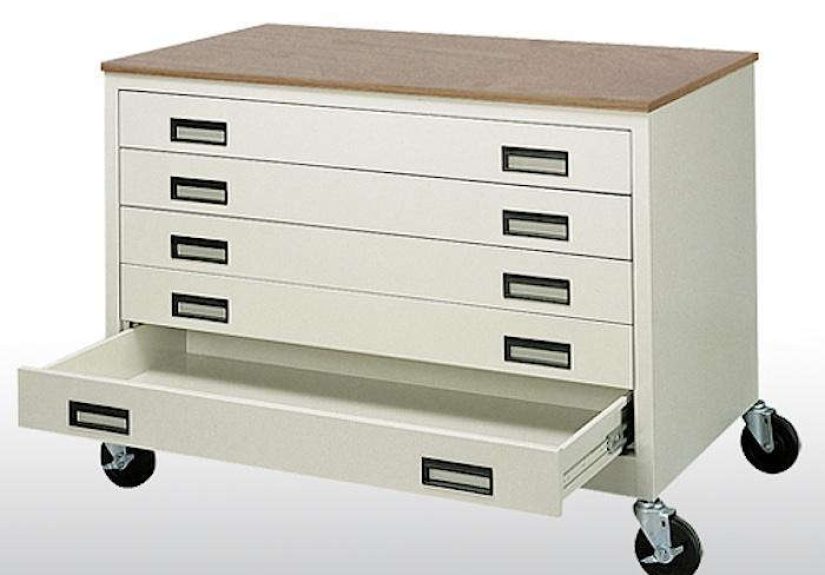
The phrase “Sandusky Paper Storage Cabinet” commonly refers to a steel cabinet designed for storing paper-based materials, especially large-format or flat documents. One well-known version is a mobile paper storage cabinet with five roll-out drawers, a steel body, recessed handles, heavy-duty casters, and a laminate wood-grain top that can double as a work surface. Its overall size is often listed at approximately 46 inches wide, 24 inches deep, and 36 inches high, making it more substantial than a typical office file cabinet but still usable in many workrooms and studios.
Unlike a standard vertical file cabinet, which asks paper to stand upright like soldiers at roll call, a paper storage cabinet supports flat storage. That matters for items such as architectural plans, classroom posters, drawings, presentation boards, print samples, maps, and art paper. Flat storage reduces curling and bending, keeps sets easier to review, and makes retrieval faster when the drawers are organized by project, client, date, paper type, or department.
Sandusky and Sandusky Lee cabinets are generally associated with metal office and industrial storage. Across different cabinet lines, shoppers will often see features such as welded steel construction, powder-coated or enamel finishes, adjustable shelving, locking systems, recessed handles, and fully assembled or partially assembled delivery options. The exact specifications vary by model, so buyers should always check the model number before ordering. A flat file cabinet, a mobile drawer cabinet, and a tall steel storage cabinet may all sit in the same product family, but they solve slightly different problems.
Why Paper Storage Still Matters in the Digital Age
It is tempting to believe that paper disappeared sometime around the rise of smartphones. Then Monday morning arrives, and someone prints a contract, a teacher laminates activity sheets, a designer spreads out material samples, and an architect unrolls a plan set the size of a small picnic blanket. Paper is not gone. It has simply become more specialized.
Good paper storage matters because paper is vulnerable. Heat, humidity, light, dust, pests, careless handling, and bad stacking habits can all shorten the life of important documents. Oversized materials are especially needy. Fold them once and the crease may never fully disappear. Store them upright without support and the edges may curl. Leave them in a damp basement and you have created an all-inclusive resort for mold, insects, and regret.
A Sandusky paper storage cabinet helps by creating a stable, enclosed, easy-to-access home for documents. It keeps materials off the floor, limits casual damage, and allows teams to separate active work from archived material. For a creative department, that can mean fewer lost sketches. For a school, it can mean better control of poster paper and teaching aids. For a facilities office, it can mean maps, building plans, and maintenance drawings are available when needed instead of hiding beneath a coffee-stained stack of mystery folders.
Key Features of the Sandusky Paper Storage Cabinet
Five Roll-Out Drawers for Flat Documents
The standout feature of the mobile Sandusky paper storage cabinet is its five roll-out drawers. Each drawer provides a shallow, wide space for storing flat materials. The drawer format makes it easy to separate categories: one drawer for active projects, one for archived drawings, one for blank paper, one for samples, and one for “things everyone swears they will label later.”
Interior drawer dimensions on the mobile version are commonly listed at about 40.5 inches wide, 22.375 inches deep, and 3.375 inches high. That layout is useful for large paper, drawings, and documents that need surface area more than vertical height. Because the drawers are shallow, stacks stay manageable. You can see what is inside without digging through a paper canyon.
Steel Construction Built for Busy Workspaces
Steel construction is one of the reasons Sandusky cabinets appeal to offices, schools, industrial rooms, and studio environments. Paper may be light one sheet at a time, but stacks of paper get heavy quickly. Add catalogs, binders, samples, plans, and supplies, and suddenly the “paper cabinet” is doing weightlifting without applause.
Many Sandusky Lee storage cabinets are known for welded steel construction, metal doors, reinforced shelves, powder-coated or enamel finishes, and locking handles. For buyers, the practical benefit is durability. Steel resists the sagging and corner damage that can happen with cheaper particleboard furniture. It also handles the rougher rhythm of shared spaces, where drawers are opened often and nobody admits who dented the old cabinet.
Mobile Design With Heavy-Duty Casters
The mobile paper storage cabinet version typically includes heavy-duty swivel casters, with locking casters to help keep the unit in place. Mobility is more useful than many people expect. A school art room may need to move supplies between tables. A print shop may roll the cabinet closer to a cutting station. A design studio may shift the unit depending on project flow.
That said, mobility should be treated with common sense. A loaded steel cabinet can be heavy. Lock the casters when the cabinet is in use, avoid rolling it across uneven surfaces when fully loaded, and do not treat it like an office skateboard. Furniture has boundaries, emotionally and structurally.
Laminate Wood-Grain Top Work Surface
One practical advantage of the mobile Sandusky paper storage cabinet is the laminate wood-grain top. This gives the unit a work-surface function, not just a storage role. In a studio, it can support sorting, reviewing, labeling, trimming, or preparing documents. In an office, it can serve as a staging area for project folders, mailers, samples, or outgoing materials.
For smaller workspaces, that dual function is valuable. Every square foot has to justify itself. A cabinet that stores paper below and offers a usable surface above can reduce the need for a separate table. It is not a dining table, a drafting table, or a place to assemble a five-course lunch, but for document handling it is extremely handy.
Recessed Handles and Clean Front Design
Recessed handles help keep the drawer fronts clean and reduce protrusions. This is a small detail with real-world benefits. In narrow rooms, protruding handles catch clothing, bags, cords, and passing humans who are already carrying too much coffee. Recessed pulls create a sleeker profile and make the cabinet easier to place in traffic areas.
Sandusky Paper Storage Cabinet vs. Flat File Cabinet
People often compare a Sandusky paper storage cabinet with a Sandusky flat file cabinet. The difference comes down to layout and use case. A mobile paper storage cabinet is often counter-height and may include casters and a top work surface. A traditional flat file cabinet is usually lower, wider, and designed specifically for large-format archival or work-in-progress documents.
Sandusky Lee flat file cabinets often feature multiple shallow drawers, central locking systems, label holders, ball-bearing rollers, stackable designs, and paper weights or hoods that help reduce curling. Some flat file models are especially popular with architects, artists, engineers, printmakers, and libraries because they allow oversized paper to remain flat and organized.
Choose the mobile paper storage cabinet if you want storage plus movement plus a usable top surface. Choose a flat file cabinet if your main priority is archival-style flat storage for larger sheets, blueprints, drawings, maps, or artwork. Choose a tall steel storage cabinet if you need to store binders, supplies, tools, boxes, or mixed office materials rather than flat paper.
Best Uses for a Sandusky Paper Storage Cabinet
Architecture and Engineering Offices
Plan sets, markups, drawings, site maps, and reference prints need to stay organized. A paper storage cabinet helps teams separate projects by drawer and keeps oversized materials from becoming curled scrolls of confusion. For architecture and engineering environments, the ability to retrieve a drawing quickly can save time during meetings, revisions, and client reviews.
Art Studios and Design Classrooms
Artists and teachers often work with delicate papers, poster board, watercolor sheets, printmaking paper, stencils, and student projects. A Sandusky paper storage cabinet gives those materials a flat, protected place to live. It can also reduce waste because paper is less likely to be damaged before use.
Print Shops and Marketing Departments
Print samples, campaign mockups, large brochures, display sheets, and presentation materials can quickly overwhelm standard shelving. A drawer-based paper cabinet lets teams organize by client, campaign, size, or production stage. The top surface can also function as a quick inspection or sorting area.
Home Offices and Craft Rooms
A Sandusky paper storage cabinet may be more cabinet than the average home office needs, but for serious crafters, home-based designers, teachers, photographers, or collectors, it can be a smart upgrade. It keeps paper and flat materials visible, protected, and easier to use. The key is measuring carefully. This is not a tiny desktop organizer; it is furniture with shoulders.
How to Choose the Right Sandusky Cabinet
Start with the size of the materials you store. If your documents are letter-size or legal-size, a standard file cabinet may be enough. If you store posters, drawings, art paper, architectural sheets, or maps, flat drawers are more appropriate. Next, decide whether mobility matters. A cabinet on casters can be convenient, but a stationary flat file may offer better stability for high-volume archival storage.
Look closely at drawer capacity and cabinet weight limits. Different Sandusky models list different capacities. A mobile paper storage cabinet may support heavier loads per drawer than some flat file units, while certain flat files are designed for large but relatively shallow paper stacks. Always match the cabinet to the materials: paper, prints, boards, samples, or mixed supplies.
Security is another factor. If you store confidential records, valuable artwork, maps, plans, or client documents, a lockable cabinet is worth considering. For shared workspaces, label holders also matter. Labels prevent drawers from turning into archaeological layers of “someone probably knows what this is.”
Finally, consider the finish and environment. Powder-coated, enamel, or archival-quality finishes may help reduce wear and make cleaning easier. Keep the cabinet in a clean, dry, stable area away from leaks, direct sunlight, vents, radiators, and damp floors. Even the best cabinet cannot protect paper from a room that behaves like a sauna with plumbing issues.
Organization Tips for Better Paper Storage
A cabinet is only as useful as the system inside it. Begin by assigning each drawer a purpose. For example: Drawer 1 for active projects, Drawer 2 for completed projects, Drawer 3 for blank stock, Drawer 4 for specialty paper, and Drawer 5 for archives. Use large, readable labels. Tiny labels look elegant until someone needs to find a document in a hurry.
Store delicate or long-term materials in acid-free folders or protective enclosures. Avoid rubber bands, paper clips, tape, and adhesive notes on valuable documents. These small office villains can stain, tear, dent, or chemically damage paper over time. For oversized items, store them flat whenever possible, and avoid overfilling drawers. Overloaded drawers make retrieval harder and can cause edge damage.
Create a simple check-in/check-out routine if multiple people use the cabinet. This does not need to be dramatic. A clipboard, spreadsheet, or shared inventory list can prevent the classic office mystery: “Who took the site plan?” followed by fifteen minutes of suspicious silence.
Maintenance and Care
Maintaining a Sandusky paper storage cabinet is fairly straightforward. Wipe exterior surfaces with a soft cloth and a mild cleaner suitable for painted metal or laminate surfaces. Avoid harsh abrasives that may scratch the finish. Keep drawer tracks free of dust and paper scraps. If the cabinet has casters, check them occasionally for debris, especially in studios where thread, paper trimmings, and tape backing seem to reproduce overnight.
Do not slam drawers, overload them, or use the top surface as a step stool. This sounds obvious, but every workplace has one person who believes furniture is a ladder if they are determined enough. It is not. Respect the cabinet, and it will keep doing its very unglamorous but very important job.
Is the Sandusky Paper Storage Cabinet Worth It?
For the right user, yes. The Sandusky paper storage cabinet is worth considering when your paper materials are valuable, oversized, frequently accessed, or easily damaged. It is especially useful in spaces where storage needs to be durable, organized, and professional-looking without becoming fussy.
It may be more cabinet than you need if you only store a few folders or basic printer paper. In that case, a smaller file cabinet or shelving unit might be more practical. But if your workspace regularly handles drawings, plans, classroom materials, art paper, maps, print samples, or project sets, a dedicated paper storage cabinet can reduce clutter and protect materials better than open shelving or cardboard boxes.
The strongest argument for this cabinet is not that it is fancy. It is that it prevents chaos. It gives paper a real home. It creates categories. It protects edges. It saves table space. It helps teams find what they need without conducting a full detective investigation every Tuesday morning.
Practical Experience Notes: What It Feels Like to Use a Sandusky Paper Storage Cabinet
In real-world office and studio use, the biggest benefit of a Sandusky paper storage cabinet is not discovered on day one. Day one is mostly measuring, placing, labeling, and admiring how serious the workspace suddenly looks. The real value appears after a few weeks, when people stop asking where the oversized paper went. That silence is productivity. Beautiful, underrated productivity.
One common experience is that the cabinet changes how people treat paper. When drawings, prints, or project materials are lying on a table, they feel temporary. Someone places a laptop on them. Someone else adds a coffee cup nearby. A third person “just quickly” stacks another pile on top. But when the same materials are placed in a dedicated drawer, they become part of a system. People are more likely to return them properly, especially when the drawers are labeled in plain language.
Another experience is the relief of flat storage. Anyone who has tried to flatten a curled poster under books knows the struggle. Flat drawers reduce that daily annoyance. Large sheets slide in, stay supported, and come out looking more like documents and less like they survived a wrestling match. For art teachers, designers, and print professionals, that alone can justify the space.
The work-surface top also becomes surprisingly useful. In a busy room, people naturally need a place to sort, compare, and prepare materials. The top of the cabinet often becomes a staging zone: outgoing drawings on the left, blank stock in the center, labeled folders on the right. It is not glamorous, but it helps workflow. The trick is not allowing the top to become a permanent parking lot for unrelated clutter. A cabinet that stores paper should not become a museum of abandoned mugs, mystery chargers, and snacks from a meeting no one remembers.
Mobility is helpful, but it works best when used thoughtfully. Rolling the cabinet a few feet to clean, rearrange, or support a project is convenient. Rolling it across a crowded room while fully loaded is less charming. In shared spaces, locking the casters after moving the unit should become a habit. A stable cabinet is a happy cabinet, and a happy cabinet does not surprise anyone’s ankles.
Users also notice that the cabinet encourages better inventory habits. When paper stock is divided by size, color, finish, or project type, reordering becomes easier. Instead of buying more paper because nobody can find the last batch, staff can open a drawer and see what is actually available. That reduces duplicate purchases and keeps expensive specialty paper from disappearing into the office wilderness.
The final practical lesson is simple: the cabinet works best when it has rules. Label every drawer. Do not overfill. Keep food and drinks away. Use protective folders for valuable documents. Review the contents every few months. Remove outdated materials before the cabinet becomes a time capsule. With a little discipline, the Sandusky paper storage cabinet becomes more than furniture. It becomes the quiet manager of paper chaos, and frankly, every workspace could use one quiet manager who never schedules meetings.
Conclusion
The Sandusky Paper Storage Cabinet is a smart solution for workspaces that take paper seriously. It combines durable steel construction, wide roll-out storage, practical organization, and, in mobile versions, the convenience of casters and a usable top surface. For architects, designers, teachers, artists, print shops, offices, and organized home users, it offers a better way to store flat documents without bending, burying, or losing them.
Its value is clearest when paper is part of daily work. If your documents are oversized, expensive, project-based, or frequently handled, a dedicated paper storage cabinet can protect materials and improve workflow. It will not make your office magically paperless, but it can make paper manageable. And sometimes, in a world full of clutter, that is more than enough.