Table of Contents >> Show >> Hide
- What Is Scoliosis (and What It Isn’t)?
- Types of Scoliosis
- What Causes Scoliosis?
- Scoliosis Symptoms: What People Notice First
- How Scoliosis Is Typically Identified
- Why Timing Matters (Especially During Growth Spurts)
- A Few Practical Notes for Everyday Life
- Quick FAQ
- Conclusion
- Real-Life Experiences With Scoliosis (What People Commonly Describe)
If spines were meant to be perfectly straight, yoga mats would come with a ruler. But here’s the deal: a healthy spine
naturally curves front-to-back (think gentle “S” from the side). Scoliosis is differentit’s a
side-to-side curve that often shows up in late childhood or the teen years, especially around growth spurts.[1]
Sometimes it’s mild and basically just “a quirky spine signature.” Sometimes it’s more dramatic and needs close monitoring.
This guide breaks down the types of scoliosis, the most common causes, and the
symptoms people notice firstplus a longer “real-life experiences” section at the end to make the topic feel
less like a textbook and more like real humans living in real bodies.
What Is Scoliosis (and What It Isn’t)?
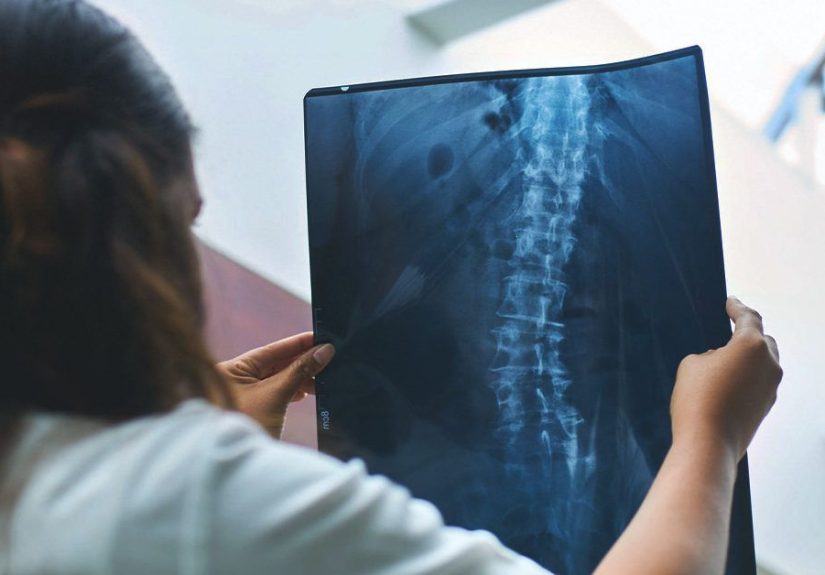
Scoliosis is an abnormal sideways curve of the spine. It often looks like a “C” or an “S” shape on an X-ray.[2]
Many cases also involve rotation (a twist), which is why one side of the ribs or shoulder blade may look more
prominent.[11]
What it isn’t: scoliosis is not the same thing as “bad posture.” Slouching can make your back look uneven, but posture
alone doesn’t typically create the structural curve-and-rotation pattern clinicians are looking for.[7]
Types of Scoliosis
Providers classify scoliosis in a few waysby cause, age of onset, or
associated conditions. Here are the types you’re most likely to hear in real life.
1) Idiopathic Scoliosis (Most Common)
“Idiopathic” is medical-speak for “we don’t know the exact cause.” And yes, it’s frustratinglike a mystery novel with no
final chapter. Idiopathic scoliosis is the most common overall type, especially in adolescents.[3]
It’s often diagnosed during puberty or early teen years, commonly after age 10.[1]
Idiopathic scoliosis is sometimes grouped by age:
infantile (0–3), juvenile (4–10), and adolescent (10–18).[6]
Adolescent idiopathic scoliosis (AIS) is the best-known category and the one often found during school or sports physicals.[7]
2) Congenital Scoliosis (Present at Birth)
Congenital scoliosis happens when the spine doesn’t form typically during fetal developmentusually due to vertebrae that are
shaped differently or don’t separate as expected.[6] The curve may be noticed at birth, in early childhood, or later
when growth makes it more obvious. Some children with congenital scoliosis are also evaluated for other organ system differences,
because development can be “team-based” in the womb.[8]
3) Neuromuscular Scoliosis
Neuromuscular scoliosis is linked to conditions that affect the nerves and muscles that support the spinethink disorders that
change muscle strength, tone, or coordination. The curve can be more severe and may continue progressing into adulthood.[9]
Examples include cerebral palsy, muscular dystrophy, and spinal muscular atrophy (among others).[4]
4) Degenerative (Adult-Onset) Scoliosis
Adults can develop scoliosis as the spine’s joints and discs ageespecially with osteoarthritis and uneven “wear and tear.”
Degenerative scoliosis is typically defined as an adult curve of at least 10 degrees that develops due to spinal degeneration.[10]
Unlike many teen cases that are painless, adult scoliosis is more likely to come with back pain or symptoms from pinched nerves.[10]
5) Syndromic or Condition-Associated Scoliosis
Some scoliosis is associated with broader conditions (for example, certain connective tissue disorders). In these cases, the curve
is part of a larger health picture, and care often involves multiple specialists.[5]
6) Functional (Non-Structural) Scoliosis-Like Curves
Sometimes the spine looks curved because of something outside the spinelike muscle spasm, leg length difference, or certain
postural habits. If the underlying issue is corrected, the curve may improve. Clinicians work to distinguish these from structural
scoliosis using exam findings and imaging when needed.[7]
What Causes Scoliosis?
The honest answer: it depends on the type. Many casesespecially in kids and teensare idiopathic, meaning no single clear cause
can be identified.[3] But “unknown” doesn’t mean “nothing is going on.” Researchers suspect a mix of genetic and growth-related
factors for idiopathic scoliosis.[3]
Idiopathic Scoliosis: A “Many-Factors” Mystery
Idiopathic scoliosis tends to run in families, suggesting a genetic contribution, but there’s no single “scoliosis gene” that explains
every case.[3] It often appears around growth spurts, when bones lengthen quickly and the body’s alignment is basically doing
a software update in real time.[1]
Congenital Causes: Vertebrae That Developed Differently
Congenital scoliosis results from vertebrae that formed abnormally before birthsuch as hemivertebrae (a vertebra that formed partially)
or vertebrae that fused. This changes how the spine grows and can create or worsen a curve over time.[8]
Neuromuscular Causes: Muscle Support and Control Changes
In neuromuscular scoliosis, the underlying condition affects muscle control or strength. If the “support cables” around the spine
don’t pull evenly, the spine may gradually curve and rotate.[4]
Degenerative Causes: Asymmetrical Aging of Discs and Joints
Degenerative scoliosis can develop when discs and facet joints wear unevenly, creating instability and an adult curve. Symptoms often
relate to arthritis, spinal stenosis, or nerve compression rather than the curve alone.[10]
Rare Causes: When Providers Look for Another Explanation
Less commonly, a curve can be linked to other medical issues (for example, certain tumors, infections, or conditions affecting the
spinal cord). This is one reason clinicians pay attention to “red flags” like severe or unusual pain, neurological changes, or
symptoms that don’t fit the typical pattern.[6]
Scoliosis Symptoms: What People Notice First
Scoliosis symptoms fall into two broad categories: what you can see and what you can feel.
Many mild cases don’t cause painespecially in adolescentsso visual clues are often the first tip-off.[1]
Visible Signs (Common in Kids and Teens)
- Uneven shoulders or one shoulder sitting higher than the other[3]
- One shoulder blade more prominent (especially when standing naturally)[11]
- Uneven waistline or hips (one hip may appear higher)[3]
- Rib prominence or a “rib hump,” often more noticeable when bending forward[7]
- Leaning to one side or a body “shift” that makes alignment look off-center[2]
Physical Symptoms (More Common in Adults, But Possible in Any Age)
- Back pain or achingespecially in adults with degenerative changes[10]
- Muscle fatigue (your back muscles working overtime to keep you upright)[10]
- Leg pain, numbness, or weakness if nerves are compressed (more typical in adult degenerative scoliosis)[10]
Severe Symptoms (Less Common, But Important)
In severe curves, scoliosis can affect lung space and breathingthis is uncommon, but it’s one reason monitoring matters in growing
kids with progressing curves.[1] Severe deformity can also affect balance and sitting posture, particularly in neuromuscular scoliosis.[9]
“Red Flags” That Deserve Prompt Medical Attention
Seek medical evaluation sooner rather than later if scoliosis signs come with severe or worsening pain, neurological symptoms
(like new weakness or numbness), rapid curve changes, or breathing issues.[6]
How Scoliosis Is Typically Identified
Many cases start with a routine examespecially during the middle school / teen years. A common screening method is the
Adam’s forward bend test, where a clinician looks for rib or trunk asymmetry when a child bends forward.[7]
If scoliosis is suspected, the next step is often imaging to measure the curve. Clinicians use X-rays to calculate the
Cobb angle, and scoliosis is generally diagnosed when the curve measures at least 10 degrees.[12]
Additional imaging (like MRI) may be used if there are signs pointing to an underlying neurological cause or other concerns.[6]
Why Timing Matters (Especially During Growth Spurts)
Scoliosis often becomes more noticeable during periods of rapid growth.[1] That’s why mild curves in a growing child may be
watched over time: the big question isn’t only “Is there a curve?” but also “Is the curve changing?”
Monitoring is usually less urgent for a stable, mild curvebut more important if the curve is progressing quickly, the child is still
growing, or the curve is larger to begin with.[7]
A Few Practical Notes for Everyday Life
This article focuses on types, causes, and symptomsnot treatment plansbut people living with scoliosis often ask about day-to-day
realities. Here are a few practical, non-medical takeaways:
- Backpacks: If possible, use both straps and keep loads lighteryour spine already has enough drama.
- Sports: Many teens with mild scoliosis stay active; movement can support overall health and confidence.[12]
- Body image: Asymmetry can be emotionally loud even when symptoms are physically quiet. Support matters.
- Adults: If back or leg symptoms show up, it’s worth asking whether degenerative scoliosis or stenosis is part of the story.[10]
For individualized advice, diagnosis, or monitoring, a healthcare professional is the best guideespecially for growing kids or adults
with significant pain.
Quick FAQ
Is scoliosis genetic?
Idiopathic scoliosis often runs in families, suggesting genetics play a role, but most cases don’t follow a simple inheritance pattern.[3]
Does scoliosis always hurt?
Not always. Many adolescents have little to no pain, while adultsespecially with degenerative scoliosisare more likely to report pain or
nerve symptoms.[1][10]
Can adults “get” scoliosis?
Yes. Adults may have scoliosis that started earlier in life or develop degenerative scoliosis from age-related changes.[10]
Is scoliosis the same as kyphosis?
No. Scoliosis is a sideways curve. Kyphosis is an exaggerated rounding (front-to-back curve) of the upper back. They can occur together,
but they are different patterns.
Conclusion
Scoliosis is a sideways spinal curve that can range from barely noticeable to medically significant.[2] Understanding the
type of scoliosisidiopathic, congenital, neuromuscular, degenerative, or condition-associatedhelps explain the likely
causes and the symptoms to watch for.[6] Many people live full, active lives with scoliosis, especially when changes are caught early
and monitored appropriately. And if your spine is doing interpretive dance? You don’t have to figure it out alonegetting checked is a smart move.
Real-Life Experiences With Scoliosis (What People Commonly Describe)
People’s experiences with scoliosis vary widely, but there are a few themes that show up again and againespecially for teens and their families.
One common story starts with surprise: a routine school screening, a sports physical, or a parent noticing that one shoulder sits a little higher.
Many teens say they didn’t feel anything at allno pain, no “warning signal”which can make the diagnosis feel unreal, like being told you have a
crooked picture frame you never looked closely at. That “silent” start is part of why scoliosis is often discovered visually rather than through
symptoms.[1]
For adolescents with idiopathic scoliosis, emotions can be the loudest symptom. Some describe becoming hyper-aware of mirrors, fitted shirts, or how
they look in team photos. A few mention avoiding certain outfits because the waistline looks uneven or one shoulder strap slips. When bracing is part
of the plan, the experience is often a mix of “I’m doing something proactive” and “I would like to be invisible, please.” Teens commonly talk about
learning practical hacks: softer undershirts to reduce irritation, planning outfits that feel normal, and building confidence scripts for questions
like, “What’s that under your hoodie?” (Answer options range from honest to hilariously vague“It’s my superhero gear.”)
Parents often describe the early months as a crash course in new vocabulary: Cobb angle, growth spurts, monitoring schedules, and the realization that
scoliosis isn’t a “one appointment and done” situation. Many say the hardest part is uncertaintywondering whether the curve will stay stable or change
as their child grows. The more reassuring experiences often come from clear tracking: consistent follow-ups, understandable explanations, and the feeling
of being on a plan rather than on a roller coaster. When providers explain that many curves are mild and may simply be watched, families often feel a
huge drop in anxietylike someone finally turned the background alarm off.[7]
Adults with scoliosis frequently describe a different arc. Instead of noticing shoulder height, they may notice discomfort: back fatigue after walking,
hip pain, or aching that seems to “move” depending on activity. Some describe leg symptomstingling, heaviness, or painespecially when degenerative
changes and nerve compression are involved.[10] A common adult experience is trying to solve the problem like a puzzle: “Is it my posture?
My mattress? My workout?” Eventually, many learn that the curve is only part of the story, and the surrounding joints, discs, and nerves may be just as
important for symptoms.
Across ages, a surprisingly positive theme appears: many people describe scoliosis as something they adjust to rather than something that defines them.
Teens often say the fear was worse than the reality once they understood the condition. Adults often say that learning the “why” behind their symptoms
helped them advocate for themselves more effectively in appointments. And in both groups, the best experiences usually include the same ingredients:
clear information, realistic expectations, supportive caregivers, and permission to feel whatever they feelbecause health isn’t just physical. It’s also
confidence, comfort, and knowing you’re not the only one whose spine decided to add a little plot twist.