Table of Contents >> Show >> Hide
- What is the MMR vaccine, exactly?
- So, do adults need another MMR dose?
- Who may need another dose of MMR?
- 1. Adults born in 1957 or later who never got vaccinated
- 2. Adults with uncertain or missing records
- 3. Healthcare personnel
- 4. College students and adults in post-secondary education
- 5. International travelers
- 6. Certain adults with HIV, if not severely immunocompromised
- 7. Close contacts of immunocompromised people
- What about people born before 1957?
- The important pre-1968 exception
- Is the second MMR dose a “booster”?
- Do adults ever need a third MMR dose?
- Should adults get antibody testing first?
- Who should not get MMR right now?
- What about side effects?
- How to know whether you need another dose
- The practical bottom line
- Experiences and real-life situations adults often face with MMR
If the phrase “another dose of MMR” has suddenly started floating around your group chat, your office Slack, or that family text thread where one uncle always types in all caps, you are not alone. Between measles headlines, outbreak alerts, travel worries, and the universal adult experience of saying, “Wait… do I even know where my vaccine records are?” a lot of people are asking the same question: Should adults receive another dose of MMR?
The honest answer is gloriously un-dramatic: most adults do not need a routine extra MMR shot. But some adults absolutely should get vaccinated again, catch up on missing doses, or confirm whether they’re protected. The trick is knowing which category you fall into.
This matters because the MMR vaccine protects against measles, mumps, and rubellathree viral illnesses that sound old-fashioned until they make a comeback and remind everyone that “old-fashioned” is not the same thing as “gone.” Measles in particular is famously contagious. It doesn’t knock politely; it basically kicks the door in.
What is the MMR vaccine, exactly?
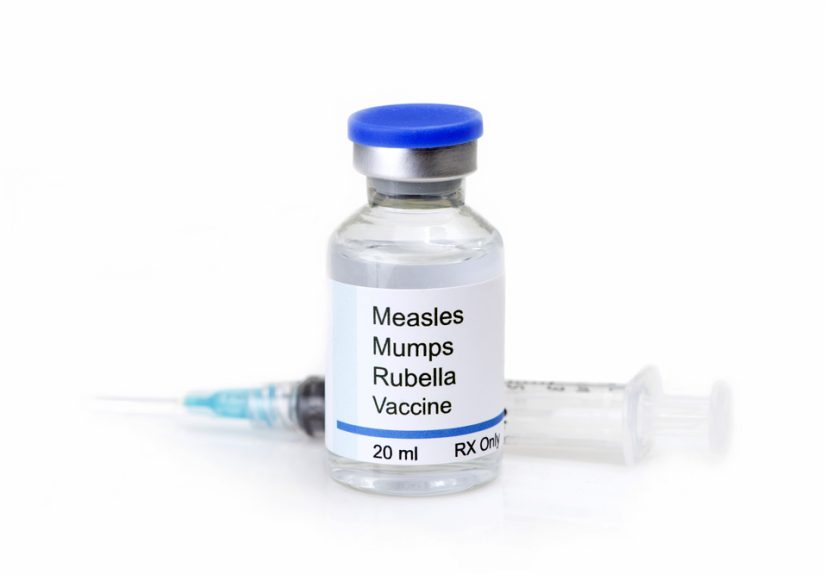
MMR stands for measles, mumps, and rubella. It’s a combined vaccine designed to help your immune system recognize and fight all three viruses. In the United States, most people get it in childhood: one dose around 12 to 15 months and a second dose around 4 to 6 years old.
That childhood schedule matters because for many adults, the answer to today’s question depends on what happened back then. If you received the recommended doses and you’re not in a special risk group, you’re usually set. No dramatic booster chase. No scavenger hunt through every pediatric office in America. No need to treat your vaccine history like a season finale cliffhanger.
So, do adults need another MMR dose?
Usually, no. For most adults with acceptable evidence of immunity, an extra routine dose of MMR is not recommended. That is the calm, boring, medically accurate answer. But boring can be beautiful.
Where things get more interesting is this: not every adult has the same level of risk, the same vaccine history, or the same documentation. “Should adults receive another dose of MMR?” is really shorthand for a more practical question:
Do you have enough proof that you’re protected, and does your lifestyle or risk level mean you need more than the average person?
Most adults are considered protected if they have one of the following:
Documentation of appropriate vaccination, laboratory evidence of immunity, laboratory confirmation of past infection, ordepending on the disease in questionbirth before a certain era when natural infection was common. In plain English, if you’ve got records showing you were vaccinated correctly or a blood test showing immunity, you’re usually good.
Who may need another dose of MMR?
This is the part where “most adults don’t need another shot” turns into “some adults definitely should take a closer look.”
1. Adults born in 1957 or later who never got vaccinated
If you were born in 1957 or later and never received MMRor have no evidence of immunityyou may need vaccination. Many adults in this situation need at least one dose. Some will need two doses, depending on their risk category.
This is not really a “booster” in the casual sense. It’s more of a catch-up move. Your immune system isn’t being topped off like a coffee refill; it’s being introduced properly to the assignment.
2. Adults with uncertain or missing records
This group is larger than people think. Plenty of adults vaguely remember getting “all the childhood shots,” but can’t prove it. That may be enough for dinner conversation, but it’s less helpful when a college program, employer, travel clinic, or healthcare provider asks for documentation.
In many cases, if records are missing, a healthcare provider may recommend vaccination rather than trying to reconstruct your immunization biography from memory. An antibody test may sometimes be used, but routine post-vaccination blood testing is not generally necessary for most adults.
3. Healthcare personnel
If you work in healthcare, the standard is often stricter. Why? Because hospitals and clinics are not ideal places for a highly contagious virus to make new friends.
Healthcare personnel are commonly expected to have two documented doses of MMR or other acceptable evidence of immunity. This is one of the clearest examples of adults who may need another dose, even if the average low-risk adult does not.
4. College students and adults in post-secondary education
Dorms, lecture halls, cafeterias, shared bathrooms, packed eventscollege campuses are basically social networking for microbes. Adults attending college, trade school, or other post-secondary settings may be recommended to have two doses if they do not already have evidence of immunity.
So yes, your biology lab may be teaching science in more ways than one.
5. International travelers
If you are traveling internationally, being “pretty sure” you were vaccinated is not the travel accessory you want to rely on. Adults who travel internationally should be fully vaccinated according to current recommendations. That often means confirming that you have the proper number of doses before you go.
Travel changes the math because measles exposure risk can increase depending on destination, transit, and outbreak conditions. Your passport can get stamped in minutes. Your immune system prefers advance notice.
6. Certain adults with HIV, if not severely immunocompromised
Some adults with HIV may be recommended to receive MMR if they do not have immunity and do not have severe immunosuppression. This is a decision that should be made with a clinician, because live vaccines involve important safety considerations.
7. Close contacts of immunocompromised people
In some situations, close contacts of immunocompromised individuals may be advised to make sure they are fully vaccinated. This is one of those moments when vaccination is not only about self-protection but also about reducing the chance of bringing home an avoidable infection to someone more medically vulnerable.
What about people born before 1957?
In general, adults born before 1957 are considered to have presumptive immunity because measles circulated widely before vaccination became routine. In many cases, these adults do not need MMR vaccination.
That said, there can be special exceptions in specific workplaces or outbreak-related situations. So while “born before 1957” often means “presumed protected,” it does not mean every single administrative requirement everywhere magically disappears.
The important pre-1968 exception
Here’s a detail many adults have never heard: if you were vaccinated before 1968 with an older inactivated (killed) measles vaccine or a measles vaccine of unknown type, current guidance often recommends revaccination with at least one dose of live measles-containing vaccine, usually MMR.
This is one of the rare vaccine-history plot twists that actually matters. If your old records suggest you got the early, less effective version, an updated dose may be appropriate.
Is the second MMR dose a “booster”?
Not in the way people often use the word. The second dose of MMR is generally not given because protection predictably fades on schedule. Instead, it mostly exists because a small percentage of people do not develop immunity after the first dose. The second dose gives those non-responders another chance to become protected.
That’s why two doses are more effective than one. It’s less like “recharging a battery” and more like “making sure the message got delivered.”
Do adults ever need a third MMR dose?
For measles, a third routine MMR dose is generally not recommended. For mumps, however, public health officials may recommend a third dose for certain groups during a mumps outbreak. That is a very specific situation, not a blanket rule for everyone with a vague feeling of vaccine nostalgia.
So if you hear “some people need a third dose,” the missing fine print is usually: in a mumps outbreak, for selected at-risk groups, based on public health guidance.
Should adults get antibody testing first?
Sometimes, but not always. In routine care, adults generally do not need antibody testing after vaccination to confirm protection. If records are unavailable, a clinician may recommend vaccination directly rather than ordering blood work. In other situationssuch as occupational clearance, school documentation, or specific medical questionstesting may make sense.
In short, titers can be useful, but they are not a personality trait and they are not required for everybody.
Who should not get MMR right now?
Because MMR is a live attenuated vaccine, there are important situations where it should not be given, at least not at that moment.
Pregnant people
MMR is contraindicated during pregnancy. People are also advised to avoid becoming pregnant for a period after receiving the vaccine. If rubella immunity is missing during pregnancy, vaccination is typically handled after delivery.
People with severe immunocompromise
Adults who are severely immunocompromised generally should not receive MMR. This is one of the clearest reasons not to self-diagnose your vaccine needs via social media. A clinician needs to look at the full medical picture.
People with certain severe allergies or prior serious reactions
A history of severe allergic reaction to a prior dose or vaccine component can also be a reason not to receive it. Again, this is a doctor conversation, not a “my cousin read a thread about it” conversation.
What about side effects?
Most people who receive MMR do well. Common side effects are usually mild and temporary, such as soreness where the shot was given, a mild fever, or a rash. Serious adverse events are uncommon. And this is the big-picture point worth repeating: getting vaccinated is far safer than getting measles, mumps, or rubella themselves.
Measles is not just “a rash and some bad vibes.” It can lead to serious complications, including hospitalization. That is why public health experts care so much about maintaining immunity, especially in communities where outbreaks can spread quickly.
How to know whether you need another dose
If you’re wondering what to do next, don’t panic and don’t start excavating old filing cabinets like you’re in a medical archaeology documentary. Use this simple framework:
You probably do not need another dose if:
You have documented MMR vaccination appropriate for your risk group, laboratory evidence of immunity, confirmed prior infection, or you fall into a category with accepted presumptive immunity.
You should ask a clinician about another dose if:
You were never vaccinated, you are unsure of your records, you work in healthcare, you attend college, you travel internationally, you have HIV without severe immunosuppression, you were vaccinated before 1968 with an older product, or local public health guidance changes because of an outbreak.
The practical bottom line
Should adults receive another dose of MMR? Most adults won’t need one. But some adults absolutely should. The decision depends on documentation, risk factors, travel, occupation, education setting, age, medical status, and outbreak circumstances.
If you know you had the recommended doses and you are not in a special risk group, this is probably one of those rare adult responsibilities you may already have completed successfully. Please take a moment to enjoy that feeling. It does not happen every day.
If your vaccine history is uncertain, your job or school requires proof, or you are traveling or working in a higher-risk environment, it is worth checking now. Waiting until an outbreak headline shows up in your neighborhood is a deeply inconvenient time to discover that your records are “somewhere at Mom’s house.”
Experiences and real-life situations adults often face with MMR
Ask enough adults about vaccines, and you quickly discover that the science is the easy part. The messy part is life. Real life is full of half-remembered childhood clinics, records lost in cross-country moves, college deadlines, international flights booked before anyone checked immunity, and that one relative who says, “I’m sure you got it,” with the confidence of someone who has absolutely no paperwork.
One common experience happens when adults start a new healthcare job. Suddenly, immunity is no longer a fuzzy memory; it is a form with boxes that need dates, signatures, and documentation. People who felt perfectly organized five minutes earlier realize they have tax returns from 2018, a takeout menu from a restaurant that closed three years ago, and zero vaccine records. For many, that is the moment MMR becomes less of a childhood concept and more of a practical adult task.
Another familiar situation is travel. A person books a dream trip abroad, spends hours comparing luggage, airport transfers, and whether neck pillows are genius or a scam, and only then learns that being fully vaccinated against measles really matters. Travel clinics see this all the time. The traveler is not anti-vaccine, not confused, not irresponsiblejust busy. They assumed childhood care had covered everything forever and had never needed to think about it again.
Then there are adults returning to school. Colleges and training programs often require vaccine documentation, and that requirement can trigger an entire family detective mission. Parents search old drawers. Pediatric offices merge, close, or move systems. State registries help sometimes, but not always. In the end, many adults discover that getting another MMR dose is simpler than reconstructing a complete immunization timeline from the era of flip phones and paper folders.
Some experiences are more emotional. Adults who are becoming parents often review vaccines for the first time in years, not just for themselves but because they are thinking about protecting a baby who is too young to be fully vaccinated. That changes the tone of the decision. It stops being abstract and becomes deeply personal. The question shifts from “Do I really need this?” to “How do I reduce risk for someone who depends on me?”
Outbreak news can also create anxiety, especially for adults who are unsure of their records. When measles headlines rise, uncertainty feels louder. People wonder whether one childhood dose was enough, whether they got two, whether they had the right vaccine version, or whether they should rush out for a shot immediately. The reassuring part is that there is a clear path forward: check your records if you can, review your risk factors, and talk with a qualified healthcare professional. Panic is not a plan, but verification is.
There is also a surprisingly common emotional response called “I thought vaccines were only a kid thing.” Many adults associate immunization with pediatric waiting rooms, cartoon wall decals, and lollipops. Adult vaccination can feel like discovering there is homework in a class you forgot you were enrolled in. But that mindset changes once people understand that adult recommendations are normal, practical, and often based on work, travel, age, health status, or exposure risknot on fear, but on prevention.
Perhaps the most relatable experience of all is relief. Once adults confirm they are protected, the whole issue becomes much less mysterious. Whether they find old records, get a clinician’s recommendation, receive a catch-up dose, or learn they were already considered immune, the uncertainty fades. And honestly, that may be the best outcome here: fewer rumors, fewer guesses, and fewer conversations that begin with, “I read something online…” and end with everyone somehow more confused than when they started.
MMR decisions are rarely about drama. They are about clarity. For adults, that clarity can be powerful. It lets people travel with more confidence, meet school or job requirements without last-minute chaos, protect vulnerable family members, and respond to outbreak news with facts instead of panic. In a world overflowing with noisy health advice, that is refreshingly useful.