Table of Contents >> Show >> Hide
- What Is the SI Joint, and Why Does It Hurt?
- How Stretches and Gentle Exercise Can Help
- Before You Start: A Few Smart Rules
- SI Joint Stretches: 7 Moves to Try
- How Often Should You Do These SI Joint Exercises?
- Common Mistakes That Can Make SI Joint Pain Worse
- Other Ways to Support SI Joint Pain Relief
- When to See a Doctor About SI Joint Pain
- Conclusion
- Experiences Related to SI Joint Stretches and Sacroiliac Joint Pain
- SEO Tags
If your lower back keeps grumbling every time you stand up, roll over in bed, climb stairs, or sit too long, your sacroiliac joint may be trying to get your attention. The SI joint is where your sacrum meets your pelvis, and when it gets irritated, even simple movements can feel surprisingly dramatic. One minute you are reaching for coffee, and the next your buttock, low back, or upper thigh is staging a protest.
The good news is that gentle, well-chosen movement often helps. For many people, SI joint pain improves with a mix of stretching, light strengthening, better body mechanics, and a little patience. The less-good news? Randomly yanking on your hamstrings like you are starting a lawn mower is not a treatment plan. The goal is to reduce tension around the pelvis, improve mobility where you are stiff, and build enough stability so the joint is not asked to do a circus act every time you get out of a chair.
In this guide, you will learn what the SI joint does, why it hurts, and how to try seven practical moves that may ease sacroiliac joint pain. A few of these are classic stretches, while a couple are gentle mobility or support exercises. That is intentional. The SI joint usually likes a balanced approach: less strain, more control, and no heroic nonsense.
What Is the SI Joint, and Why Does It Hurt?
Your sacroiliac joints connect the base of your spine to your pelvis. They help transfer weight from your upper body into your legs and provide stability while you walk, bend, sit, stand, and twist. In other words, they are quiet little overachievers. When they are working well, you barely notice them. When they are irritated, they become the coworker who replies-all to everything.
SI joint pain is often felt in the low back, buttock, or just below the beltline. Some people notice pain on one side only. Others feel aching that spreads into the back of the thigh. It can flare with long periods of sitting or standing, stair climbing, running, standing on one leg, or moving from sitting to standing. Because the symptoms can overlap with sciatica, hip pain, lumbar spine problems, and inflammatory conditions, SI joint pain is not always easy to identify by symptoms alone.
Common contributors include joint irritation, osteoarthritis, inflammatory arthritis, pregnancy-related changes, altered walking patterns, muscle imbalance, and poor load transfer through the hips and core. That is why treatment often focuses on the muscles around the pelvis as much as the joint itself. When those muscles are tight, weak, or poorly coordinated, the SI joint can wind up doing more work than it signed up for.
How Stretches and Gentle Exercise Can Help
When the tissues around the pelvis and low back are stiff, they can increase stress on the SI joint. Stretching may help by reducing tension in the hamstrings, glutes, hip flexors, and inner thighs. Gentle movement can also improve blood flow, restore a more comfortable range of motion, and make daily activities feel less cranky.
At the same time, flexibility alone is not the full story. Many people with SI joint pain also need better support from the glutes, abdominal muscles, and deep stabilizers around the pelvis. That is why the best exercise routine for sacroiliac joint pain usually blends mobility with light strengthening. Think of it as teaching your body to loosen up where it is stuck and stabilize where it is sloppy.
Before you begin, here is the golden rule: none of these moves should cause sharp, shooting, or worsening pain. A mild stretching sensation is fine. Pain that feels electric, burning, or distinctly mean is your cue to stop.
Before You Start: A Few Smart Rules
- Warm up first with a short walk or a few minutes of easy movement.
- Move slowly and stay within a comfortable range.
- Breathe normally. Holding your breath makes everything more dramatic than it needs to be.
- Aim for gentle consistency rather than aggressive stretching.
- Stop and get medical advice if symptoms spread with numbness, tingling, weakness, fever, or bowel or bladder changes.
SI Joint Stretches: 7 Moves to Try
1. Knee-to-Chest Stretch
This is a classic for a reason. It gently stretches the low back, hip area, and surrounding tissues without requiring fancy coordination or yoga-level optimism.
How to do it: Lie on your back with your knees bent and feet flat. Bring one knee toward your chest and hold it with your hands behind the thigh or over the shin. Gently draw it in until you feel a comfortable stretch in the low back, hip, or buttock. Hold for 5 to 20 seconds, then switch sides. If it feels good, try both knees to the chest.
Why it may help: This move can reduce tension around the lower back and pelvis while giving the SI region a break from compressed positions. It is also a nice reset after sitting for long periods.
2. Lower Trunk Rotation
If your back and pelvis feel locked up like a rusty garden gate, this gentle rotation can help restore motion without a lot of strain.
How to do it: Lie on your back with knees bent and feet flat. Keep your shoulders relaxed on the floor. Slowly let both knees drift to one side, only as far as feels comfortable, then return to center and go to the other side. Move in a slow, controlled way. Hold each side for 5 to 10 seconds.
Why it may help: This exercise can ease stiffness through the low back and pelvis and may feel especially good when SI joint pain is linked to prolonged sitting. Keep the motion small if your symptoms are sensitive.
3. Figure-Four Glute Stretch
Tight glutes and deep hip rotators can add tension around the SI joint. This stretch targets those areas without asking you to fold yourself into a decorative pretzel.
How to do it: Lie on your back with knees bent. Cross one ankle over the opposite knee to form a figure four. Reach behind the uncrossed thigh and gently pull the legs toward your chest. You should feel a stretch in the buttock of the crossed leg. Hold for 15 to 30 seconds, then switch sides.
Why it may help: Releasing tension in the gluteal region may reduce pull on the pelvis and improve comfort during walking, standing, and transitions like sitting to standing.
4. Seated Hamstring Stretch
Hamstrings that feel like steel cables can tug on the pelvis and change the way your lower body moves. That is not ideal when your SI joint is already irritated.
How to do it: Sit tall on the edge of a chair. Extend one leg forward with the heel on the floor and the knee straight but not locked. Hinge forward from the hips with a long spine until you feel a stretch in the back of the thigh. Hold for 10 to 30 seconds, then switch sides.
Why it may help: Improving hamstring flexibility can reduce strain through the back of the pelvis and make bending, walking, and standing feel more natural.
5. Hip Flexor Stretch
When the front of the hips is tight, the pelvis can tilt in ways that increase low-back and SI joint stress. This stretch helps undo some of that desk-chair mischief.
How to do it: Step into a half-kneeling lunge position, with one knee on the floor and the other foot planted in front. Keep your torso upright and gently shift your weight forward until you feel a stretch at the front of the hip on the kneeling side. Do not arch your lower back. Hold for 15 to 30 seconds, then switch sides.
Why it may help: Loosening the hip flexors can improve pelvic alignment and reduce the feeling that your lower back is doing all the work.
6. Pelvic Tilt
This is one of those deceptively simple moves that does a lot with very little drama. It helps you find a more comfortable position for your pelvis and wake up the abdominal muscles that support it.
How to do it: Lie on your back with knees bent and feet flat. Gently tighten your abdominal muscles and flatten your lower back toward the floor. Then relax and let your pelvis return to neutral. Move slowly and repeat 5 to 10 times.
Why it may help: Pelvic tilts improve awareness of pelvic position and can ease stiffness in the low back. They are also a nice stepping stone toward better control during standing, walking, and lifting.
7. Bridge
Yes, this is technically more strengthening than stretching, but SI joints often appreciate a little stability with their flexibility. Consider this the responsible adult of the routine.
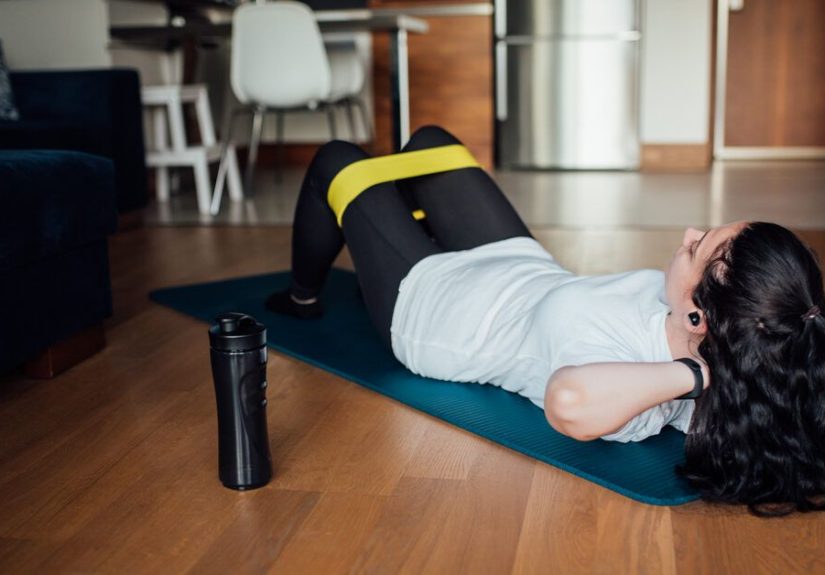
How to do it: Lie on your back with knees bent and feet flat, hip-width apart. Tighten your abdominal muscles and squeeze your glutes as you lift your hips until your body forms a line from shoulders to knees. Hold briefly, then lower slowly. Start with 5 repetitions.
Why it may help: Bridges strengthen the glutes and posterior chain, which can reduce stress on the SI joint during movement. If this causes pinching or increased pain, skip it for now and focus on gentler mobility work first.
How Often Should You Do These SI Joint Exercises?
For many people, a short daily routine works better than one heroic session followed by two days of regret. Start with 10 to 15 minutes once a day. If your body responds well, you can gradually build to twice a day for the gentler stretches. A useful pattern is to begin with the easiest moves first, such as knee-to-chest, pelvic tilts, and lower trunk rotations, then add figure-four, hamstring, hip flexor, and bridge work as tolerated.
You do not need to do all seven every single time. Some days your body may want mobility. Some days it may want glute support. The smart move is to pay attention to patterns. If a certain stretch consistently makes you feel better afterward and the next day, keep it. If a move leaves you sore in a bad way or sets off symptoms, scale it back or set it aside.
Common Mistakes That Can Make SI Joint Pain Worse
- Stretching too aggressively: More is not always better. SI joints often prefer calm, controlled motion.
- Ignoring pain signals: Stretching into sharp pain is not toughness. It is a scheduling conflict with your future self.
- Skipping strengthening completely: A super-flexible pelvis with poor support can still be unhappy.
- Twisting too far: Rotation can help, but forced twisting can also irritate the joint.
- Bad setup: If you are arching your back, gripping your neck, or holding your breath, adjust the position.
Other Ways to Support SI Joint Pain Relief
Stretching works best when it is part of a bigger strategy. Try to break up long periods of sitting, especially if sitting is one of your main triggers. A short walk, gentle posture reset, or a few pelvic tilts every hour can help more than one intense stretching session at the end of the day.
Many people also benefit from physical therapy. A skilled therapist can figure out whether your pain is more related to stiffness, weakness, altered gait, or movement habits that keep irritating the joint. They may use manual therapy, targeted strengthening, movement retraining, and home exercises to improve how the pelvis and lower back work together.
Supportive habits matter, too: move regularly, avoid sudden increases in activity, use good body mechanics when lifting, and ease back into exercise rather than trying to win a medal for recovering from back pain in one weekend.
When to See a Doctor About SI Joint Pain
Gentle exercise is often helpful, but it is not the answer to every kind of pain. Get medical attention if you have numbness, tingling, leg weakness, fever, bowel or bladder changes, severe night pain, pain after major trauma, or symptoms that keep getting worse. You should also check in with a healthcare professional if your pain is not improving after a few weeks of careful self-care or if you are not sure the SI joint is actually the problem.
Because SI joint pain can resemble sciatica, disc problems, hip conditions, and inflammatory arthritis, a proper evaluation matters when symptoms are persistent or unusual. Sometimes the right answer is exercise. Sometimes the right answer is a more specific diagnosis. Your pelvis, sadly, does not come with subtitles.
Conclusion
The best SI joint stretches are not flashy. They are steady, gentle, and targeted to the muscles that influence the pelvis and lower back. Knee-to-chest, trunk rotations, figure-four, hamstring and hip flexor stretches, pelvic tilts, and bridges can all play a role in easing sacroiliac joint pain when used thoughtfully.
The real secret is not finding one magical move. It is building a routine that improves flexibility, restores comfortable motion, and gives the joint better support. Start small, stay consistent, and listen to your symptoms. With the right approach, your SI joint can become less of a daily diva and more of a background employee again.
Experiences Related to SI Joint Stretches and Sacroiliac Joint Pain
Many people dealing with SI joint pain describe the experience in almost the same frustrated tone: “I thought it was just regular back pain, but it felt oddly specific.” That is a common pattern. The discomfort often shows up low on one side, near the buttock, and makes ordinary things feel strangely complicated. Getting out of the car becomes an event. Rolling over in bed requires strategy. Standing after a long meeting feels like your pelvis forgot how to negotiate.
Another common experience is that the pain seems inconsistent. Some people feel fine while walking but ache after sitting. Others can sit reasonably well but flare up during stairs, lunges, or standing on one leg to put on pants. That inconsistency is one reason SI joint pain can be so confusing. It does not always behave like a simple muscle strain. It often feels more like the body is okay with movement in general but deeply offended by certain positions and transitions.
People who try gentle SI joint stretches often report that the first big win is not dramatic pain elimination. It is usually something smaller but meaningful. They notice they can stand up with less stiffness. They wake up with less pulling in the buttock. They can take a short walk without that familiar “uh-oh” feeling. These small changes matter because they suggest the tissues around the joint are calming down and movement is becoming less guarded.
There is also a learning curve. A lot of people discover that the stretches that help most are not the ones they expected. Some assume they need huge stretches for the low back, only to find that a smaller movement like a pelvic tilt works better. Others swear by the figure-four stretch because it seems to loosen the exact tight spot in the glute that has been nagging them for weeks. Some love bridges because the move makes them feel more supported afterward. Some hate bridges at first and do better after starting with easier mobility drills. In other words, SI joint pain is personal, and your routine may need a little trial and error.
One more experience comes up again and again: people often feel better when they stop trying to “push through” and start trying to “work with” their symptoms. That shift is huge. Instead of forcing deeper twists or longer holds, they use comfortable ranges, breathe, move consistently, and let progress build gradually. It sounds less exciting than a miracle fix, but it is often what actually works. The body tends to respond well when it feels safe, supported, and not ambushed by heroic stretching.
So if your progress feels slow, that does not mean you are failing. It usually means you are doing rehab the normal way: one less painful stand-up, one easier walk, one better morning at a time.