Table of Contents >> Show >> Hide
- What “Tough Chewer” Really Means (and Why It Matters)
- Vet-Smart Safety Rules for Chew Toys
- The 15 Best Dog Toys for Tough Chewers (Vet-Informed Picks)
- 1) KONG Extreme (Classic Shape)
- 2) KONG Extreme Tires
- 3) Goughnuts Ring (Safety-Indicator Design)
- 4) West Paw Toppl (Treat-Dispensing Puzzle)
- 5) West Paw Qwizl (Treat Holder for “Spendy Chews”)
- 6) West Paw Bumi (Stretchy Tug + Chew Hybrid)
- 7) West Paw Jive Ball
- 8) Planet Dog Orbee-Tuff Squeak Ball
- 9) Ruff Dawg Dawg-Ring
- 10) SodaPup Magnum Can Toy (Treat Dispenser)
- 11) Starmark Treat Dispensing Chew Ball
- 12) Benebone Wishbone (Nylon Chew)
- 13) Nylabone Power Chew Textured Bone
- 14) Ruffwear Gnawt-a-Rock (Treat-Dispensing, Erratic Bounce)
- 15) Chuckit! Ultra Ball
- How to Make Tough Toys Last Longer (Without Duct Tape)
- When to Throw a Toy Away (and When to Call Your Vet)
- Experience Notes: What Tough Chewers Teach You (The Extra )
- Conclusion
If your dog can turn a “durable” toy into modern art in under five minutes, welcome. You’re among friends. Tough chewers aren’t being naughtythey’re being dogs. Chewing relieves boredom, burns stress, cleans teeth, and helps them self-soothe. The problem is that “tough” on a product label can mean anything from “lasts through one episode of your show” to “survives the apocalypse.”
This vet-informed roundup focuses on safer materials, smarter shapes, and toys designed to reduce the risk of broken teeth, choking, or swallowed chunks. No dog toy is truly indestructible (if one were, your dog would take it as a personal challenge). The goal is to find options that hold up better, keep your dog busy longer, and fail in a way that’s easier for you to catch before it becomes an emergency.
What “Tough Chewer” Really Means (and Why It Matters)
“Tough chewer” isn’t a breedit’s a chewing style. Some dogs gnaw like they’re reading a book by candlelight. Others chomp like they’re speedrunning a video game. The best toy depends on which chewer you live with.
- Crunchers: bite down hard, try to crack toys into pieces, and may swallow chunks.
- Scissor-chewers: use back teeth to slice and shear (handles and edges are their favorite targets).
- Obsessive gnawers: settle in and work one spot until they win.
- Power fetchers: love balls, but also chew them between throws (aka “multitasking”).
Vet-Smart Safety Rules for Chew Toys
1) Size up, always
A chew toy should be too big to fit fully in your dog’s mouth. Bigger toys reduce choking risk and make it harder for your dog to swallow pieces if the toy starts to break down.
2) Avoid “too hard” toys (yes, that includes some popular ones)
Many veterinary dental experts warn that extremely hard chews (think: items you can’t dent with your thumbnail) can increase the risk of fractured teeth. A “tough” toy should have a bit of giveespecially for determined chompers.
3) Inspect like you’re TSA
If you see deep cracks, sharp edges, or missing chunks, the toy has entered its retirement era. Toss it. The safest toy is the one your dog can’t swallow in pieces.
4) Supervise new toys
The first few sessions tell you everything. If your dog immediately tries to remove a squeaker, shred seams, or bite off corners, that toy is now a supervised-only itemor a “nice try” donation to the trash.
The 15 Best Dog Toys for Tough Chewers (Vet-Informed Picks)
Below are durable favorites across rubber, nylon, and treat-dispensing designs. Each includes a quick “best for” note so you can match the toy to your dog’s chewing style.
1) KONG Extreme (Classic Shape)
Best for: power chewers who need a job (especially food-motivated dogs).
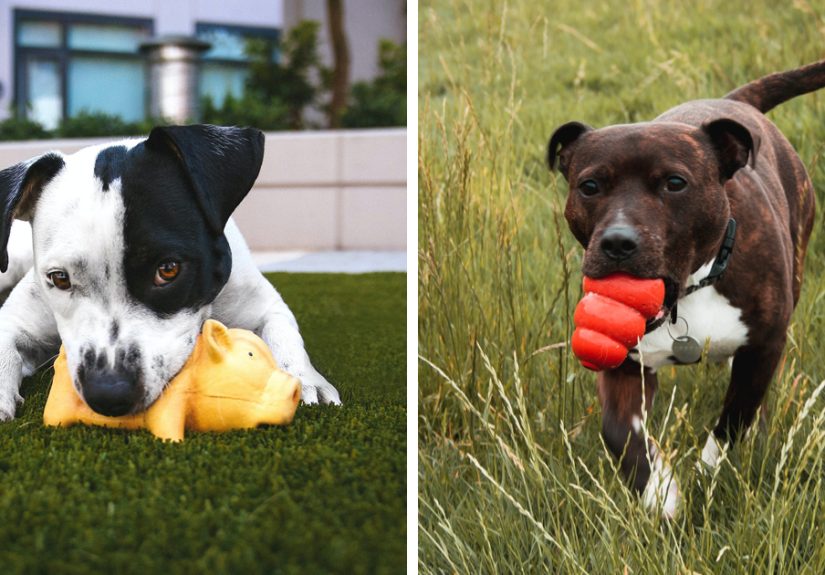
The black KONG Extreme is a go-to because it’s tough rubber with a classic shape that bounces unpredictably and can be stuffed with kibble, wet food, or peanut butter (xylitol-free, always). Freezing a filled KONG can turn 10 minutes into 30–45 minutes of focused chewing and lickinggreat for crate time or “I need to take a phone call without an audience.”
- Why it works: durable rubber + enrichment = less bored chewing on your furniture.
- Watch for: choosing the right size; too small becomes a choking hazard.
2) KONG Extreme Tires
Best for: gnawers who like edges and ring shapes.
The tire design gives your dog a satisfying rim to chew and a cavity you can smear with soft treats. It’s also easier for many dogs to hold in place with their paws, which means longer engagement and less “drop it… drop it… DROP IT” frustration.
- Why it works: thick rubber + treat-stuffing groove = longer chew sessions.
- Watch for: retire it if the rim gets jagged or torn.
3) Goughnuts Ring (Safety-Indicator Design)
Best for: dogs who treat chew toys like a competitive sport.
Goughnuts is famous for the red safety indicator core: if your dog chews down to the red layer, it’s your visual cue to remove the toy. It’s a simple idea, but it helps owners catch “end-of-life” before it turns into “where did that chunk go?”
- Why it works: designed specifically for heavy chewing, with a built-in “stop” signal.
- Bonus: brand policies often include replacement programs (check the manufacturer details for your region).
4) West Paw Toppl (Treat-Dispensing Puzzle)
Best for: tough chewers who also inhale food like a vacuum.
Toppl turns meals into enrichment. Fill it with kibble, top with a little wet food, then freeze. The shape encourages licking and problem-solving. It’s also a strong pick for dogs who destroy bowls out of pure enthusiasm.
- Why it works: durable material + slow feeding + mental stimulation.
- Pro tip: keep two and rotate: one in use, one in the freezer.
5) West Paw Qwizl (Treat Holder for “Spendy Chews”)
Best for: dogs who can finish a bully stick before you finish blinking.
Qwizl is designed to hold treats and long chews in place, helping them last longer and reducing the risk of your dog swallowing a whole chew “because it fit and therefore it must be destiny.” The vents let scents out, which keeps dogs working.
- Why it works: makes high-value chews last longer and keeps hands away from accidental chomps.
- Watch for: replace if the openings stretch or tear enough to loosen the chew.
6) West Paw Bumi (Stretchy Tug + Chew Hybrid)
Best for: dogs who want tug, fetch, and chew in one toy.
Bumi stretches and flexes, making it great for interactive play. It’s a smart option for dogs who destroy rope toysbecause swallowed string can be a serious hazard. Bumi gives you the tug game without the fringe benefits (literally).
- Why it works: flexible, durable, and easier to clean than fabric tug toys.
- Best practice: use it as an interactive toy, not an “all-day solo chew” for the most intense destroyers.
7) West Paw Jive Ball
Best for: ball-obsessed dogs who also chew the ball between throws.
Jive has an erratic bounce that keeps fetch interesting and a durable build that holds up better than many standard balls. It also avoids the fuzz of tennis balls, which can be abrasive over time for some dogs that do constant ball work.
- Why it works: tough, bouncy, and designed for repeated play.
- Watch for: if your dog starts carving off chunks, swap to a larger size or a different toy.
8) Planet Dog Orbee-Tuff Squeak Ball
Best for: dogs who demand a squeakbut you still want durability.
Orbee-Tuff balls are popular because they’re bouncy and tough, and the squeak factor can keep dogs engaged longer. This can be a win for “I need my dog busy while I cook dinner” situationsjust supervise if your dog is determined to remove squeakers.
- Why it works: durable ball + high engagement.
- Watch for: squeaker obsession (some dogs treat squeakers like a surgical extraction challenge).
9) Ruff Dawg Dawg-Ring
Best for: dogs who love tug and chewing the rim.
Ruff Dawg toys are known for thick rubber designs and are often backed by lifetime guarantees on select models. The ring shape is easy to grab and satisfying to gnaw, and it’s a great “yard toy” for dogs who want to carry something proudly like a trophy.
- Why it works: grippy shape + sturdy rubber construction.
- Best for: supervised play if your dog is a chunk-biter.
10) SodaPup Magnum Can Toy (Treat Dispenser)
Best for: extreme chewers who need enrichment (and owners who need peace).
This toy is built to be stuffedkibble, treats, wet foodand it can be frozen for longer sessions. The “can” shape gives your dog an easy grip, and the challenge is adjustable depending on what you put inside.
- Why it works: durable rubber + food puzzle = productive chewing time.
- Pro tip: start easy (loose kibble), then level up (frozen layers).
11) Starmark Treat Dispensing Chew Ball
Best for: dogs who need to work for food and can’t be trusted with plush toys.
This ball is designed to dispense kibble or treats while also handling rough play. It bounces, rolls, and keeps dogs busy. If your dog is bored-chewing the coffee table, a toy that turns “chew time” into “earn it” can make a noticeable difference.
- Why it works: movement + reward keeps dogs engaged longer.
- Watch for: choosing the correct size so it can’t be swallowed.
12) Benebone Wishbone (Nylon Chew)
Best for: dogs who ignore rubber but commit to a good nylon chew.
Benebone’s wishbone shape is easy for dogs to hold, and the flavor concept keeps many dogs interested longer than plain nylon. Nylon chews can be great for obsessive gnawersbut they can also be very hard, so they’re best for dogs with healthy teeth and owners who monitor wear and replace before sharp edges form.
- Why it works: paw-friendly shape + long-lasting gnaw appeal.
- Watch for: sharp corners and very hard chewingretire early if you see heavy wear.
13) Nylabone Power Chew Textured Bone
Best for: strong chewers who want texture and a “bone-like” shape.
Nylabone’s Power Chew line is built for determined chewers and often includes texture for chewing satisfaction. Like other nylon toys, it’s important to pick the right size and replace it once it becomes sharp or heavily worn.
- Why it works: durable nylon + textured surfaces for long gnaw sessions.
- Safety note: if your dog is a tooth-cracker, consider a more flexible rubber option instead.
14) Ruffwear Gnawt-a-Rock (Treat-Dispensing, Erratic Bounce)
Best for: dogs who love puzzles and chaos (the fun kind).
Gnawt-a-Rock has an internal chamber for kibble or small treats and an irregular shape that makes it bounce unpredictably. It’s designed for engagement and movement, which helps burn mental and physical energy. Note: it’s made from natural latex rubber, so skip it if your dog has known latex sensitivities.
- Why it works: enrichment + fetch + unpredictable movement.
- Watch for: size/shapebest for larger mouths, and always supervise early sessions.
15) Chuckit! Ultra Ball
Best for: fetch fanatics who are tough on balls.
The Ultra Ball is a classic for a reason: high bounce, bright visibility, and durable rubber that holds up better than many standard balls. It’s primarily a fetch toy, so if your dog settles down to “chew the ball into confetti,” switch to a thicker rubber chew toy instead.
- Why it works: great for active play, floats for water sessions, and handles repeated throws.
- Watch for: replace if your dog starts peeling off layers or puncturing deeply.
How to Make Tough Toys Last Longer (Without Duct Tape)
- Rotate toys: keep 3–5 in a “toy library” and swap every day or two to keep novelty high.
- Use food strategically: stuff and freeze rubber toys for longer, calmer engagement.
- Match toy to mood: fetch toy for zoomies, chew toy for downtime, puzzle toy for rainy days.
- Clean regularly: grime can shorten toy life (and nobody wants “mystery smell enrichment”).
When to Throw a Toy Away (and When to Call Your Vet)
Toss a toy if it’s cracked, sharp, sticky, missing chunks, or shedding pieces. If you think your dog swallowed part of a toy especially if you notice vomiting, loss of appetite, lethargy, gagging, or trouble passing stoolcontact your veterinarian promptly. When it comes to foreign objects, “wait and see” can turn into “why is my weekend at the emergency clinic.”
Experience Notes: What Tough Chewers Teach You (The Extra )
Spend enough time around tough chewers and you learn a few truthsmostly that your dog is either a genius engineer or a tiny, furry demolition contractor. One common pattern owners report is that the “toy graveyard” grows fastest when a dog is bored, under-exercised, or left with a toy that doesn’t match their chewing style. A power chewer given a plush toy isn’t “being bad”; they’re doing exactly what the toy’s seams allow them to do. If the seams are the weak spot, your dog will find them. Immediately. With enthusiasm. Possibly while maintaining eye contact.
Another big lesson: enrichment beats raw durability more often than you’d think. Many tough chewers don’t just want something to bitethey want something to solve. That’s why treat-dispensing toys can feel like magic. A dog that would destroy a plain rubber toy might spend 30 minutes calmly working on a frozen Toppl or a stuffed Magnum Can Toy. Licking and problem-solving are naturally soothing behaviors, which means you’re not only saving your furnitureyou’re helping your dog regulate their energy. In real households, this is the difference between “I can finally answer emails” and “my dog is redecorating the couch.”
Tough chewers also teach you the art of “planned retirement.” The best owners aren’t the ones who find a toy that lasts forever (that’s a myth). They’re the ones who notice the toy is changing: edges getting sharp, rubber cracking, chunks missing. They replace early, before a problem starts. Think of it like replacing running shoes: you could keep going, but your knees (or your dog’s stomach) might file a complaint.
You’ll also notice that dogs often have “chew preferences” that look irrational to humans. Some dogs love a ring shape because it’s easy to brace with paws. Some become obsessed with erratic bounce toys because unpredictable movement feels like hunting. And some don’t care what you boughtif it doesn’t smell interesting, it’s dead to them. That’s when flavored nylon chews (used wisely and monitored for hardness and wear) can be useful, especially for dogs that ignore rubber.
Finally, the most practical experience-based tip: build a toy routine. Morning? Fetch ball. Midday? Treat puzzle. Evening? A calmer chew toy while the household winds down. This rhythm gives your dog a predictable outlet for chewing, and predictable outlets reduce “creative” outletslike baseboards. The win isn’t a single perfect toy. The win is a system that keeps your tough chewer busy, satisfied, and safer… while keeping your home looking like a home and not a beaver exhibit.
Conclusion
The best dog toys for tough chewers combine smart design, safer materials, and the right match for your dog’s chewing style. Start with durable rubber and enrichment toys, size up, supervise early, and retire toys before they become a hazard. Your dog still gets the joy of chewingand you get to keep your furniture, your sanity, and (ideally) your emergency vet bill budget.