Table of Contents >> Show >> Hide
- What Counts As a “Movie Flop” in 2024?
- The Biggest Movie Flops Of 2024 We Had High Hopes For
- 1. Argylle – The $200 Million Spy Romp That Couldn’t Find a Mission
- 2. Madame Web – Another Tangled Web for Sony’s Spider-Verse
- 3. Kraven the Hunter – Apex Predator, Prey at the Box Office
- 4. The Fall Guy – The Beloved Crowd-Pleaser That Couldn’t Fill Seats
- 5. Furiosa: A Mad Max Saga – Critically Acclaimed, Commercially Stalled
- 6. Joker: Folie à Deux – From Billion-Dollar Icon to Musical Money Pit
- 7. Borderlands – Big Loot, Tiny Box Office
- 8. Megalopolis – A Passion Project with a Brutal Price Tag
- 9. Horizon: An American Saga – Chapter 1 – The Western Event That Never Was
- Why So Many Big Movies Flopped in 2024
- Experiences and Takeaways: What 2024’s Flops Feel Like from the Audience Side
- Conclusion: What 2024’s Flops Tell Us About the Future
Every year, Hollywood hands us a few movies that seem destined to conquer the box office:
stacked casts, massive budgets, big-name directors, buzzy trailers, and fanbases already
arguing on social media before the first review drops. And then—2024 happens to them.
The audience shrugs, the spreadsheets scream, and those “surefire hits” quietly migrate to
streaming as executives pretend everything is totally fine.
2024 was especially brutal. The overall domestic box office slipped from the previous year,
and several high-profile projects simply didn’t connect with moviegoers, even with strong
marketing and franchise recognition behind them. Big IP, superheroes, prestige directors,
and star power all struck out more often than expected, turning what should have been
victory laps into very expensive cautionary tales.
Let’s revisit the biggest movie flops of 2024 that we genuinely thought would crush it—at
least on paper. We’ll look at why expectations were high, how badly the numbers went sideways,
and what these misfires say about where blockbuster cinema is heading.
What Counts As a “Movie Flop” in 2024?
Before we dive into specific titles, it’s helpful to define what we mean by a
“movie flop.” In the age of streaming, box office math is messier than ever,
but there are still some basic guidelines:
- Budget versus worldwide gross: A movie that costs $150–200 million and only earns back roughly its production budget in theaters is usually in trouble.
- Marketing and distribution costs: Studios often spend tens (or hundreds) of millions more to promote and release these films.
- Opportunity cost and expectations: If a movie is positioned as a tentpole or franchise cornerstone and then barely limps over the break-even line (or doesn’t get close), it’s considered a flop even if the raw dollar amounts look big.
Another twist in 2024: some of these flops were critically praised or at least
well-liked by fans. Others were roasted by critics but later found second lives on
streaming. Financially, though, the red ink doesn’t care how passionately a small
group of people defended them on X (formerly Twitter).
The Biggest Movie Flops Of 2024 We Had High Hopes For
1. Argylle – The $200 Million Spy Romp That Couldn’t Find a Mission
On paper, Argylle looked like a slam dunk: a star-studded cast (Henry Cavill,
Bryce Dallas Howard, Sam Rockwell, Samuel L. Jackson, Dua Lipa, John Cena), a stylish
spy concept, and a reported production budget around $200 million backed by Apple and
Universal. It topped the box office in its opening weekend—but only with about
$17–18 million domestically, which is “good for a mid-budget thriller” and “disastrous
for a mega-budget tentpole” territory.
The movie ultimately pulled in under $100 million worldwide in theaters, far below what a
traditional studio would need to justify that price tag. Reviews were mixed-to-negative,
with many viewers feeling the plotting was convoluted and the tone all over the place.
Audiences simply didn’t buy into the would-be franchise, and what was clearly intended to
launch a spy universe instead became a case study in how not to spend $200 million.
2. Madame Web – Another Tangled Web for Sony’s Spider-Verse
If you had “psychic paramedic side character from Spider-Man comics” on your
2024 blockbuster bingo card, congratulations. Madame Web was supposed
to expand Sony’s Spider-Man Universe with a female-led superhero thriller starring
Dakota Johnson, Sydney Sweeney, and a cast that honestly felt like half of future
Hollywood.
Instead, it became a meme. Critics pounced on its awkward dialogue, thin plotting, and
wild tonal swings. Despite a production budget reportedly around $80–100 million, the
film’s global box office landed near that same range, which sounds okay until you
remember marketing costs and the fact that these films are meant to launch sequels,
spin-offs, merch, and theme park tie-ins.
The biggest heartbreak? There could have been a cool, weird, psychic thriller
hidden in here somewhere. But audiences never connected with the story, and the movie
quickly became shorthand for “superhero fatigue” in 2024.
3. Kraven the Hunter – Apex Predator, Prey at the Box Office
Sony’s Spider-adjacent universe doubled down with Kraven the Hunter, a gritty,
R-rated anti-hero story meant to showcase one of Spider-Man’s more intense villains.
With a budget reportedly around $110 million and a marketing push built on blood,
brutality, and “he’s different from the other guys, we promise,” it seemed poised
to at least carve out a niche audience.
Instead, Kraven stalked the box office and caught… no one. The movie finished its
theatrical run with around $60–65 million worldwide, making it the worst performer
in Sony’s Spider-Man Universe films so far. The critical reception didn’t help
either, with low Rotten Tomatoes scores and little word-of-mouth energy. Another
supposed franchise pillar became a very expensive caution sign.
4. The Fall Guy – The Beloved Crowd-Pleaser That Couldn’t Fill Seats
The Fall Guy is one of 2024’s most painful flops precisely because so many people
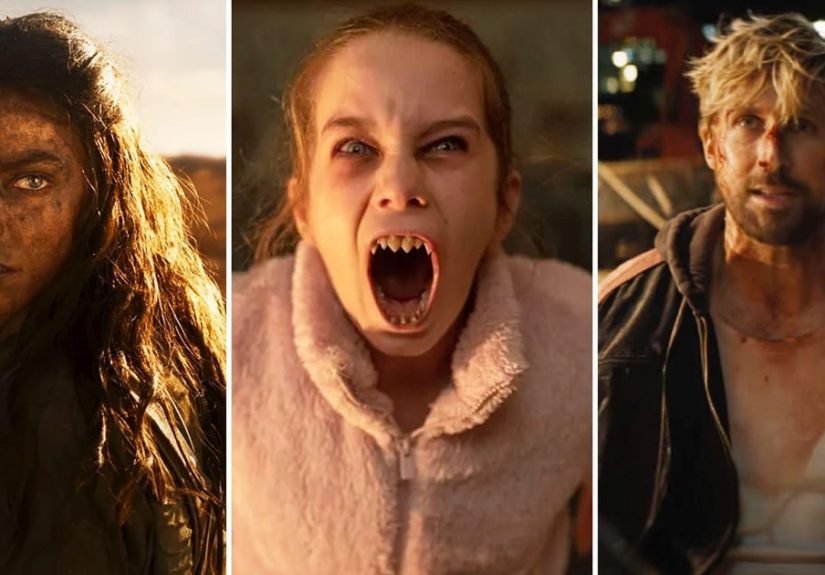
who saw it actually liked it. Ryan Gosling and Emily Blunt? Charming. Practical
stunts and old-school action? Fantastic. Critics were largely enthusiastic, praising it
as a fun, throwback, star-driven blockbuster.
Financially, though, the math didn’t work. The film reportedly cost in the
$125–150 million range and earned about $181 million worldwide. In a world where big-budget
movies often need to double (or more) their production budgets in theaters to turn a real
profit, that left the studio facing tens of millions in losses.
The Fall Guy became Exhibit A in the argument that simply putting charismatic stars
in a good movie isn’t enough anymore. The title was accurate in more ways than intended:
it “fell” so that Hollywood could have yet another conversation about budgets and
audience habits.
5. Furiosa: A Mad Max Saga – Critically Acclaimed, Commercially Stalled
On the creative side, Furiosa: A Mad Max Saga is a triumph. Critics adored it,
the action is bonkers in the best way, and Anya Taylor-Joy and Chris Hemsworth both
throw themselves into the wasteland chaos. It even scored spots on multiple “Top Films
of 2024” lists.
On the financial side? Ouch. With a reported production budget around $168 million,
Furiosa earned roughly $170–175 million worldwide. Once marketing and exhibitor
cuts are factored in, industry estimates suggest the film lost a hefty amount of money
for its backers, even if government incentives softened the blow a bit.
The big question hanging over this one: did audiences want a prequel focused on a
specific character rather than another high-octane adventure with a more familiar
lead? Or are people simply less willing to show up in theaters for even excellent
action films that aren’t tied to a still-hot franchise peak?
6. Joker: Folie à Deux – From Billion-Dollar Icon to Musical Money Pit
Few movies walked into 2024 with higher expectations than Joker: Folie à Deux.
The first Joker made over $1 billion and picked up an Oscar for Joaquin Phoenix,
so a sequel adding Lady Gaga and a musical twist sounded, at the very least, like a
license to print money.
Instead, the sequel became one of the year’s biggest financial disappointments. With a
reported budget around $190–200 million, the film earned a little over $200 million
worldwide, leading multiple analyses to estimate losses well into nine-figure territory.
Audience scores were lukewarm, and the tonal pivot to a grim musical didn’t land the
way the studio hoped.
Creatively ambitious? Absolutely. Financially, it’s a reminder that even previously
bulletproof IP can misfire if the follow-up feels too far removed from what made the
original work.
7. Borderlands – Big Loot, Tiny Box Office
A video game adaptation starring Cate Blanchett, Kevin Hart, Jack Black, and Jamie Lee
Curtis, based on a hugely popular franchise known for its irreverent humor and wild
world-building? Surely that’s at least a moderate hit, right?
Not in 2024. With a production budget widely reported north of $100 million, the
Borderlands movie managed only around $33 million worldwide in theaters.
That’s not just underperforming; that’s “the accountant is lying on the floor,
staring at the ceiling fan and rethinking everything.”
Critics and fans were split or disappointed, often pointing to tonal whiplash and
the challenge of translating the game’s specific, chaotic vibe to a two-hour movie.
The one silver lining: executives from the game’s parent company noted that despite
the film’s poor performance, it still gave the video game catalog a sales bump.
8. Megalopolis – A Passion Project with a Brutal Price Tag
Francis Ford Coppola pouring more than $100 million of his own money into a decades-long
passion project sounded like the kind of daring cinema story film buffs dream about.
Megalopolis promised audacious sci-fi spectacle, big ideas, and a cast stacked
with familiar faces.
Financially, it crashed hard. With a budget estimated around $120 million, the film
brought in only the mid-teens in worldwide grosses, making it one of the most savage
box office results of 2024. It polarized audiences and critics, inspiring passionate
defenses from some and total bafflement from others.
Megalopolis may yet find a cult following, especially as a graphic novel and
streaming exposure expand its reach, but from a theatrical perspective, it’s the
definition of “flop”—and a sobering reminder of how risky self-financed epics
are in the current market.
9. Horizon: An American Saga – Chapter 1 – The Western Event That Never Was
Kevin Costner returned to the Western genre he helped keep alive, directing, starring
in, and heavily financing Horizon: An American Saga – Chapter 1. The plan was
bold: launch a multi-part epic in theaters and kick off a new frontier franchise.
Unfortunately, the audience didn’t show up. Chapter 1’s domestic gross stalled under
$30 million, and the planned release for Chapter 2 was reshuffled after the disappointing
turnout. Despite Costner’s star power and the popularity of modern Western TV like
Yellowstone, moviegoers weren’t enthusiastic about committing to a multi-film,
slow-burn saga on the big screen.
The lesson here is harsh but clear: even a beloved star and a nostalgic genre can’t
guarantee success if the project feels more like “prestige homework” than a must-see
event.
Why So Many Big Movies Flopped in 2024
When you step back, these flops aren’t just isolated failures; they’re part of a bigger
pattern. A few major themes kept popping up in 2024:
- Audience fatigue with IP spin-offs: Not every side character or villain needs a solo film. Audiences seem less willing to follow studios into every corner of a cinematic universe, especially when the core story feels thin.
- Bloated budgets: When every blockbuster costs $150–200 million before marketing, the margin for error disappears. Movies that might have been profitable at $80 million become disasters at double that cost.
- Streaming and at-home viewing: Viewers have been trained to expect quick streaming releases. For anything that doesn’t scream “must-see in theaters,” many are content to wait a few weeks.
- Confused targeting: Some of these films tried to be everything at once: part comedy, part drama, part prestige, part franchise starter. When the pitch isn’t clear, people stay home.
The wild part? Many of these flops are not universally hated. Some are genuinely
good or at least interesting. Financial failure doesn’t always equal artistic failure—
but it does change what studios are willing to gamble on next.
Experiences and Takeaways: What 2024’s Flops Feel Like from the Audience Side
If you’re a movie fan, 2024 probably felt a bit like being stood up on a series of
very expensive first dates. You dress up (mentally), buy the tickets, maybe splurge on
popcorn, and walk into the theater convinced, “This one will be worth it.” Two hours
later, you’re scrolling your phone in the parking lot thinking, “So that’s where
$200 million went?”
These flops reveal some clear patterns in how we experience movies now:
Hype Is Louder Than Ever, But Trust Is Fragile
Marketing campaigns for movies like Argylle, Joker: Folie à Deux,
and Furiosa were everywhere: teasers, trailers, interviews, viral clips, and
carefully orchestrated “leaks.” As fans, we got conditioned to treat every trailer
like a major event. But when the final product doesn’t match the hype, people remember.
After a few high-profile disappointments, audiences become more cautious. That’s how you
end up with a movie like The Fall Guywhich is actually fun and well-crafted—
struggling to convince people to leave their couches. The trust gap between “this looks
cool” and “I’ll pay to see this in a theater” is getting bigger.
We’re Getting Pickier About What Feels “Theatrical”
Another big shift: most of us no longer treat all movies the same. There are “must-see
in IMAX” movies, “wait for streaming” movies, and “watch on your phone while folding
laundry” movies. The problem for 2024’s flops is that a lot of them landed in a weird
middle zone.
Take Horizon, for example. It’s grand, serious, and beautifully shot—but
also long, slowly paced, and clearly meant to be one chapter in a bigger story.
For many viewers, that’s exactly the kind of thing that feels more comfortable as
a streaming binge than a full-price theatrical outing.
Franchise Loyalty Isn’t Infinite
Studios spent the last decade training audiences to treat franchises like sports teams:
Marvel versus DC, Sony’s Spider-Verse, video game adaptations, and so on. But 2024 showed
that loyalty has limits. Madame Web, Kraven, and Borderlands
all relied on existing fanbases and brand recognition—and still crashed.
Fans are more willing to say, “I’ll skip this one and catch the highlights on YouTube.”
When every universe entry feels necessary, none of them really do. That’s especially
true if reviews are poor or word-of-mouth is lukewarm.
The Silver Lining: Flops Can Still Be Fun (Later)
Here’s the secretly great part about all this: it’s often easier to enjoy a flop
once the pressure is gone. On streaming, away from box office discourse and
think-pieces, some of these movies might become cult favorites, comfort rewatches,
or at least “weird curiosities you watch with friends and comment on the entire time.”
Watching Megalopolis at home might feel less like a $200 million disaster and
more like an ambitious, messy swing from a legendary director. The Fall Guy
may become the movie you throw on when you want fun, stunt-heavy comfort viewing.
Even Borderlands could end up as a “so chaotic it’s entertaining” late-night
streaming pick for fans of the games.
For audiences, the real “experience” of these flops is evolving. We don’t just encounter
them in theaters anymore; we see them in memes, streaming charts, TikToks, and
“actually it wasn’t that bad” video essays months later. The initial flop is just
the prologue. What happens after—how they’re rewatched, reevaluated, or roasted—
is increasingly where the interesting part of the story lives.
So yes, 2024 gave us a lot of expensive disappointments. But it also gave us future cult
classics, passionate debates, and a clearer view of what we truly want when we decide to
leave the house, buy the ticket, and hope—one more time—that this will be
the movie that delivers.
Conclusion: What 2024’s Flops Tell Us About the Future
The biggest movie flops of 2024 aren’t just punchlines; they’re signals. They tell us
that audiences are more selective, that nostalgia and IP have limits, and that budgets
can’t keep inflating forever without serious risk. They also show that creative swings
can still happen—they just won’t always be rewarded at the box office.
For movie fans, the best move is to stay curious and honest: support the movies that
genuinely interest you, not just the ones you feel “supposed” to see. For studios, the
lesson is even simpler (if harder to execute): you can’t force a cultural moment with
money alone. At some point, the story has to connect.