Table of Contents >> Show >> Hide
- Why the 1600s Make Such Great Period Films
- 1. The New World (2005)
- 2. The Witch (2015)
- 3. Girl with a Pearl Earring (2003)
- 4. Cromwell (1970)
- 5. Witchfinder General (1968)
- 6. Harakiri (1962)
- 7. Day of Wrath (1943)
- 8. The Three Musketeers (1973)
- 9. Mother Joan of the Angels (1961)
- 10. Rembrandt (1936)
- How to Watch 1600s Period Films Like a Pro
- Conclusion
If you love period films, the 1600s are basically the cinematic jackpot. You get witch trials, samurai codes, collapsing empires, new worlds, and more dramatic collars than any costume department should reasonably allow. This Listverse-style roundup walks through ten of the best period films set in the 1600s, from Puritan New England to Edo-era Japan and the candlelit studios of Dutch masters. These movies aren’t just eye candy; they dig into faith, power, colonialism, art, and the messy business of being human in a century that was constantly on firesometimes literally.
All of the titles below are set squarely in the 17th century (the 1600s), with the kind of historical details, costumes, and locations that make history nerds pause the movie to point at the screen and say, “Actually, that’s pretty accurate.” Whether you’re building a movie marathon, brushing up on the era for class, or just in the mood for some high-quality historical drama, these are the period films worth your time.
Why the 1600s Make Such Great Period Films
The 1600s were a turning point almost everywhere. In Europe, religious wars and witch hunts collided with the rise of modern nation-states. In North America, colonization was reshaping entire continents. In Japan, peace under the Tokugawa shogunate left thousands of warriors suddenly obsolete. That tensionbetween old orders and new worldsgives filmmakers a ton to work with.
For movie fans, that means sweeping landscapes, candlelit interiors, elaborate costumes, and stories about people trying (and often failing) to live up to impossible moral codes. The best period films set in the 1600s lean into that tension, mixing historically grounded detail with strong characters and bold visual styles.
1. The New World (2005)
Terrence Malick’s The New World opens in 1607, when English ships land in what will become Jamestown, Virginia. The film focuses on the relationship between Captain John Smith, Pocahontas, and later John Rolfe, exploring the clash between the Powhatan people and the English colonists. Rather than serve up a simple “civilization versus savagery” narrative, Malick stages the story as a lyrical, almost dreamlike encounter between two cultures, emphasizing landscape, light, and sound as much as plot.
If you like your historical dramas with lingering shots of wind through tall grass and voiceovers about the nature of love and freedom, this is your movie. But beneath the poetry is a sobering look at disease, hunger, cultural misunderstanding, and the very real consequences of colonization. As a 1600s period film, it’s a stunning entry point: the beginning of the century and the beginning of a very complicated “new world.”
2. The Witch (2015)
Set in 1630s New England, Robert Eggers’ The Witch brands itself “A New-England Folktale,” but it’s also a meticulous period piece about a Puritan family falling apart. Banished from their settlement over a religious dispute, a family tries to survive on the edge of a forbidding forest. When their infant vanishes and strange events pile up, fear and religious paranoia spiral into full-blown horror.
Eggers and his team worked with historians and museums to nail the 17th-century detailsfrom the thatched farmhouse to the archaic English dialogue. That authenticity makes the supernatural elements feel disturbingly plausible. As a period film set in the 1600s, The Witch shows how fragile life was on the frontier and how religious certainty could warp into something terrifying. Also, you will never look at a goat the same way again.
3. Girl with a Pearl Earring (2003)
Based on Tracy Chevalier’s novel, Girl with a Pearl Earring imagines the story behind Johannes Vermeer’s famous painting, created around 1665. The film follows Griet, a young maid in Vermeer’s Delft household, as she becomes both assistant and muse to the artist. The camera often frames scenes like Vermeer canvases, with soft natural light, rich textures, and a quiet sense of intimacy that makes the 17th-century Dutch setting feel lived-in rather than museum-like.
This is a smaller, quieter kind of period filmno battlefields, just kitchens, markets, and studios. But it’s a masterclass in how to use production design and cinematography to evoke a time and place. If you’re into art history, domestic drama, or just want a costume film that isn’t three hours of war councils, this belongs on your 1600s watchlist.
4. Cromwell (1970)
Cromwell drops you into the later stages of the English Civil War, when Parliament, led by Oliver Cromwell, confronts King Charles I over royal power and religious policy. The film follows Cromwell’s transformation from country squire planning to emigrate to the New World into the tough, uncompromising leader of the Parliamentarian army and eventually Lord Protector in the 1650s.
Don’t expect perfect political nuancethis is a big, old-school historical epic with stirring speeches, clashing cavalry, and very dramatic wigs. Still, it does a solid job of capturing how the 1600s were a time when arguments about scripture and taxation could snowball into full-scale civil war. If you want your 17th-century films with muskets, flags, and a side of constitutional crisis, Cromwell delivers.
5. Witchfinder General (1968)
One of the grimmest entries on this list, Witchfinder General (released in the U.S. as The Conqueror Worm) is set during the English Civil War and loosely based on the real witch-hunting exploits of Matthew Hopkins in the mid-1640s. Vincent Price plays Hopkins as a cold, opportunistic predator who travels through East Anglia torturing “confessions” out of villagers and cashing in on fear.
The period detail is relatively low-budget, but the mood is unforgettablebleak landscapes, brutal executions, and a sense that the breakdown of social order has opened the door to monsters in human form. It’s horror, but the scariest thing here isn’t any demon; it’s what people will do when ideology and profit line up a little too neatly.
6. Harakiri (1962)
Masaki Kobayashi’s Harakiri is set around 1619–1630, in the early Edo period under the Tokugawa shogunate. Peace has left many samurai masterless and impoverished. A rōnin named Hanshirō Tsugumo arrives at the manor of the Iyi clan, asking permission to commit ritual suicide in their courtyard. The clan, suspicious of “suicide bluffs” used to solicit alms, decides to call his requestand the truth of Hanshirō’s story unfolds in devastating flashbacks.
While technically a Japanese samurai film, Harakiri is very much a 1600s period piece: it explores what happens when rigid honor codes collide with economic reality. The courtyard setting, armor, and architecture all ground you firmly in the 17th century, but the themeshypocrisy, bureaucracy, and the cruelty of image-obsessed elitesfeel painfully modern.
7. Day of Wrath (1943)
Carl Theodor Dreyer’s Day of Wrath takes place in a Danish village in 1623, during a wave of witch trials. A young woman married to an older pastor falls in love with his son while an accused witch is hunted and executed. The film moves slowly, but its stark black-and-white visuals and long, quiet scenes create an oppressive atmosphere that makes you feel the weight of suspicion and fear.
As a period film, it’s less about big historical events and more about how 17th-century beliefs about sin and damnation seeped into everyday life. If you liked the mood of The Witch and want something that feels like its art-house ancestor, this is a must-watch.
8. The Three Musketeers (1973)
Based on Alexandre Dumas’ classic novel, the 1973 version of The Three Musketeers sticks closely to the book’s 1625 setting. Young d’Artagnan travels from Gascony to Paris to join the king’s Musketeers and quickly lands in a tangle of duels, court intrigue, and international plots involving Cardinal Richelieu, Queen Anne, and the Duke of Buckingham. Filmed on location in Spain with an eye for dusty streets, crowded inns, and lavish palaces, it’s a swashbuckler that actually feels like the 17th century instead of a theme park.
The tone is surprisingly comedicthis isn’t a solemn epicbut the fencing, costume design, and sense of political stakes make it a top-tier 1600s period film. If your ideal history lesson includes swordfights and one-liners, start here.
9. Mother Joan of the Angels (1961)
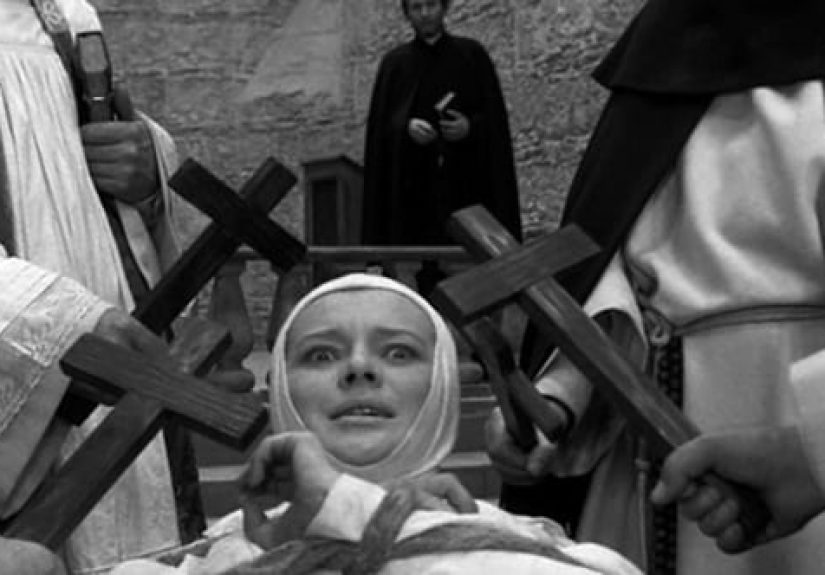
Mother Joan of the Angels is a Polish religious horror drama inspired by the infamous Loudun possessions in 1630s France. The film follows Father Suryn, a priest sent to a remote convent where the Mother Superior and several nuns are believed to be possessed by demons. Instead of focusing on sensational exorcism scenes, director Jerzy Kawalerowicz digs into guilt, desire, and the psychological toll of trying to be holy in a world that feels abandoned by God.
Shot in stark black and white, the film’s convent courtyards, cloisters, and nearby inn feel timeless but are firmly rooted in the early 17th century. It’s not a casual watch, but if you’re interested in how period films can explore spiritual and psychological conflict, this one belongs on the list.
10. Rembrandt (1936)
Alexander Korda’s Rembrandt is a biographical drama about the Dutch painter Rembrandt van Rijn, set mostly in the mid-1600s. The film picks up around 1642, after the success of “The Night Watch,” and follows Rembrandt through personal tragedy, financial ruin, and artistic reinvention. Charles Laughton’s performance gives the painter a mix of stubbornness, vulnerability, and wry humor that keeps the story from feeling like a museum lecture.
The sets and cinematography deliberately echo Rembrandt’s own shadowy, textured style, turning taverns, studios, and city streets into something that looks like you walked into one of his paintings. As a 17th-century period film, it’s less about politics and more about the struggle to keep creating art when the world would prefer you paint something more flatteringand profitable.
How to Watch 1600s Period Films Like a Pro
Watching a single 1600s period film is fun. Turning them into a themed experience is better. One easy way to do it is to build double features that contrast cultures or genres. For example, pair The New World with Cromwell: you get English soldiers on both sides of the Atlantic, one story about planting a colony, the other about tearing a monarchy apart. Or watch The Witch back-to-back with Day of Wrath to see how witchcraft panics played out differently in Puritan New England and Lutheran Denmark.
It also helps to pay attention to the small details that make these period films feel authentically 1600s. In Harakiri, the layout of the clan’s courtyard and the armor on display say as much about rigid hierarchy as any speech. In Girl with a Pearl Earring, look at how often characters open windows or shift shutters; that dance of light and shadow is straight out of Dutch Golden Age painting. In Rembrandt, the crowded Amsterdam streets and stiff, proud patrons hint at a merchant class that’s rich but deeply anxious about status.
If you’re watching with friends, lean into the “Listverse” vibe and rate each film on a few simple scales: costume accuracy, drama, historical heartbreak, and “how badly would I die if I lived there?” (Spoiler: extremely badly, in most cases.) It keeps the experience light even when the subject matter is heavybecause, let’s be honest, between witch trials, starvation, and civil wars, the 1600s were not exactly a chill century.
Finally, it’s worth remembering that even the most historically faithful period films are still interpretations. The New World idealizes some encounters; Witchfinder General exaggerates others. The point isn’t to treat them as documentaries, but to let them spark curiosity. If a movie grabs you, look up the real events or paintings afterward. You might find that the true history is even stranger than the film version. And that’s the best payoff of all: you get entertainment, plus a deeper sense of how people lived, loved, and argued their way through one of the most turbulent centuries in history.
Conclusion
The 1600s are a gift to filmmakers: a century of upheaval, belief, and reinvention that stretches from colonial America to the studios of Dutch painters and the courts of European and Japanese elites. The ten period films above don’t cover everything that happened in the 17th century, but together they offer a vivid cross-section of its politics, fears, and obsessions. Whether you’re drawn to samurai honor, Puritan dread, or candlelit art studios, there’s a story here that will stick with you long after the credits roll.