Table of Contents >> Show >> Hide
- Quick List: The Top 10
- 1) Cherubim (Ezekiel’s “Living Creatures”)
- 2) Seraphim (The “Fiery Ones”)
- 3) Leviathan (The Sea Monster of Chaos)
- 4) Behemoth (The Land Beast That Doesn’t Flinch)
- 5) Nephilim (The Giants With a Mystery Origin)
- 6) The Destroyer (Passover’s Doorway Threat)
- 7) The Four Horsemen (Apocalypse in Four Acts)
- 8) Abaddon/Apollyon (King of the Abyss-Locusts)
- 9) The Great Red Dragon (The Ancient Serpent)
- 10) The Beasts of Revelation (Sea Beast + Land Beast)
- FAQ: Are These “Real Creatures” or Symbolic Visions?
- of Experiences Related to Truly Horrifying Biblical Entities
- Conclusion: Why the Bible’s “Horror” Still Works
If your mental image of the Bible is mostly calm pastures, gentle parables, and the occasional well-behaved fish, allow me to lovingly (and slightly mischievously) inform you: Scripture also contains some nightmare fuel. Not “spooky campfire story” fuel. More like “why does that angel have how many wings and how many eyes?” fuel.
In this guide to the most horrifying biblical entities, we’ll stick to what the text actually describeswhile also admitting that many of these beings function as symbols, visions, and cosmic metaphors. (In other words: yes, it’s terrifying… and yes, it’s also the Bible doing theology with monster-grade imagery.)
Quick List: The Top 10
- Cherubim (Ezekiel’s “Living Creatures”)
- Seraphim (The “Fiery Ones”)
- Leviathan (The Sea Monster of Chaos)
- Behemoth (The Land Beast That Doesn’t Flinch)
- Nephilim (The Giants With a Mystery Origin)
- The Destroyer (Passover’s Doorway Threat)
- The Four Horsemen (Apocalypse in Four Acts)
- Abaddon/Apollyon (King of the Abyss-Locusts)
- The Great Red Dragon (The Ancient Serpent)
- The Beasts of Revelation (Sea Beast + Land Beast)
1) Cherubim (Ezekiel’s “Living Creatures”)
Cherubim are not the chubby, rosy-cheeked Valentine’s Day interns of popular art. In Ezekiel’s visions, the heavenly guardians show up as composite beings: multiple faces (human, lion, ox/bull, eagle), wings, and an overall “mobile throne-room security system” vibe. Then things get weirder: wheels beside them“a wheel intersecting a wheel”and the wheels (and bodies) are described as being full of eyes.
Why it’s horrifying: it’s the uncanny mix of animal power, human intelligence, and surveillance imagery. The eyes communicate awarenessnothing escapes. If your fear is “being seen,” Ezekiel hands you a creature that looks like it was designed by a committee of eagles, lions, and an all-seeing CCTV network.
2) Seraphim (The “Fiery Ones”)
Isaiah’s throne-room vision introduces seraphimsupernatural beings whose name is often connected to burning/fiery imagery. They have six wings: two covering their faces, two covering their feet, and two for flying. They proclaim God’s holiness and, in a moment that is both cleansing and mildly alarming, one carries a hot coal from the altar to touch Isaiah’s lips.
Why it’s horrifying: the scene is beautiful, but it’s not cozy. The “covering” posture hints at overwhelming holinesslike the brightness is too intense to handle. Also, if someone floats toward you holding live altar-coals, the phrase “this is fine” does not apply.
3) Leviathan (The Sea Monster of Chaos)
Leviathan is the Bible’s headline sea monsterappearing in poetic and prophetic passages as a creature associated with the untamable waters and the forces of chaos. Job 41 goes all-in with the description: armor-like scales, strength that makes the mighty nervous, and (depending on translation) imagery like smoke from nostrils and fire or sparks from the mouth. This isn’t “large fish.” This is “ancient nightmare wearing plated armor.”
Why it’s horrifying: Leviathan embodies the terror of the deeppower beyond human control. The point in Job is partly theological: if humans can’t subdue it, God’s sovereignty is on another level. Still, it’s hard to read “flames dart from its mouth” and not picture an aquatic dragon with a personal grudge against your boat.
4) Behemoth (The Land Beast That Doesn’t Flinch)
Behemoth shows up in Job 40 as a massive, grass-eating powerhouse. The text highlights sheer physical strengthbones like bronze tubes, limbs like iron bars, and a presence that reads like “first draft of a kaiju, but make it pastoral.” Some interpreters connect it to real animals (like the hippo), while later traditions give it more mythic weight.
Why it’s horrifying: Behemoth is less jump-scare and more unstoppable force. It’s the dread of something huge and calmso calm, in fact, that it doesn’t need to prove anything. It simply is. And you, dear reader, are not winning a wrestling match with it.
5) Nephilim (The Giants With a Mystery Origin)
Genesis 6 briefly mentions the Nephilim in a passage that has launched a thousand debates. The text links them with “sons of God” and “daughters of men” and describes “mighty men of old” and “men of renown.” Later, Numbers references giants in the land, reinforcing the sense that the Nephilim tradition became shorthand for terrifying size, power, or violent reputation.
Why it’s horrifying: the scariest part is the ambiguity. The Bible drops the detail like a narrative flashbang and moves on. Readers are left with an ominous silhouette: hybrid origin? legendary warriors? symbolic critique of corruption? The uncertainty keeps the fear alivelike hearing footsteps upstairs when you live alone.
6) The Destroyer (Passover’s Doorway Threat)
In the Passover story, a figure described as “the destroyer” is specifically barred from entering Israelite homes marked by blood. The drama is intimate and immediate: danger is moving through the land, and survival is tied to a boundarya doorwayand a sign.
Why it’s horrifying: unlike the monsters in cosmic visions, this terror is domestic. It’s the kind that turns a family home into a shelter. The Bible’s point is theological deliverance and judgment, but the imagery is still chilling: a night when something lethal passes by, and the line between safety and catastrophe is the frame of your front door.
7) The Four Horsemen (Apocalypse in Four Acts)
Revelation introduces four riders released as seals are openedan escalating sequence often associated with conquest, war, famine, and death. They aren’t “monsters” in the animal-toothed sense; they’re worse in a different way: they personify forces that collapse societies. One rides with a weapon, another with scales, and the last is explicitly named Deathwith Hades close behind.
Why it’s horrifying: they feel real. These riders are catastrophe given a facelike history’s worst headlines put on horseback. Even if you read them symbolically, the symbolism lands because it reflects what people fear most: violence, scarcity, and the fragility of normal life.
8) Abaddon/Apollyon (King of the Abyss-Locusts)
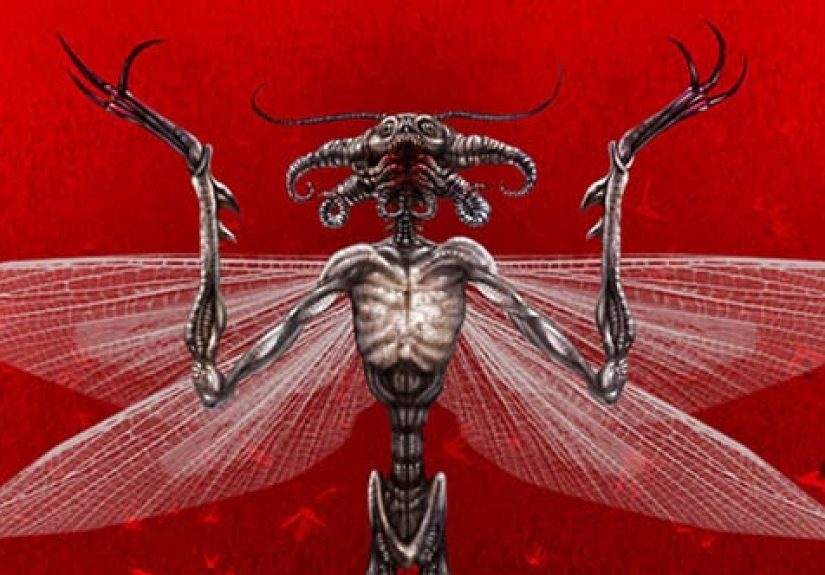
Revelation 9 describes a plague of locust-like beings from the abyss with a surreal, composite appearance: they resemble war-horses, wear something like crowns, have faces like humans, hair like women’s hair, teeth like lions, and tails like scorpions. Over them rules a kingnamed Abaddon in Hebrew and Apollyon in Greek, tied to the idea of destruction.
Why it’s horrifying: it’s body-horror plus war-horror, wrapped in apocalyptic symbolism. These aren’t normal locusts; they’re a vision of judgment that looks like nature got remixed into a weapon. And the detail that they torment rather than immediately kill? That’s not just scary; it’s psychologically brutal.
9) The Great Red Dragon (The Ancient Serpent)
Revelation’s great red dragon appears with multiple heads and hornsan apocalyptic “boss-level” adversary. The text links the dragon with “that ancient serpent” and frames it as the cosmic enemy behind conflict, deception, and persecution. It’s a vision of evil not merely as a personal temptation but as a dominating power that tries to devour hope before it can even grow up.
Why it’s horrifying: dragons are scary; symbolic dragons that represent a system of destructive spiritual power are scarier. It’s the difference between fearing a predator and fearing a predator that can recruit, deceive, and reorganize reality around itself.
10) The Beasts of Revelation (Sea Beast + Land Beast)
Revelation 13 introduces a beast rising from the sea with multiple heads and horns, crowned with blasphemous authority. Its features echo predator imageryleopard-like body, bear-like feet, lion-like mouthlike the animal kingdom’s most dangerous traits fused into one symbol. A second beast comes from the earth, performing signs and driving allegiance, functioning as propaganda with teeth.
Why it’s horrifying: these beasts represent more than brute force. They portray power that demands worshippolitical, spiritual, ideological and uses both terror and spectacle to secure loyalty. In modern terms: it’s the nightmare of domination plus misinformation, wearing a crown.
FAQ: Are These “Real Creatures” or Symbolic Visions?
Some are poetic, some are visionary, and some are narrative threats.
Biblical horror isn’t one genre. Job uses vivid poetry to stress God’s power over creation. Ezekiel and Revelation use symbolic visions where imagery communicates theology. Exodus uses narrative tension to describe judgment and deliverance. In every case, the “horror” serves meaning: it confronts human limits, exposes chaos, or warns against destructive allegiance.
of Experiences Related to Truly Horrifying Biblical Entities
For many readers, the first “experience” with horrifying biblical entities isn’t paranormalit’s emotional and imaginative. You open a Bible expecting moral lessons, and suddenly Ezekiel is describing living creatures with multiple faces and wheels full of eyes. The experience is a cognitive jolt: the text refuses to stay in the tidy category of “religious inspiration” and barges into “cosmic art-house horror.” People often report reading Ezekiel or Revelation the way they watch a complex film: rewinding mentally, rereading lines, and thinking, “Waitdid that just say eyes all around?”
Another common experience is the “late-night Bible study effect.” Read Job 41 at noon and you might nod thoughtfully at the poetry. Read it at 1:00 a.m., and “smoke pours from its nostrils” starts feeling less like a metaphor and more like a creature breathing behind your curtain. The Bible’s monster imagery has a way of changing temperature depending on when and how you read it. Darkness, fatigue, and silence can make ancient descriptions feel surprisingly presentespecially when the language stacks details like armor, fire, and unstoppable strength.
Visual art is another doorway into these experiences. Many people encounter the Four Horsemen not first in a Bible passage, but in a woodcut, painting, or modern poster: skeletal Death riding, War swinging a sword, famine imagery tied to scales. Seeing the image primes the mind, so that when you later read Revelation 6, the passage feels like it’s “already moving.” The experience becomes a feedback loop: the text shapes the art, the art shapes how you feel the text. Suddenly, the horsemen aren’t just symbols; they’re emotional shorthand for crisis.
Sermons and group discussions can also intensify the impact. A classroom or small group might explore how Leviathan represents chaos, how the dragon represents deception, or how the beasts represent coercive power. The experience here is less “boo!” and more “oh no.” People connect the imagery to real patternspropaganda, violence, exploitation, systems that demand loyalty. That’s when biblical horror becomes unsettling in a practical way: it stops being “mythic weirdness” and starts feeling like a mirror held up to history.
Finally, there’s the personal experience of vocabulary itself. Words like Abaddon, Apollyon, Nephilim, and Leviathan carry weight, partly because they sound ancient and severe. Readers often feel the chill of unfamiliar nameslike a warning label written in thunder. Even if you interpret these entities symbolically, the experience remains: the Bible uses extreme imagery to force attention. It’s Scripture’s way of saying, “Some realities are too big for gentle language,” and once you notice that, you don’t read these passages the same way again.