Table of Contents >> Show >> Hide
- What Are Septic Field Lines with Rock and Gravel?
- The Basic Parts of a Gravel Drainfield
- Main Types of Septic Field Lines with Rock and Gravel
- How Professionals Choose the Right Type
- Pros and Cons of Rock-and-Gravel Field Lines
- Common Mistakes Homeowners Make
- Signs Your Gravel Field Lines May Be in Trouble
- Experience-Based Lessons from Rock-and-Gravel Septic Field Lines
- Conclusion
- SEO Tags
If you have ever looked at a septic diagram and thought, “Ah yes, a mysterious underground spaghetti system,” you are not alone. Septic field lines can sound complicated, but the basic idea is surprisingly simple: wastewater leaves the septic tank, travels through a network of buried lines, moves through rock and gravel, and then gets its final cleaning in the soil. The trick is that not every property needs the same kind of field line layout.
That is where rock-and-gravel septic field lines come in. These are the classic, long-used drainfield designs found across the United States. They rely on perforated pipe, washed stone or gravel, and suitable soil conditions to spread effluent slowly and evenly. When they are designed well, installed correctly, and treated kindly by the homeowner, they can work for years without drama. When they are ignored, overloaded, or crushed by someone parking a truck on top of them, they can become a very expensive outdoor water feature nobody asked for.
In this guide, we will break down the main types of septic field lines with rock and gravel, how each one works, where each type fits best, and what homeowners should understand before buying, building, or repairing a system. If you want a practical, plain-English explanation without the engineering fog, pull up a chair. Preferably not on top of the drainfield.
What Are Septic Field Lines with Rock and Gravel?
A conventional septic drainfield usually includes a septic tank, a distribution method, and a soil absorption area. In a rock-and-gravel system, perforated pipe is laid inside trenches or beds filled with washed gravel or crushed stone. Effluent leaves the septic tank, flows into those lines, seeps out through the holes in the pipe, trickles through the gravel, and then enters the surrounding soil for final treatment.
The gravel is not there just to look busy. It creates open space around the pipe so wastewater can spread out instead of blasting one narrow path into the soil. A fabric or similar cover is often placed over the top of the gravel to help keep soil from migrating down and clogging that space. Below and around the trench, the soil does the heavy lifting by filtering contaminants and supporting the microbes that finish the treatment process.
That last point matters. Homeowners often think the septic tank does all the cleaning. It does not. The tank settles solids and sends out partially clarified effluent. The real polishing step happens in the drainfield soil. That is why the type, depth, and condition of the soil are just as important as the pipe and gravel.
The Basic Parts of a Gravel Drainfield
Perforated Pipe
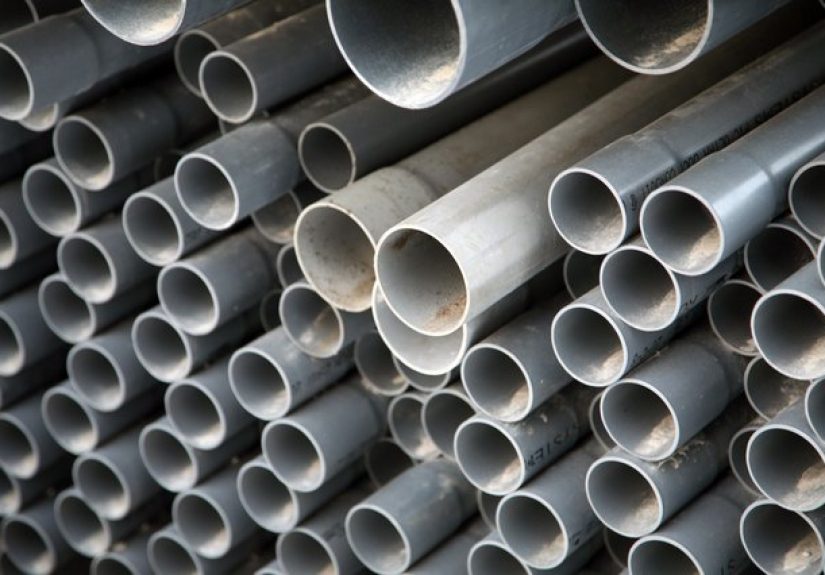
This is the line that carries effluent into the field. It has holes that allow the water to seep out gradually rather than dump in one spot. The pipe is usually installed level in standard trench systems so flow is distributed as evenly as possible.
Washed Rock or Gravel
The gravel surrounds the pipe and creates a void space that helps hold and spread effluent. Think of it as a staging area between the pipe and the soil. No glitter, no glamour, but a very important supporting role.
Geotextile or Cover Material
A fabric or similar material is placed over the gravel before backfilling. Its job is to keep fine soil particles from filtering down into the gravel and reducing the open space.
Soil Absorption Area
The underlying and surrounding soil is the final treatment zone. Good septic design depends on matching the drainfield to the site’s soil texture, depth, slope, and seasonal wetness.
Main Types of Septic Field Lines with Rock and Gravel
1. Standard Parallel Gravel Trenches
This is the classic septic field line layout most people picture when they hear “leach field” or “drainfield.” A set of narrow, parallel trenches is dug in suitable soil. Each trench contains gravel and a perforated line, and the trenches are usually fed from a distribution box that attempts to split the flow evenly among them.
These systems work best on relatively level sites with enough space for multiple laterals. They are common because they are familiar, proven, and straightforward when site conditions cooperate. If your lot has decent native soil, enough separation from groundwater or restrictive layers, and room for trenches, standard gravel lines are often the default answer.
Best fit: level or gently sloping lots, conventional homes, and sites with suitable natural soil.
Big advantage: simple design and long track record.
Watch out for: uneven distribution if the box settles or the trenches are not installed precisely.
2. Serial Distribution Gravel Trenches
When a site slopes, equal flow to all trenches becomes harder to achieve with plain gravity alone. That is where serial distribution comes in. In this layout, the first trench receives effluent first. Once that trench fills to a set level, overflow moves through a relief line or crossover to the next trench downhill, and then to the next one after that.
It is a practical solution for sloping ground because it works with gravity instead of pretending your hillside is flat. The trenches are typically installed in steps down the slope, with each trench serving as a stage in the sequence. This arrangement can reduce the risk of overloading the lowest trench too early, which is what happens when gravity gets a little too enthusiastic.
Best fit: sloped sites where gravity flow is possible but equal elevation trenches are not practical.
Big advantage: uses the natural slope efficiently.
Watch out for: poor installation can cause the upper trench to hog all the flow or crossovers to malfunction.
3. Contour Gravel Trenches
Contour trenches are laid along the natural contour of the land rather than running straight up and down a hill. On hillside properties, this approach helps keep wastewater from racing downhill through the trench area. Instead, effluent is spread more evenly across the slope.
Contour layouts are especially useful where the site topography is the main design challenge. They are not a completely different technology so much as a smart way of placing rock-and-gravel field lines so the soil can do its job evenly. If the property has rolling terrain, contour placement can be the difference between a system that behaves and a system that acts like it is auditioning for a mudslide documentary.
Best fit: hilly lots and properties with noticeable grade changes.
Big advantage: better distribution across a slope.
Watch out for: contour systems still need correct spacing, trench depth, and soil evaluation.
4. Gravel Bed Systems
Not every rock-and-gravel system uses long, narrow trenches. Some sites use a bed system, where the absorption area is wider than a typical trench layout. Instead of a series of narrow cuts, the field is designed more like a broader excavation with multiple lines or a wider arrangement for dispersal.
Bed systems are sometimes considered where lot shape, available space, or site layout make standard trench arrangements awkward. They can be helpful on certain constrained sites, but they are still highly dependent on local rules and soil conditions. Because beds spread wastewater across a broader excavation, their performance depends heavily on good design and proper loading rates.
Best fit: sites where layout constraints make trench geometry difficult.
Big advantage: can adapt to some unusual lot configurations.
Watch out for: beds are not a shortcut around poor soil or poor siting.
5. Pressure-Dosed Gravel Trenches
Some gravel trench systems are not pure gravity systems at all. They use a pump or dosing device to deliver effluent under pressure or in measured doses. This category includes pressure distribution and low-pressure pipe systems that still use gravel-filled trenches as the absorption area.
Why go to the extra trouble? Because pressure dosing can spread wastewater more evenly, especially on difficult sites, longer fields, or places where the drainfield sits uphill from the tank. Instead of relying on gravity and hope, the system sends doses through smaller lines or pressurized laterals so the full field gets used more uniformly.
These systems are more mechanical than standard gravity trenches, which means more components and usually more maintenance. But they can solve real site problems and improve distribution on properties where gravity layouts are not ideal.
Best fit: challenging slopes, uphill fields, long laterals, and sites needing more controlled dosing.
Big advantage: more even dispersal of effluent.
Watch out for: pumps, controls, and alarms add cost and maintenance needs.
How Professionals Choose the Right Type
Choosing among these types of septic field lines with rock and gravel is not just a matter of personal taste. Nobody picks a serial distribution system because it matches the shutters. The decision usually comes down to a few practical factors:
Soil Conditions
Soil texture, permeability, and available unsaturated depth matter more than almost anything else. Good soil treatment is the whole game.
Slope
Flat sites tend to favor standard parallel trenches. Sloped sites may lean toward serial or contour layouts. More difficult terrain may call for pressure dosing.
Available Space
Long, narrow lots, odd-shaped parcels, and limited buildable areas can influence whether trenches or beds make more sense.
Groundwater and Restrictive Layers
Seasonal high water tables, shallow bedrock, or compacted subsoil can limit what kind of gravel line system will work.
Local Code Requirements
Septic rules vary by state, county, and health district. Even when two systems look similar on paper, local codes may allow one and reject the other.
Pros and Cons of Rock-and-Gravel Field Lines
Pros
Rock-and-gravel systems have decades of use behind them. Materials are familiar, installers know them well, and the design is easy to understand. They provide good void space for wastewater dispersal and remain a standard benchmark for conventional onsite wastewater treatment.
Cons
They are not magic. Gravel trenches still depend on suitable soil and careful installation. They can be damaged by compaction, clogged by solids if the tank is neglected, invaded by roots, or overloaded by excess water from leaks and poor household habits. They also need adequate site space, which some smaller lots simply do not have.
Common Mistakes Homeowners Make
The most common septic mistake is assuming the drainfield is just empty yard space. It is not. It is a working part of the treatment system. Parking on it, building over it, or sending roof runoff onto it is a great way to shorten its life.
Other common mistakes include flushing wipes, grease, and household chemicals; overusing the garbage disposal; doing all the laundry in one heroic weekend marathon; and planting thirsty trees too close to the lines. Deep roots and compacted soil are not friends of a gravel field line system.
Signs Your Gravel Field Lines May Be in Trouble
Keep an eye out for wet or spongy ground above the field, sewage odors outside, unusually lush strips of grass, slow drains inside the house, or plumbing backups. These signs do not always mean total failure, but they do mean the system deserves professional attention. Septic issues are a little like smoke alarms: ignoring them does not usually make the situation more charming.
Experience-Based Lessons from Rock-and-Gravel Septic Field Lines
In real-world use, the biggest lesson homeowners learn is that septic field lines reward boring behavior. That may not sound exciting, but it is true. People who spread out water use, keep vehicles off the field, and pump the tank when needed usually get a longer, less dramatic service life from conventional gravel lines.
Another common experience is that lot shape changes everything. On paper, a standard parallel trench system may seem simple. On an actual property with a slope, tree line, driveway, well setback, and one stubborn patch of bad soil, the design conversation changes fast. This is why two neighboring houses can both have septic systems but completely different field line layouts. The yard decides more than the owner does.
Homeowners also notice that rock-and-gravel systems tend to be easier to explain than to visualize. Many people do not know where their field lines are until something goes wrong. Then suddenly everyone becomes very interested in locating the distribution box, checking old permit drawings, and wondering why the greenest grass in the yard is growing in one suspicious stripe. The practical takeaway is simple: know your layout before you need it.
There is also a recurring pattern with water use. Families often assume that if the tank is underground, the drainfield can absorb endless water. It cannot. A week of extra houseguests, a leaking toilet, and several back-to-back laundry loads can push a field harder than expected. Gravel trenches work best when wastewater arrives in a manageable rhythm, not in a chaotic flood. In everyday life, moderation beats brute force.
Tree roots are another classic lesson. Homeowners love shade. Septic systems love personal space. When those two preferences collide, the roots often win the first round. A nice-looking maple planted “not too close” can become tomorrow’s pipe invasion story. Many septic veterans will tell you the most expensive landscaping mistake is the one that looked harmless at planting time.
People with sloped lots often gain a special appreciation for properly designed serial or contour trenches. These systems may look less intuitive on a sketch, but in practice they make sense because they work with the land rather than against it. Owners on hilly sites frequently discover that slope is not the enemy; bad distribution is. A smart layout can make a difficult lot function well for years.
Another real-world observation is that maintenance habits matter more than septic additives and miracle cures. Homeowners are often tempted by products that promise to “boost” the system. In practice, the most reliable routine is still old-fashioned: protect the field, limit harmful waste, fix leaks quickly, and have the septic tank inspected and pumped on an appropriate schedule. It is not flashy, but neither is paying for premature drainfield replacement.
Finally, experience shows that septic systems age best when owners respect them as part of the house infrastructure, not an invisible afterthought. A roof gets maintenance. An HVAC unit gets maintenance. A drainfield deserves the same attitude. If you treat your rock-and-gravel septic field lines like hidden but valuable equipment, they are much more likely to return the favor by staying hidden and valuable.
Conclusion
When people talk about septic systems, they often focus on the tank because it is the part everyone recognizes. But the drainfield is where the long-term success of the system is really won or lost. Among the main types of septic field lines with rock and gravel, standard parallel trenches remain the familiar favorite, serial distribution lines solve many slope-related challenges, contour trenches help hillside properties behave, bed systems adapt to certain layout constraints, and pressure-dosed gravel trenches offer more controlled distribution when gravity alone is not enough.
The best system is not the fanciest one. It is the one that matches the site, follows local rules, and gets treated with a little respect after installation. In other words, the right septic field line is less about choosing a “best” type and more about choosing the right fit for the soil beneath your feet. The ground always gets the final vote.