Table of Contents >> Show >> Hide
- So, Can You Plant Faux Plants in Your Yard?
- Why Homeowners Are Tempted by Faux Plants Outdoors
- Why Gardeners Usually Say “Use Sparingly”
- When Faux Plants Can Actually Work Outdoors
- How to Use Faux Plants Outdoors Without Making Your Yard Look Strange
- Better Alternatives to “Planting” Faux Plants in the Yard
- What Gardeners Really Mean When They Say No
- The Verdict
- Real-World Experiences and Common Scenarios
It is the kind of question that sounds like a joke until you notice how many people are quietly wondering the same thing: can you actually plant faux plants in your yard and get away with it? Not just set a fake fern on the porch for a party, but really place artificial greenery outside and call it landscaping. Gardeners, unsurprisingly, have opinions. Some are polite. Some are dramatic. A few react as if you suggested carpeting the lawn.
Still, the question is fair. Outdoor artificial plants are easier to find than ever, they look better than the stiff plastic impostors of decades past, and plenty of homeowners want low-maintenance curb appeal. If you have a difficult corner, a rental property, a heavily shaded entry, or a spot where every real plant seems to file for resignation, faux plants can sound oddly practical.
The short answer is this: yes, you can put faux plants in your yard, but most gardeners would not recommend literally planting them in open soil as a true landscaping solution. They work best in very specific situations, and they fail badly when used like a substitute for living plants across a whole yard. In other words, a fake topiary in a pot by the front door? Potentially fine. A parade of artificial shrubs pretending to be a foundation bed? That is a tougher sell.
So, Can You Plant Faux Plants in Your Yard?
Technically, yes. No law of nature is going to rise from the soil and stop you. You can secure faux plants in containers, anchor them in decorative gravel, or even place them in garden beds. But whether you should depends on what you want from your yard.
Gardeners tend to agree on one major point: artificial plants are not a replacement for real landscaping if your goal is long-term beauty, healthy soil, biodiversity, or a natural look. Faux plants can provide a visual effect, but they do not grow, cool the area, support pollinators, improve the soil, or adapt to changing seasons. They are décor, not ecology.
That distinction matters. A yard is not just an outdoor room with decorative accessories. It is an environment. Real plants do work. Faux plants just stand there and hope nobody gets too close.
Why Homeowners Are Tempted by Faux Plants Outdoors
The appeal is easy to understand. Many people are not trying to trick the gardening gods. They are trying to solve a problem.
1. They want a low-maintenance yard
Watering, pruning, fertilizing, pest control, replacing dead plants, and dealing with weather damage can make landscaping feel like a second job. Faux plants seem like the dream answer: set them down, fluff them up, and go live your life.
2. Some spaces are brutal for live plants
Deep shade, reflected heat near pavement, dry strips by foundations, windy entryways, and pet-heavy areas can all be rough on living plants. When people say, “Nothing grows there,” they are often not exaggerating. Artificial greenery can feel like a shortcut to a finished look in tough spots.
3. They want instant curb appeal
Unlike real plants, faux plants arrive mature. No waiting for a shrub to fill in, no crossing your fingers through summer, and no awkward stage where your “vision” looks like three twigs and a prayer. For staging a home, styling a patio, or dressing up an event, that instant fullness is attractive.
4. They are tired of replacing expensive plants
If deer, drought, heat, poor drainage, or neglect keep wiping out landscaping investments, artificial plants can seem cheaper over time. Whether that holds up depends on quality, placement, and how often the fake plants need replacing due to fading or cracking.
Why Gardeners Usually Say “Use Sparingly”
Here is where the practical concerns start to pile up. Faux plants may look convincing online or from the store shelf, but a yard is a harsh place to keep up appearances.
Sun and weather are not kind
Even good-quality outdoor artificial plants can fade in strong sun. UV exposure can bleach color, make leaves brittle, and turn realistic textures into something that looks like a holiday decoration that missed its pickup date. Rain, dust, wind, and heat also age synthetic materials quickly, especially cheaper ones.
They do not support wildlife or soil health
A real plant does far more than fill space. It shades the ground, slows runoff, supports insects and birds, and changes with the seasons. A faux plant offers visual bulk but no ecological benefit. Gardeners who care about pollinators, native planting, and healthy yard ecosystems see this as a major downside.
Maintenance is lower, not zero
This is one of the biggest surprises for homeowners. Fake plants still need upkeep. They collect dust, pollen, spiderwebs, leaves, and mildew. Some need occasional rinsing. Others need reshaping after storms. If a faux shrub gets crooked, dirty, or faded, it can make the whole yard look neglected faster than a slightly thirsty real plant would.
They can look off next to real landscaping
Mixing artificial and living plants is harder than it sounds. Real plants move, grow unevenly, and change color over time. Faux plants stay frozen in one perfect pose, which can make them stand out in a suspicious way. The contrast is often what gives them away.
Plastic in the landscape raises environmental concerns
Many gardeners dislike introducing more synthetic materials into the yard, especially when those materials may degrade over time. Faded plastic leaves and broken stems are not exactly romantic additions to the landscape. If sustainability matters to you, faux plants are usually not the first recommendation.
When Faux Plants Can Actually Work Outdoors
Now for the part where the gardeners loosen their grip on the trowel. Artificial plants are not always a terrible idea. In fact, there are a few situations where they can make decent sense.
Front porch containers
This is probably the safest use. Faux greenery in a sheltered pot near the front door can add structure and color where you want a polished look without constant maintenance. It is especially useful in covered entryways that are gloomy, windy, or hard to water consistently.
Seasonal decorating
For parties, holidays, open houses, or short-term styling, faux plants can be practical. They create a lush look without requiring planting time or recovery time afterward. Think of them as set design, not horticulture.
Rental homes and temporary spaces
If you are dressing up an outdoor area but do not want to invest in permanent landscaping, artificial plants in containers can do the job. You can move them with you, swap them out, and avoid sinking money into a yard you do not own.
Problem spots where realism is not the main goal
A dark corner of a balcony, a rooftop lounge, or a decorative nook by a mailbox may benefit from faux greenery when the goal is simply softness and shape. In these cases, the plant is functioning like outdoor décor rather than pretending to be part of a living garden system.
Commercial or high-traffic styling
Restaurants, event venues, model homes, and some retail spaces use outdoor faux plants because consistency matters more than botany. What works for a styled business setting, though, does not always translate beautifully to a front yard.
How to Use Faux Plants Outdoors Without Making Your Yard Look Strange
If you are going to use artificial plants outside, gardeners suggest being strategic rather than enthusiastic. That means restraint, good placement, and realistic expectations.
Choose outdoor-rated, UV-resistant materials
Indoor faux plants placed outside usually fade and deteriorate quickly. Look for products labeled for outdoor use and designed to tolerate sunlight and moisture. Better materials cost more, but bargain-bin plastic often announces itself from the curb.
Use containers instead of open ground when possible
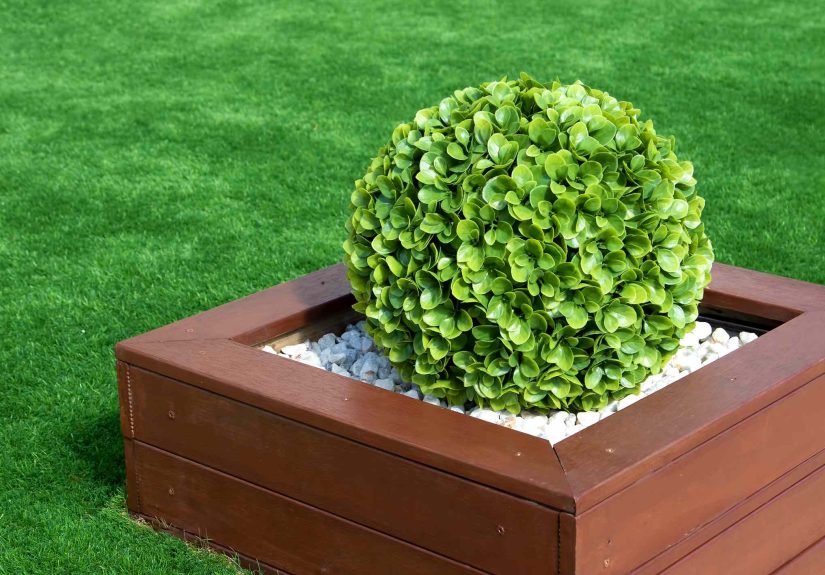
Pots, urns, window boxes, and planters are where faux plants perform best. They look intentional there. Sticking artificial stems straight into a garden bed can create a “yard sale meets botanical confusion” effect that is hard to ignore.
Keep them near architecture, not deep in the landscape
Artificial greenery tends to look more believable near doors, patios, fences, pergolas, and seating areas than in the middle of a lawn or mixed border. The closer the use is to décor, the more natural it feels.
Limit the quantity
One or two well-placed faux pieces can read as practical styling. Twenty of them can make the yard feel like it has trust issues. Small doses are usually more convincing and much easier to maintain.
Clean them regularly
Dusty leaves, cobwebs, and faded stems ruin the effect fast. Rinse, wipe, reshape, and replace damaged pieces before they become the outdoor equivalent of tired store mannequins.
Do not mix low-quality faux plants with high-quality real landscaping
If the rest of your yard is thoughtfully designed, poor artificial plants will stand out immediately. In a polished landscape, fake greenery needs to be especially convincing or it becomes the visual punchline.
Better Alternatives to “Planting” Faux Plants in the Yard
Gardeners almost always have a backup plan, and many of those alternatives are more satisfying than synthetic shrubs pretending to photosynthesize.
Try tougher real plants first
Before giving up on a difficult spot, it helps to match the plant to the conditions more carefully. Drought-tolerant perennials, native grasses, evergreen groundcovers, shade-loving foliage plants, and container-friendly shrubs can often solve the problem better than a faux substitute.
Use mulch, gravel, or hardscape deliberately
Not every blank area needs a plant. A clean gravel bed, attractive boulders, edging, a bench, or a simple container grouping can make a space feel finished without forcing greenery where it does not belong.
Use preserved natural materials
In some decorative settings, preserved moss, dried branches, or seasonal natural accents can give texture without the obviously artificial look of plastic foliage. These are not permanent landscape solutions, but they can feel more organic.
Rethink irrigation and soil conditions
Sometimes the issue is not the plant choice but the site setup. Fixing drainage, adding compost, using drip irrigation, or adjusting light conditions can turn a “nothing grows here” zone into a workable planting area.
What Gardeners Really Mean When They Say No
Most gardeners are not objecting because they are trying to gatekeep yard beauty. They are reacting to a mismatch between function and appearance. A living landscape is dynamic. It changes with weather, light, season, and care. Fake plants freeze that whole process into one static moment. That can be useful for décor, but it is rarely the most rewarding answer for a yard.
So when a gardener says, “Please do not plant faux boxwoods in your flower bed,” what they often mean is this: if you want your yard to feel good, work well, and age gracefully, use materials that belong there. A good landscape does not just look green on day one. It gets better with time.
The Verdict
Yes, you can place faux plants in your yard, especially in outdoor containers, covered porches, temporary displays, and decorative corners. But if you are thinking of using artificial plants as a true replacement for living landscape beds, most gardeners would advise against it. They fade, collect grime, offer no environmental benefits, and can look increasingly unnatural as the real world keeps doing what the real world does.
The smartest compromise is to treat faux plants as accents, not landscaping. Use them where they solve a real styling problem, keep them limited, choose high-quality outdoor materials, and avoid pretending they are doing the job of actual plants. Your yard will look more intentional, and the gardeners in your life may only sigh a little.
Real-World Experiences and Common Scenarios
In practice, homeowner experiences with faux plants outdoors usually fall into a few familiar patterns. One of the most successful is the front-porch container story. Someone has a shaded entry that gets little direct sun and a lot of neglect. Real ferns dry out, seasonal flowers stretch toward the light like they are asking for help, and anything expensive dies right before guests arrive. In that case, a pair of high-quality faux topiaries or mixed greenery containers can work surprisingly well. Because the plants are close to the house and read as decorative elements, people often accept them at face value. The result is tidy, symmetrical, and low-stress.
Then there is the opposite experience: the homeowner who decides to line a garden bed with artificial shrubs because mowing around real plants is annoying. At first the setup looks neat from a distance. A few weeks later, one shrub tilts after a storm, another starts fading on the sunny side, and leaves from nearby trees get trapped in the plastic foliage like they signed a lease. Suddenly the bed looks less “maintenance-free landscape” and more “movie prop after a windy shoot.” This is where many gardeners say faux plants fail hardest: broad, exposed use in real planting areas.
Another common situation involves staging and events. For an open house, graduation party, or outdoor wedding, faux plants often earn their keep. They fill empty corners, soften hard edges, and hold their shape through the whole event. No last-minute drooping, no panic watering, no petals falling off before the photos. In these short-term uses, artificial greenery behaves exactly as people hope it will. The problem starts when temporary styling gets promoted to permanent landscape strategy.
Some homeowners also use faux plants after repeated frustration with deer, drought, or intense heat near driveways and sidewalks. That frustration is real. If every living plant cooks, gets chewed, or collapses, artificial greenery can feel like sweet revenge. But even then, the better long-term success stories usually come from combining a few faux accents with smarter plant choices, gravel mulch, raised containers, or hardscape features. The people happiest with the result are rarely the ones trying to make an entire yard fake. They are the ones solving one stubborn visual problem at a time.
That may be the clearest lesson from real outdoor use: faux plants perform best when they are asked to decorate, not impersonate nature. When used with restraint, they can help an entryway look finished or carry a seasonal display. When used as a full landscaping shortcut, they usually become the very thing homeowners hoped to avoid: something that looks like more trouble than it was worth.