Table of Contents >> Show >> Hide
- What Is the Fun Scale?
- Type 1 Fun: Fun Now, Fun Later
- Type 2 Fun: Miserable Now, Magical Later
- Type 3 Fun: Not Fun Now, Not Fun Later
- Type 1 vs. Type 2 vs. Type 3 Fun: A Simple Comparison
- Why Do People Seek Type 2 Fun?
- Can Fun Be Good for Mental Health?
- How to Add More Type 1 Fun to Your Life
- How to Choose Healthy Type 2 Fun
- How to Avoid Type 3 Fun
- The Fun Scale at Work, School, and Home
- Personal Experiences: What the Fun Scale Looks Like in Real Life
- Conclusion: Fun Is More Complicated Than It Looks
- SEO Tags
Fun sounds simple until you are halfway up a muddy trail, your socks have become soup, and your friend says, “This will be funny later.” Congratulations: you have just met the fun scale.
The “types of fun” framework is a popular way to describe experiences that feel delightful, difficult, ridiculous, meaningful, or absolutely not worth repeating. It is especially common in outdoor recreation circleshikers, climbers, runners, cyclists, paddlers, and other people who voluntarily wake up before sunrise to become damp in expensive jackets. But the idea applies far beyond mountains and backpacks. It can explain a family road trip, a school project, a chaotic birthday party, a first attempt at pottery, or the time you agreed to help a friend move and discovered they owned 47 boxes labeled “misc.”
At its core, the fun scale asks one useful question: Is this enjoyable now, later, both, or never again? That question turns fun from a vague feeling into a surprisingly practical tool for choosing better adventures, managing expectations, and understanding why some unpleasant experiences become favorite stories.
What Is the Fun Scale?
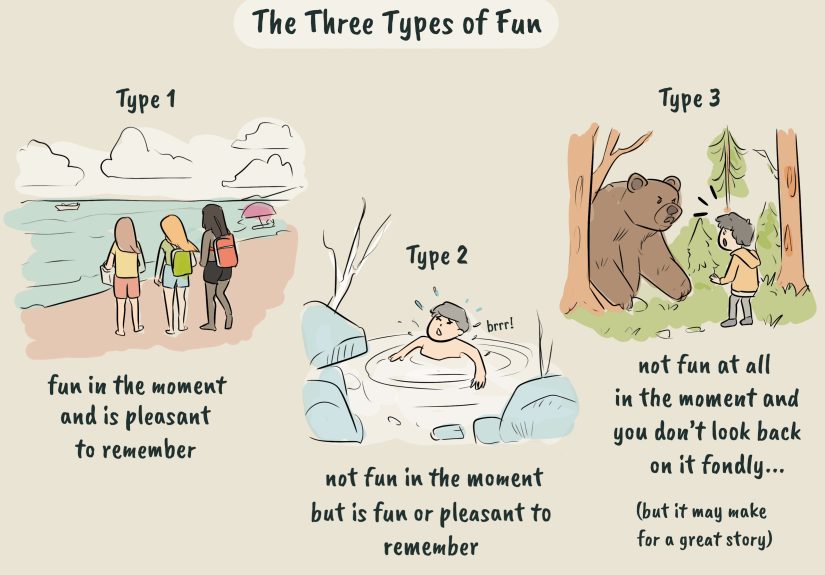
The fun scale is a casual classification system that divides fun into three main categories: Type 1 fun, Type 2 fun, and Type 3 fun. The idea is often traced through climbing, hiking, and adventure communities, where people needed a humorous way to explain why an outing that felt miserable in the moment somehow became legendary over dinner.
The basic version looks like this:
- Type 1 fun: Fun while it is happening and fun to remember later.
- Type 2 fun: Not especially fun while it is happening, but rewarding or funny afterward.
- Type 3 fun: Not fun during the experience and not fun in hindsight.
That simple structure is why the fun scale has spread beyond outdoor sports. It gives language to something most people already know: not all enjoyable memories come from easy moments. Some come from effort, discomfort, surprise, teamwork, problem-solving, and the kind of inconvenience that makes everyone dramatically reconsider their life choices.
Type 1 Fun: Fun Now, Fun Later
Type 1 fun is the obvious kind. It feels good while it is happening. You do not need a motivational speech, a recovery snack, or six months of emotional distance to appreciate it. It is enjoyable in real time.
Examples of Type 1 Fun
Type 1 fun can include a beach day with perfect weather, a casual bike ride, a movie night, dancing with friends, playing a board game, making pancakes on a slow morning, or taking a scenic walk that does not involve surprise blisters. The key feature is immediate enjoyment. You are smiling during the activity, not just after you survive it.
This type of fun matters because it gives life lightness. It helps people relax, connect, laugh, and recharge. Research and wellbeing experts often describe play as valuable for adults, not just children, because playful activities can support mood, creativity, learning, and social connection. In normal-person language: your brain appreciates a recess, even if your calendar keeps pretending you are a robot.
Why Type 1 Fun Is Underrated
Modern culture can make simple fun seem suspiciously unproductive. If an activity does not build a résumé, burn calories, generate content, or improve your morning routine, people sometimes treat it as optional fluff. That is a mistake. Type 1 fun is not laziness wearing sunglasses. It is a basic ingredient in a balanced life.
The trick is to make Type 1 fun intentional. Instead of waiting for free time to magically appear like a unicorn with a scheduling app, plan small enjoyable activities. Call a friend. Cook something playful. Go outside. Try a hobby without turning it into a side hustle. Let fun be fun.
Type 2 Fun: Miserable Now, Magical Later
Type 2 fun is the strange celebrity of the fun scale. It is not enjoyable while it is happening, but it becomes meaningful, funny, or satisfying afterward. During the activity, you may think, “Why did I agree to this?” Later, you tell the story with dramatic hand gestures and a suspicious amount of pride.
Examples of Type 2 Fun
Classic Type 2 fun includes hiking through rain, running a difficult race, camping in unexpected cold, learning a hard skill, finishing a demanding creative project, or traveling somewhere when every bus, train, and suitcase seems personally offended by your existence.
Type 2 fun often includes discomfort but not true danger. That distinction matters. Struggling up a steep hill and laughing about it later can be Type 2 fun. Ignoring serious safety risks is not “character building”; it is a bad decision wearing hiking boots.
Why Type 2 Fun Feels So Rewarding
Type 2 fun works because humans do not remember experiences like security cameras. We shape memories around meaning, challenge, growth, and story. An experience that felt difficult in the moment may become satisfying because it proves something: you adapted, finished, helped someone, learned a skill, or stayed surprisingly calm while your tent tried to become a kite.
Type 2 fun can also strengthen relationships. Shared challenges create inside jokes and trust. A group that gets lost in a corn maze for two hours may not enjoy every minute, but later they have a shared legend. “Remember the corn maze?” becomes friendship glue.
Type 3 Fun: Not Fun Now, Not Fun Later
Type 3 fun is the category people talk about with a thousand-yard stare. It is not enjoyable in the moment, and it does not become charming afterward. Instead of “I am glad we did that,” the memory says, “Let us never schedule that again.”
Examples of Type 3 Fun
Type 3 fun might include a trip that becomes unsafe, a challenge that overwhelms everyone, an event ruined by poor planning, or an activity that crosses from uncomfortable into genuinely harmful. In outdoor settings, this could mean extreme weather without preparation, running out of essential supplies, or pushing past physical limits in a way that creates real risk.
In everyday life, Type 3 fun might be a party where nobody feels included, a group project where one person does all the work, or a “spontaneous adventure” that is mostly traffic, stress, and regret with a gas station sandwich.
Why Type 3 Fun Still Teaches Something
Type 3 fun is not useless. It teaches boundaries. It helps people learn what they do not want to repeat, what they should prepare for, and when “no thanks” is a complete sentence. Sometimes the wisest outcome of Type 3 fun is a better checklist, a clearer limit, or the decision to choose the shorter trail next time.
Type 1 vs. Type 2 vs. Type 3 Fun: A Simple Comparison
| Type of Fun | How It Feels During | How It Feels Later | Common Examples |
|---|---|---|---|
| Type 1 Fun | Enjoyable | Enjoyable | Picnics, games, easy hikes, concerts, relaxing hobbies |
| Type 2 Fun | Difficult or uncomfortable | Rewarding, funny, meaningful | Hard hikes, challenging races, demanding creative projects |
| Type 3 Fun | Unpleasant or unsafe | Still unpleasant | Poorly planned trips, risky outings, overwhelming events |
Why Do People Seek Type 2 Fun?
At first glance, Type 2 fun makes no sense. Why choose something difficult when couches exist? But people are not built only for comfort. We also seek mastery, novelty, connection, purpose, and the satisfaction of doing hard things.
Type 2 fun can create a sense of accomplishment. Finishing a tough hike, learning to surf, completing a long bike ride, or performing on stage after weeks of practice may include stress and discomfort. But afterward, the memory shines because effort gave it weight.
There is also a storytelling advantage. Type 1 fun is pleasant, but Type 2 fun often has a plot. “We had a nice picnic” is lovely. “We tried to have a picnic, then the wind stole the napkins, a squirrel judged us, and we still had the best afternoon” is a story.
Can Fun Be Good for Mental Health?
Fun is not a cure-all, and it should never be used to dismiss real stress, anxiety, burnout, or health concerns. Still, playful activities can support wellbeing in practical ways. They may help people relax, build social bonds, shift attention away from constant pressure, and return to problems with a fresher mind.
Hobbies and playful routines are especially useful because they give people something enjoyable to return to. A hobby does not have to be impressive. Gardening, drawing, dancing badly in the kitchen, joining a casual sports league, playing chess, singing in the car, or learning a recipe all count. The point is not perfection. The point is participation.
How to Add More Type 1 Fun to Your Life
To add more Type 1 fun, start small. Choose activities that are easy to begin and enjoyable without a complicated setup. You might schedule a weekly game night, take a walk after dinner, visit a local park, try a simple craft, or meet a friend for coffee with no agenda except conversation.
Make the activity frictionless. If your fun plan requires 19 steps, three apps, and emotional preparation, your brain may file it under “tax paperwork.” Keep it simple. Fun thrives when the entry point is low.
How to Choose Healthy Type 2 Fun
Healthy Type 2 fun should challenge you without putting you in serious danger. A good test is whether the activity has discomfort, learning, and effortbut also preparation, support, and a reasonable way to stop.
Before choosing a Type 2 adventure, ask:
- Do I have the skills, time, and supplies needed?
- Is the challenge uncomfortable or genuinely unsafe?
- Will I feel proud afterward, or just drained and resentful?
- Am I doing this because I want growth, or because I feel pressured?
- Can I adjust the plan if conditions change?
Type 2 fun should expand your life, not punish you for having ambition. The best version leaves you tired, proud, and already turning the experience into a story. The worst version leaves you googling “how to resign from my own hobbies.”
How to Avoid Type 3 Fun
To avoid Type 3 fun, respect limits. Plan properly. Listen when someone says they are not comfortable. Do not confuse intensity with value. Bigger, harder, colder, faster, and more chaotic does not automatically mean better.
In group settings, communication is everything. People have different thresholds. One person’s “refreshing challenge” is another person’s “why is nature attacking me?” Talk about expectations before the activity. Check in during it. Be willing to change the plan.
The Fun Scale at Work, School, and Home
The fun scale is not only for outdoor adventures. It can help explain everyday life.
At Work
A brainstorming session with snacks and good energy may be Type 1 fun. A difficult product launch may be Type 2 fun if the team feels proud afterward. A chaotic project with unclear goals and no support can quickly become Type 3 fun.
At School
A group presentation might feel like Type 2 fun: stressful before and during, satisfying once it is done. A creative class project can become Type 1 fun if people feel engaged. But a poorly organized assignment with unfair workloads? That is Type 3 fun wearing a backpack.
At Home
Cooking dinner together may be Type 1 fun. Hosting a holiday gathering may be Type 2 fun if the preparation is intense but the memory is warm. Cleaning the garage in August without a plan, snacks, or mercy? Strong Type 3 potential.
Personal Experiences: What the Fun Scale Looks Like in Real Life
The fun scale becomes easier to understand when you look at ordinary experiences through its lens. Imagine a Saturday morning walk with a friend. The weather is clear, the conversation is easy, and you stop for iced coffee afterward. That is Type 1 fun at its finest. Nothing heroic happens. Nobody needs a documentary crew. It is simply enjoyable, and that is enough.
Now imagine a different Saturday. You and your friend decide to try a longer trail because the online reviews say it is “moderate,” which is apparently internet language for “bring snacks and question everything.” The first mile is beautiful. The second mile climbs. The third mile introduces mud. By the fourth mile, your legs have entered negotiations with management. During the hike, nobody is exactly cheerful. But later, after dry socks and lunch, the whole thing becomes hilarious. The hill gets steeper every time the story is told. The mud becomes “basically a swamp.” The snack break becomes “a survival meal.” That is Type 2 fun: uncomfortable in the moment, golden in memory.
Then there is the Type 3 version. Suppose the same hike starts too late, the group brings too little water, the weather turns bad, and people keep pushing even though everyone is exhausted. That is no longer a funny challenge. It is poor planning. Later, the lesson is not “what an adventure.” The lesson is “never do that again without checking conditions, packing properly, and respecting the group’s limits.”
Creative hobbies follow the same pattern. Painting with friends can be Type 1 fun when nobody cares whether the final canvas looks like a sunset or a confused lasagna. Learning a musical instrument may be Type 2 fun because practice can feel awkward before progress appears. But forcing yourself into a hobby you hate just because it looks impressive online can become Type 3 fun. Fun should not need a public relations team to convince you it was worth it.
Travel also loves the fun scale. A smooth weekend trip with good food and easy wandering is Type 1. A delayed train, a language mix-up, and a surprise rainstorm may become Type 2 if everyone stays safe and eventually laughs about it. But a trip with constant conflict, unsafe choices, or total exhaustion may land in Type 3. The difference often comes down to preparation, attitude, flexibility, and the people involved.
One of the best uses of the fun scale is planning better memories. Some weeks call for Type 1 fun because you are tired and need ease. Other seasons call for Type 2 fun because you want growth, challenge, and a story worth retelling. Type 3 fun should be rare, and when it happens, it should become information. It tells you what to change next time.
The most balanced life includes a mix. Too much Type 1 fun can become routine if you never try anything new. Too much Type 2 fun can become burnout if every weekend is an endurance test disguised as personal development. Too much Type 3 fun means something needs adjusting quickly. The sweet spot is knowing what kind of fun you are choosingand why.
Conclusion: Fun Is More Complicated Than It Looks
The types of fun explain why some experiences feel wonderful immediately, some become wonderful only after they are over, and some deserve to remain firmly in the “never again” folder. Type 1 fun gives us joy in the moment. Type 2 fun gives us challenge, growth, and unforgettable stories. Type 3 fun gives us lessons, boundaries, and sometimes a strong appreciation for staying home.
The fun scale is useful because it helps people choose experiences more intentionally. Instead of asking only, “Will this be fun?” ask, “What kind of fun will this be?” That small shift can improve your plans, your relationships, your adventures, and your ability to laugh when things get weirdbut not unsafe.
In the end, fun is not always effortless. Sometimes it is easy, sometimes it is muddy, and sometimes it arrives late wearing the ridiculous hat of hindsight. The goal is not to avoid every challenge. The goal is to know when discomfort is part of a meaningful story and when it is simply a sign to turn around, drink water, and choose a better plan next time.
Editorial note: This article was written for general informational and lifestyle purposes. It synthesizes widely discussed ideas from outdoor recreation, play research, wellbeing writing, and practical examples, without adding source-link clutter inside the publishable article body.