Table of Contents >> Show >> Hide
- Why This Princess Diana Art Series Resonates So Deeply
- The Real Diana Behind the Fantasy
- If Princess Diana Were Still Alive, How Might Royal Life Be Different?
- Why the “What If She Was Alive?” Question Never Really Goes Away
- More Than Nostalgia: What These 24 Images Actually Say
- The Enduring Legacy of Princess Diana in Popular Culture
- Extended Reflection: The Experience of Looking at a World Where Diana Lived
- Conclusion
- SEO Metadata
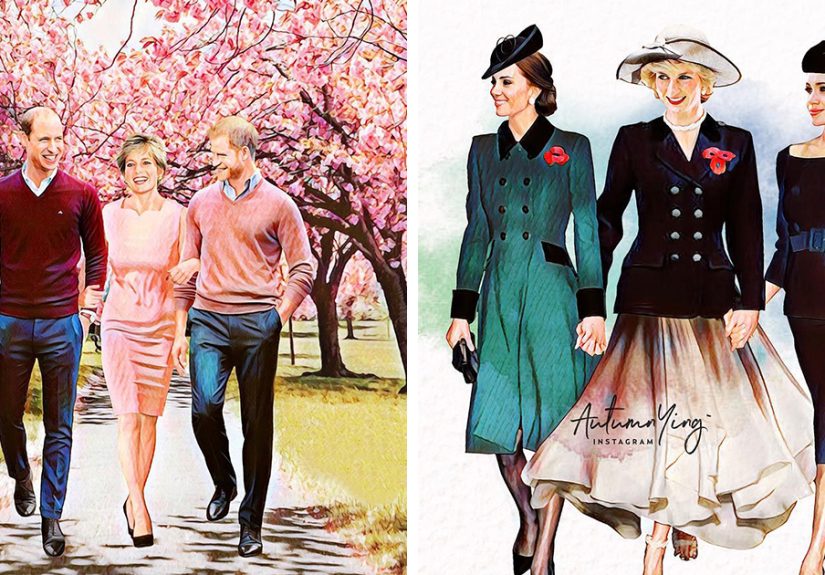
There are royal “what ifs,” and then there are royal what ifs. The biggest one of all still wears a sapphire ring in the public imagination, still moves through old photographs like a burst of camera flash and kindness, and still makes people wonder how very different the modern monarchy might feel if Princess Diana had lived. That lingering question sits at the heart of a moving illustrated series by artist Autumn Ying, whose portraits imagine Diana alive, smiling, and present for the family milestones she never got to see.
The concept is simple, emotional, and almost unfairly powerful: what would the royal family look like if Diana were still here to hug her sons as adults, meet Catherine and Meghan, and spoil her grandchildren with the energy of a glamorous grandmother who probably would have arrived with excellent gifts and even better one-liners? In these imagined family scenes, Diana is not portrayed as a distant symbol or frozen icon. She is warm, involved, and woven into ordinary moments that feel extraordinary precisely because they never happened.
That is why these 24 images hit people right in the feelings. They are not just pretty portraits. They are a visual form of alternate history. They invite viewers to picture a royal family less haunted, more emotionally fluent, and maybe a little less stiff in the shoulders. And because Diana was never merely a princess in a tiara, but a global celebrity, humanitarian, and cultural force, the idea of her surviving into the present day opens up endless conversations about family, fame, grief, charity, and the future of the crown.
Why This Princess Diana Art Series Resonates So Deeply
Autumn Ying’s work taps into something the internet understands instinctively: people do not only mourn what happened. They also mourn what could have happened. In these illustrations, Diana appears as she was remembered in the 1990s, standing beside her now-grown children and the next generation of royals. The images reframe public grief into something softer and more intimate. Instead of focusing on tragedy, they focus on presence.
That emotional pivot matters. Princess Diana remains one of the most recognizable figures in modern royal history because her public image was built on accessibility. She could wear couture one day and make a hospital room feel less frightening the next. She seemed, to many people, less like an untouchable royal and more like a human being trying to survive enormous pressure in a gold-plated fishbowl. So when an artist imagines Diana still alive, viewers do not see fantasy in the abstract. They see a version of life that feels emotionally plausible.
And let’s be honest: the royal family has never exactly lacked drama. That is another reason these portraits catch fire online. They offer a softer rewrite of a famously difficult family story. In Ying’s imagined world, Diana is there for weddings, birthdays, photo ops, and generations of family growth. She becomes a stabilizing emotional center. For an audience that has watched years of headlines about conflict, distance, and royal tension, that idea is pure catnip with a side of tears.
The Real Diana Behind the Fantasy
To understand why this artistic thought experiment works so well, you have to remember who Diana really was. Long before today’s social-media-savvy celebrities turned compassion into public branding, Diana had already changed expectations for what public empathy could look like. She used her visibility in ways that felt startlingly human. She shook hands with people living with HIV at a time when many were still irrationally terrified of casual contact. She visited landmine survivors and helped draw global attention to a crisis many preferred to discuss only in policy language. She connected glamour to service in a way that made both feel bigger.
That combination of vulnerability and star power is a major reason the “what if Diana were alive” question remains so potent. She was not simply beloved because she was photogenic, though she was. She was beloved because she made the monarchy look more emotionally available, more contemporary, and more responsive to real suffering. She did not erase the institution’s formality, but she softened its edges. In hindsight, she looked a lot like the prototype for the kind of public-facing royal many people now expect.
In other words, the fantasy works because Diana already felt modern before “modern royal” became a cliché. She understood cameras, but she also understood what people wanted from public figures: not perfection, but connection. She could communicate with a glance, a touch, or a slightly tilted smile that seemed to say, “Yes, this is all absurd, but let’s carry on.”
If Princess Diana Were Still Alive, How Might Royal Life Be Different?
1. William and Harry’s public lives might feel less fractured
Any serious look at this question begins with Diana as a mother. Much of the emotional power of Ying’s illustrations comes from imagining her not as a headline, but as a parent who lived long enough to remain active in her sons’ adult lives. Would she have been able to prevent every family rupture? Probably not. Families are still families, even when palaces and tabloids are involved. But it is hard not to think her emotional intelligence and directness might have changed the tone of many later chapters.
Diana was known for trying to give William and Harry experiences outside royal insulation. She reportedly wanted them to understand ordinary life, social inequality, and the reality of people struggling beyond palace gates. If she had been around to guide them into adulthood, it is possible that both princes would have had an even stronger shared emotional anchor. At minimum, the private family dynamic might have included one more trusted voice capable of cutting through the ceremony and saying, in effect, “Everyone calm down and have some tea.”
2. She would almost certainly have been a magnetic grandmother
This is where the illustrated series gets especially effective. The public never got to see Diana with George, Charlotte, Louis, Archie, or Lilibet, and that absence creates a giant emotional blank space. Ying fills it with affectionate domesticity: group portraits, holiday warmth, relaxed smiles, and the kind of family closeness people wish had been possible. Diana’s public warmth suggests she would have embraced grandmotherhood with enthusiasm. One suspects she would have been glamorous, mischievous, and extremely difficult to outshine in Christmas photos.
3. The monarchy’s image might have modernized faster
Diana’s legacy did not disappear with her death; it pressured the institution to adapt. But if she had remained alive, that modernization might have happened more openly and with more confidence. Diana had a rare ability to make royal life look less ceremonial and more emotionally legible. She understood the power of visibility, symbolism, and public touchpoints long before image strategy became a full-time palace industry.
Would the monarchy still have faced criticism? Absolutely. But Diana’s continued presence could have softened public cynicism by giving the family a figure who felt both iconic and emotionally accessible. She might have functioned as a bridge between royal tradition and celebrity-era expectations.
4. Fashion diplomacy would have had a very fabulous extra chapter
Diana’s style legacy is still being quoted, referenced, auctioned, revived, and mood-boarded within an inch of its life. If she had lived into the age of Instagram, fashion week, and global image circulation at light speed, she would almost certainly have remained a cultural powerhouse. But the point is not just clothes. Diana used fashion as communication. She understood that what she wore could signal warmth, strength, rebellion, respect, or approachability. In a world where Catherine and Meghan each developed their own public style languages, Diana’s continued presence would have added another fascinating layer to royal visual storytelling.
Why the “What If She Was Alive?” Question Never Really Goes Away
The question lasts because Diana’s story feels unfinished. Not in the tabloid sense, but in the human sense. She died at 36, which means the public memory of her is permanently divided between who she was and who she was becoming. That second version is what artists, writers, and viewers keep returning to. They are not only remembering the princess Diana was. They are imagining the woman she might have become in her forties, fifties, and sixties.
Would she have become even more outspoken? More private? More globally focused? More selective about causes? Would she have built an independent humanitarian platform outside palace structures? The honest answer is that nobody knows. But the guesswork persists because Diana’s public trajectory suggested reinvention, resilience, and unfinished momentum. She was not a static figure. She was evolving.
That is exactly what makes speculative art about Princess Diana so compelling. It restores movement to someone public memory often traps in a single tragic frame. Instead of asking viewers to revisit the worst moment of her story, it asks them to imagine all the life that might have followed. That is a much more generous exercise.
More Than Nostalgia: What These 24 Images Actually Say
At first glance, the series looks like royal nostalgia with a polished digital finish. Look closer, and it becomes a cultural mirror. These illustrations say as much about the audience as they do about Diana. They reveal a longing for tenderness in public life. They reflect a belief that institutions feel more bearable when human warmth enters the frame. They also suggest that people still view Diana as a symbol of emotional authenticity inside a system often criticized for emotional restraint.
That is why the portraits feel bigger than fan art. They engage with memory, grief, celebrity, and the mythology of the modern royal family. They allow people to imagine not merely that Diana survived, but that her presence could have changed the emotional weather around everyone else. In that sense, the series is not only asking, “What if she was alive?” It is quietly asking, “What kind of family might have grown around her if she had been?”
It is a heartbreaking question, yes. But it is also a strangely hopeful one. These images do not deny loss. They just refuse to let loss have the final word.
The Enduring Legacy of Princess Diana in Popular Culture
Even decades later, Princess Diana remains one of the few public figures whose image can move seamlessly between history, activism, fashion, and internet-era fandom. She is studied, revisited, dramatized, memorialized, and endlessly reinterpreted. There are very few people for whom a new artistic series can still spark a global wave of conversation around grief, motherhood, fame, and monarchy all at once. Diana does that almost automatically.
Part of that endurance comes from the unusual scale of her public identity. She was a royal, but she was also something more unruly than that: a celebrity with moral symbolism attached. She was glamorous enough for magazine covers, vulnerable enough for emotional projection, and compassionate enough to be remembered as more than a style icon. That combination keeps her culturally alive.
So when an artist imagines Princess Diana still with the royal family, the result does not feel random or opportunistic. It feels inevitable. Sooner or later, someone was always going to try painting the life the world never got to see.
Extended Reflection: The Experience of Looking at a World Where Diana Lived
Scrolling through a series like this is a surprisingly layered experience. At first, there is simple curiosity. You want to see how the artist handles the faces, the clothing, the visual chemistry of people who belonged to different eras of the same family story. Then the emotional logic kicks in. One portrait looks sweet. Another feels uncanny. Then suddenly one image lands just right, and you are not just observing digital art anymore. You are standing in the middle of a cultural ache that never fully healed.
That reaction says something important about how people engage with Princess Diana. For many viewers, she is not remembered in a coldly historical way. She is remembered relationally. People think about her as a mother to William and Harry, as a woman under pressure, as a humanitarian who used symbolism effectively, and as a public figure who seemed to understand loneliness in a very visible way. Because of that, imagining her alive does not feel like rewriting a remote chapter of history. It feels like revisiting a family story that was interrupted too early.
There is also a deeply modern aspect to the experience. The internet loves alternate realities, reimagined timelines, and emotionally charged visual speculation. We are used to seeing artists ask what would happen if fictional couples stayed together, if canceled shows had continued, or if historical figures had lived longer. But Princess Diana occupies a different category. She is not fictional, and the grief around her is not abstract. That makes the experience heavier. The viewer knows this is a fantasy, but the emotional response still arrives with real force.
Another interesting part of the experience is how quickly it turns into self-reflection. People start with Diana, but they often end up thinking about their own families. What milestones did someone miss? What would it feel like to see one more wedding, one more birthday, one more holiday photo with a person who should still be there? That is why the series resonates beyond royal watchers. It is about absence made visible. Diana simply provides the most famous possible frame.
And yet the images are not bleak. That is what makes them effective. They offer comfort without pretending reality was different. They let viewers sit for a moment inside a version of events where affection had more time. In a media landscape that often monetizes scandal, outrage, and rivalry, there is something unexpectedly powerful about artwork that pauses the chaos and imagines simple togetherness.
Maybe that is the real reason people keep sharing, commenting on, and returning to projects like this. They are not just interested in Princess Diana as a historical figure. They are interested in the emotional possibility she still represents: empathy inside power, warmth inside formality, and humanity inside institutions that often seem built to suppress it. Those are not small themes. They are the kinds of themes that make a set of 24 pictures feel bigger than a gallery post and more lasting than a fleeting internet trend.
In the end, the experience of looking at these portraits is a little like opening a window into a room history closed too soon. You know the room is imagined. You know the conversation inside never happened. But for a moment, it feels close enough to hear the laughter.
Conclusion
Autumn Ying’s imagined portraits of Princess Diana with today’s royal family work because they blend tenderness with cultural memory. They do not try to replace history. They illuminate the emotional gap history left behind. By picturing Diana alive for her sons’ adulthood, her daughters-in-law, and her grandchildren, the series transforms a familiar public tragedy into a meditation on connection, legacy, and all the life that never got to unfold.
Princess Diana remains endlessly fascinating because she still symbolizes something many public institutions struggle to project: genuine human warmth. That is why the question “What if she was alive?” still carries such force. It is not only about Diana. It is about the version of the royal family, and maybe the version of public life, that people still wish had been possible.