Table of Contents >> Show >> Hide
- 1) Turkey Had a Huge Advantage: It Was Basically “Made in America”
- 2) The “First Thanksgiving” Didn’t Crown Turkey… But the Myth Did
- 3) Meet the Powerhouse Who Helped Turkey Win: Sarah Josepha Hale
- 4) When Thanksgiving Went National, Turkey Came Along for the Ride
- 5) Pop Culture Sealed the Deal (and Probably Overcooked It a Little)
- 6) The Turkey Got a PR Team: Industry Traditions and the White House
- 7) Symbolism: What Turkey Says (Without Saying a Word)
- 8) Could Thanksgiving Exist Without Turkey?
- Turkey Tales: of Thanksgiving Experiences (Because We’ve All Been There)
- Conclusion: The Bird That Won Thanksgiving
Every November, an entire nation agrees on two things: stretchy pants are formalwear, and a turkey should be
involved somehow. But why turkey? Why not a majestic roast beef? Why not a celebratory lasagna the size
of a spare tire? Why do we gather around one big bird like it’s the guest of honor and the main course at the
same time?
The short version: the turkey didn’t become Thanksgiving’s mascot overnight. It earned the job through a
mix of practicality, storytelling, politics, publishing power, and a little bit of America’s talent for turning
“we did this once” into “we do this forever.” Let’s dig into the surprisingly spicy history of how the turkey
became the symbol of Thanksgivingand why it’s still holding the crown (and the gravy boat).
1) Turkey Had a Huge Advantage: It Was Basically “Made in America”
First, a simple truth: wild turkeys are native to North America. Long before turkey became a holiday headline,
it was already herestrutting through forests like it owned the place (which, honestly, it kind of did).
When European settlers were figuring out what to eat, turkey was one of the large, available game birds on the menu.
A bird built for feeding a crowd
Thanksgiving is a “bring the family, the neighbors, and that one cousin who eats like a growing bear” kind of
holiday. Turkey is perfectly suited for that. A single bird can feed a table full of people, and it scales up
beautifully: the bigger the gathering, the bigger the turkey. It’s the original one-pan group project.
Farm economics: don’t eat your egg-layers
Historically, chickens were valuable because they produced eggs, and dairy animals were valuable because they
produced milk. Eating them was possible, but it wasn’t always the smartest choice if you depended on their daily output.
Turkeys, on the other hand, were a practical “special occasion” meat: large, flavorful, and less likely to disrupt
your everyday food supply.
Plentiful enough to become tradition
For a food to become a national tradition, it has to be more than deliciousit has to be accessible. Over time,
turkey fit that bill in many regions: it was widely raised, it could be prepared in different ways, and it wasn’t
locked to one specific class of people. In a country that loves a big, shared ritual, turkey was an easy “yes.”
2) The “First Thanksgiving” Didn’t Crown Turkey… But the Myth Did
If you grew up imagining the 1621 harvest feast at Plymouth as a turkey-centered banquetcomplete with butter,
mashed potatoes, and a perfectly browned birdhistory has a gentle correction for you: the evidence is not that tidy.
What the early accounts actually suggest
The surviving descriptions of the 1621 gathering mention a harvest celebration and “fowl,” and they note that the
Wampanoag contributed venison. “Fowl” could include ducks, geese, and other birds. Could turkey have been there?
Possibly. But there’s no slam-dunk receipt that says, “Turkey was the main character.”
So how did turkey become the star anyway?
Because Americans are phenomenal at building national stories. Over the 1800s, as Thanksgiving evolved from regional
observances into a shared holiday, people wanted a signature menusomething that felt specifically American, big enough
to symbolize abundance, and dramatic enough to earn a centerpiece spot. Turkey checked every box.
Once the idea of turkey-at-Thanksgiving landed in the public imagination, it became self-reinforcing. Families served it,
writers described it, illustrations featured it, and soon the question wasn’t “Why turkey?” but “How many pounds is your turkey?”
3) Meet the Powerhouse Who Helped Turkey Win: Sarah Josepha Hale
If Thanksgiving had an original influencer (long before anyone tried to “unbox” a cranberry sauce can), it was
Sarah Josepha Halewriter, editor, and relentless champion of a national Thanksgiving holiday. She didn’t just promote
Thanksgiving; she helped standardize what Thanksgiving looked like on the table.
A novel, a magazine, and a decades-long mission
In the 1820s, Hale described an idealized New England Thanksgiving meal in fiction, featuring a roasted turkey in a position
of honor. Later, as editor of an influential women’s magazine, she had a megaphone into American homes. She wasn’t simply
describing dinnershe was shaping expectations.
Turkey + stuffing becomes the “default setting”
Hale’s vision helped lock in the familiar pairing of turkey and stuffing (plus the parade of supporting characters: gravy,
pies, cranberries). The genius wasn’t just choosing turkeyit was presenting a full holiday scene that felt warm, abundant,
and repeatable. Families could copy it. Communities could adopt it. A nation could recognize itself in it.
Then Hale did the most unstoppable thing in American history: she wrote letters. A lot of letters. She urged political leaders
to establish a single, national day of Thanksgivingfixed, official, and shared across states.
4) When Thanksgiving Went National, Turkey Came Along for the Ride
Thanksgiving existed in various forms long before it became a federal holiday. Different states celebrated on different days,
and some didn’t celebrate much at all. What turned it into a unified American tradition was national recognitionand timing.
Lincoln’s 1863 proclamation
In the midst of the Civil War, President Abraham Lincoln proclaimed a national Thanksgiving observance. The holiday was framed
as a moment for gratitude and reflection during a brutal period. And because Hale’s Thanksgiving vision was already circulating,
her “ideal meal” traveled with the holiday’s growing popularity.
The date debate and the 1941 fix
Even after Thanksgiving was widely celebrated, the exact date wasn’t always consistent nationwide. Eventually, federal action
fixed Thanksgiving on the fourth Thursday of Novemberhelping cement the holiday in the national calendar and, by extension,
reinforcing the turkey tradition as a reliable annual ritual.
5) Pop Culture Sealed the Deal (and Probably Overcooked It a Little)
Traditions don’t survive on practicality alone; they survive on imagery. America didn’t just eat turkeyit started seeing turkey
everywhere. The bird became shorthand for the whole holiday.
Thanksgiving as a picture you can taste
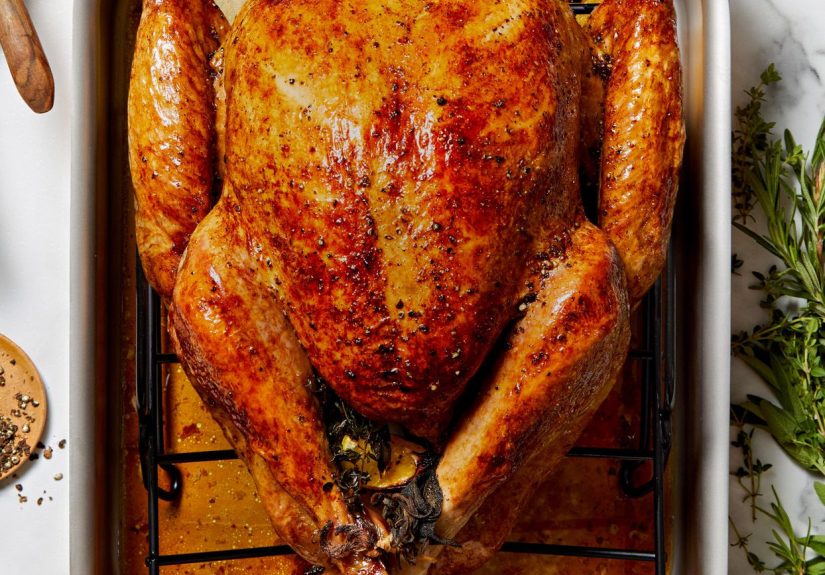
In the 20th century, Thanksgiving became a visual icon: family gathered, table full, turkey gleaming in the center like it had a ring light on it.
Paintings, advertisements, magazines, and later TV all repeated the same message: “This is what Thanksgiving looks like.”
Parades, football, and leftovers
Once Thanksgiving became a full-day eventparades in the morning, football in the afternoon, naps whenever gravity winsthe turkey became the anchor.
It’s not just dinner; it’s the organizing principle. The turkey shows up, and the rest of the day assembles around it.
And let’s be honest: leftovers are part of turkey’s brand power. Ham leftovers are nice. Turkey leftovers are a lifestyle:
sandwiches, soups, casseroles, and the legendary “I swear this tastes better on day two” plate.
6) The Turkey Got a PR Team: Industry Traditions and the White House
If you want something to feel official in America, you put it near a podium. The turkey did exactly that.
The White House turkey tradition
For decades, a turkey has been presented at the White House as part of an annual tradition tied to the holiday season and American agriculture.
Over time, this evolved into the modern spectacle of the presidential turkey “pardon,” which adds a quirky civic ritual to the bird’s cultural dominance.
Is it serious policy? No. Is it extremely on-brand for a holiday that includes both gratitude and competitive pie-eating?
Absolutely.
7) Symbolism: What Turkey Says (Without Saying a Word)
Turkey isn’t just food. It’s a symbol that does a lot of emotional heavy lifting.
Abundance without arrogance
A turkey is big. It announces “we have enough to share.” It’s celebratory, but it’s not fancy in a champagne-and-caviar way.
It’s more like: “We worked hard. We made it to the end of the year. Sit down and eat.”
Relatable, slightly chaotic, and kind of hilarious
The turkey also matches Thanksgiving’s vibe: sincere, imperfect, and occasionally stressful. It’s a bird that requires planning,
patience, and sometimes an emergency backup plan (hello, grocery store rotisserie chicken). In other words, it’s a holiday mirror.
Bonus: the “turkey coma” myth (and the real culprit)
The turkey has even been blamed for the post-meal crash. While turkey contains tryptophan, it doesn’t have a magical, exclusive
sleep spell that knocks out entire families at 3:17 p.m. The more likely reasons: a huge meal, rich sides, dessert, and maybe a
cozy couch that suddenly feels like it’s made of clouds. Turkey is innocent-ish. The buffet is the real suspect.
8) Could Thanksgiving Exist Without Turkey?
Absolutelyand in many homes, it already does. Plenty of families serve ham, brisket, roast chicken, seafood, or vegetarian mains.
Some celebrate with dishes rooted in their cultural heritage, turning Thanksgiving into a broader “feast of gratitude” rather than a strict menu.
So why does turkey still dominate?
Because symbols are sticky. Even when menus change, turkey remains the default reference point“Turkey Day,” turkey decorations,
turkey-shaped serving platters, turkey jokes, turkey everything. It’s the mascot even when it’s not the meal.
What matters more than the bird
The deeper tradition is the gathering itself: sharing food, marking the season, pausing to appreciate what’s good, and making room
for one another. Turkey is the famous guest at the party, but the party doesn’t exist because of the guest.
Turkey Tales: of Thanksgiving Experiences (Because We’ve All Been There)
Ask ten Americans about Thanksgiving turkey, and you’ll get twelve opinions, three arguments about brining, and at least one story
that begins with, “So… we thought we thawed it.”
There’s the first-time host experience: you stand in the kitchen staring at a bird that looks like it could file taxes. You Google
“how long to cook a turkey” and immediately regret learning the phrase “internal temperature” in such an emotionally intense context.
Suddenly you’re negotiating with time itself: the guests arrive in two hours, the turkey needs three more, and your oven is making
noises that sound like judgment.
Then there’s the family debate that repeats annually like a beloved sitcom episode. Someone insists the only correct method is an
all-day roast. Someone else swears by spatchcocking, because nothing says “holiday warmth” like using a word that sounds like a pirate
insult. Another person has discovered smoking the turkey and now speaks about wood chips the way sommeliers talk about wine. Meanwhile,
the most practical relative quietly orders a backup ham “just in case,” like a culinary insurance policy.
Thanksgiving turkey also comes with a choreography: the triumphant entrance, the photo moment, the ceremonial carving, and the inevitable
commentusually from an aunt or a grandparentabout how “your grandfather used to carve this better.” The turkey isn’t just eaten; it’s
performed. It’s the centerpiece of a family ritual where everyone plays their role: the carver, the gravy-maker, the person who “just checks”
the turkey every five minutes, and the cousin who wanders into the kitchen to “help” and somehow leaves with a dinner roll.
And the leftovers? That’s when turkey becomes a second holiday. Day-after turkey sandwiches are practically a national sport: soft bread,
a swipe of mayo, a little cranberry sauce, maybe stuffing if you’re feeling bold. Some people go full architect, stacking layers like a
delicious skyscraper. Others turn turkey into soup, pot pie, tacos, or casseroles that taste like comfort and victory.
Friendsgiving adds another layer of turkey experience. Someone shows up with a perfectly seasoned turkey breast and announces they watched
“five videos and a chef screamed at me through the screen.” Someone else brings plant-based “turkey” and it’s surprisingly good, which creates
a brief moment of existential confusion in the traditionalists. Everyone laughs, everyone eats, and somehow the turkeyreal or symbolicstill
anchors the gathering.
That’s the real magic: the turkey becomes a shared reference point. Even when it’s dry, even when it’s late, even when it’s replaced,
it represents the same thingpeople coming together, trying their best, and making memories that will be retold next year with improved
comedic timing.
Conclusion: The Bird That Won Thanksgiving
The turkey became the symbol of Thanksgiving because it fit the moment and the message: a native, crowd-feeding centerpiece that worked on farms,
looked great in stories and illustrations, and spread alongside the holiday as it went national. Writers like Sarah Josepha Hale helped define
the “classic” Thanksgiving table, national leaders helped unify the date, and pop culture turned the turkey into an instantly recognizable icon.
Today, the turkey still holds its place not just because of tradition, but because it captures what Thanksgiving tries to be: abundant, communal,
a little messy, and ultimately full of gratitude. Also, it’s delicious when someone remembers to season it.