Table of Contents >> Show >> Hide
- Why the Adrenal Glands Get So Much Attention
- When Doctors Order a CT for an Adrenal Tumor
- How a CT Scan Actually Creates the Images
- The Adrenal CT “Recipe”: Phases You Might Get
- The Washout Math (Don’t WorryThis Is the Fun Kind of Numbers)
- What a Radiologist Looks For on CT (Beyond the Numbers)
- CT vs MRI vs PET: Why CT Often Gets First Dibs
- Preparing for the Scan: What to Expect (and What’s Normal)
- Risks and Safety: The Honest (Not Scary) Version
- Reading Your CT Report: Common Phrases Decoded
- What Happens After CT Shows an Adrenal Tumor?
- FAQ: Quick Answers to Common Worries
- Real-World Experiences: The Part No One Puts on the Appointment Card
- Conclusion
Your adrenal glands are the overachievers of the hormone world: two tiny triangles perched on top of your kidneys,
quietly running the show (stress response, blood pressure, salt balance, and a few other “small” things like staying alive).
So when a scan finds an adrenal “mass” or “tumor,” it can feel like your body just sent you a push notification you never asked for.
A CT scan is one of the most common ways doctors evaluate an adrenal gland tumor because it’s fast, widely available,
and excellent at showing the adrenal glands in sharp detail. Even better: certain CT measurements can hint whether a
mass is likely benign (not cancer) or needs closer attention. Let’s break down how CT works, what radiologists look for,
and what your results might meanwithout turning this into a physics textbook or a panic spiral.
Why the Adrenal Glands Get So Much Attention
The adrenal glands have two main parts with very different jobs:
the cortex (outer layer) helps make hormones like cortisol and aldosterone, and the medulla
(inner part) produces catecholamines like epinephrine (adrenaline). Tumors can arise from either area, and they can be:
nonfunctioning (not making extra hormone) or functioning (overproducing hormones).
That difference matters because an adrenal tumor isn’t judged only by how it looks on imaging. It’s also judged by what it
does hormonally. A small mass that makes too much cortisol can cause real health problems, while a larger benign mass might
be “boring” hormonally. Yesmedicine sometimes prefers boring.
When Doctors Order a CT for an Adrenal Tumor
A CT scan for an adrenal gland tumor usually happens in one of these situations:
- Incidental finding: A mass is discovered by surprise on a CT done for something else (pain, kidney stones, trauma, etc.).
- Symptoms or lab clues: Blood pressure spikes, low potassium, Cushing-like symptoms, or abnormal hormone tests raise suspicion.
- Cancer staging or follow-up: In patients with a known cancer elsewhere, CT helps determine if an adrenal lesion could be a metastasis.
- Localization after biochemical testing: For suspected pheochromocytoma/paraganglioma, imaging helps locate the tumor after labs suggest excess catecholamines.
How a CT Scan Actually Creates the Images
A CT (computed tomography) scanner uses X-rays taken from many angles around your body. A computer reconstructs those data
into thin “slices” (imagine a loaf of breadonly less delicious), which can be viewed in multiple planes and even as 3D images.
The key CT superpower is detail: it can differentiate soft tissues by how much they attenuate (block) X-rays.
CT density is often described in Hounsfield units (HU). Very roughly:
air is very low, water is around 0, fat is below 0, and denser tissues are higher. Adrenal masses have characteristic HU patterns
that can help categorize them.
The Adrenal CT “Recipe”: Phases You Might Get
Not every adrenal CT looks the same. The protocol depends on what’s already known and what the ordering clinician is trying to answer.
A classic “adrenal protocol” CT may include:
- Non-contrast CT (no IV dye): assesses baseline density (HU).
- Contrast-enhanced CT (IV iodinated contrast): shows how the lesion enhances (takes up contrast).
- Delayed imaging (often 10–15 minutes later): checks how quickly contrast washes out of the lesion.
Phase 1: Non-contrast CT (the “fat check”)
Many benign adrenal adenomas contain intracellular fat. On a non-contrast CT, a lipid-rich adenoma often measures
10 HU or less. That’s a big deal because it can let radiologists confidently label a lesion as likely benign
without extra imaging.
The catch: some adenomas are lipid-poor and won’t have low HU on non-contrast CT. That’s where contrast and washout
can help.
Phase 2: Contrast-enhanced CT (watching the lesion “drink”)
After IV contrast is injected, the adrenal lesion is scanned againoften in a portal venous phase for abdominal imaging.
Radiologists look at how bright the lesion becomes. Some lesions enhance strongly; others don’t. Enhancement alone can’t always
diagnose a tumor, but it sets up the next step: washout.
Phase 3: Delayed CT (watching the lesion “drain”)
“Washout” refers to how quickly a lesion loses contrast over time. Many benign adenomas wash out contrast relatively fast.
Some non-adenomas wash out more slowly. The delayed scan is commonly done around 10–15 minutes after contrast,
depending on the protocol.
The Washout Math (Don’t WorryThis Is the Fun Kind of Numbers)
Radiologists can calculate washout percentages using HU measurements from different phases. The two common calculations are:
absolute percentage washout (APW) and relative percentage washout (RPW).
Absolute Percentage Washout (APW)
APW uses three measurements: unenhanced HU, enhanced HU, and delayed HU. A commonly used formula is:
APW = [(Enhanced HU − Delayed HU) / (Enhanced HU − Unenhanced HU)] × 100%
Relative Percentage Washout (RPW)
RPW can be used when an unenhanced measurement isn’t available. A commonly used formula is:
RPW = [(Enhanced HU − Delayed HU) / Enhanced HU] × 100%
Typical thresholds (often used as “suggestive,” not magical)
- APW ≥ 60% can be consistent with adenoma in many protocols.
- RPW ≥ 40% can be consistent with adenoma when unenhanced HU isn’t available.
A quick example
Let’s say an adrenal nodule measures:
- Unenhanced: 25 HU
- Enhanced: 90 HU
- Delayed: 40 HU
APW = [(90 − 40) / (90 − 25)] × 100% = (50 / 65) × 100% ≈ 76.9%
RPW = [(90 − 40) / 90] × 100% = (50 / 90) × 100% ≈ 55.6%
Those values would often be read as “washout consistent with adenoma,” but radiologists still interpret results in context
(size, appearance, patient history, and whether you have known cancer elsewhere).
What a Radiologist Looks For on CT (Beyond the Numbers)
CT interpretation is not just a HU contest. Radiologists look at the whole picture:
Features that often suggest a benign process
- Small size (especially when stable over time)
- Smooth borders and a homogeneous (even) appearance
- Low HU on non-contrast CT (classically ≤ 10 HU)
- Washout patterns consistent with adenoma
- Macroscopic fat suggests myelolipoma (a benign lesion)
Features that can raise concern
- Larger size, irregular margins, or growth over time
- Heterogeneous appearance (necrosis, hemorrhage, complex internal architecture)
- Very high HU on non-contrast CT (less typical for lipid-rich adenoma)
- Signs of invasion into nearby structures or suspicious lymph nodes
- In patients with known cancer, certain appearances may raise suspicion for metastasis
Important note: CT can estimate risk, not deliver a courtroom verdict. Some benign lesions look “spicy,” and some malignant lesions
look deceptively chill. That’s why imaging is usually paired with lab evaluation and clinical context.
CT vs MRI vs PET: Why CT Often Gets First Dibs
If adrenal imaging were a group project, CT would be the person who shows up early with color-coded notes. MRI and PET are excellent too,
but CT is often first because it’s fast and strong at characterizing adrenal density and enhancement patterns.
When MRI may be preferred
- If radiation exposure is a major concern (for example, some younger patients or pregnancy scenarios where imaging is necessary)
- When chemical-shift MRI can help characterize lipid content in indeterminate lesions
- When CT contrast can’t be used or is risky
When PET/CT may enter the chat
- In patients with a history of cancer, PET/CT can help evaluate metabolic activity of an adrenal lesion.
- For some neuroendocrine tumors (including pheochromocytoma/paraganglioma), specialized nuclear imaging may be used.
Preparing for the Scan: What to Expect (and What’s Normal)
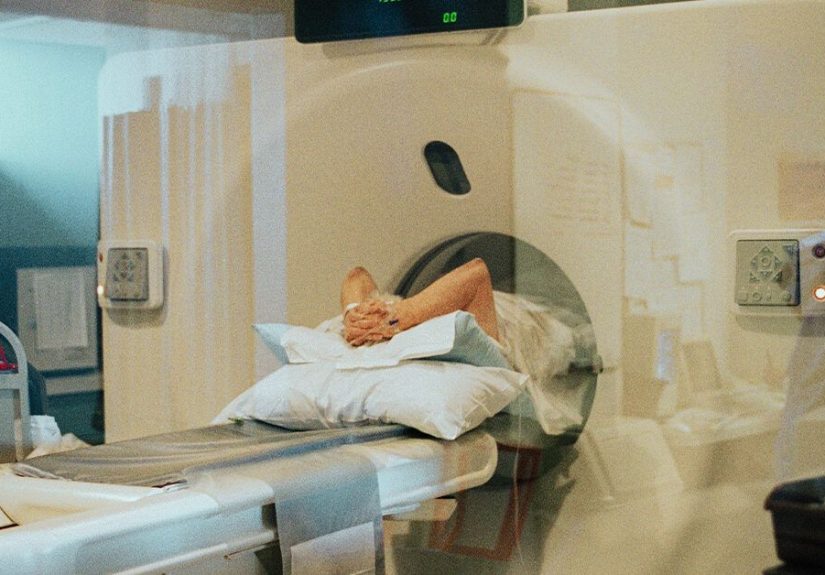
Most CT scans of the abdomen are quickoften just minutes in the scannerthough the full appointment can be longer if you need oral contrast
or delayed images. You’ll lie on a table that slides through a donut-shaped scanner. The machine may buzz and click; it’s not angry, it’s working.
Before the appointment
- You may be asked not to eat or drink for a few hours beforehand (instructions vary by facility).
- You’ll be asked about pregnancy, allergies (especially to contrast), and kidney problems.
- If contrast is planned and you have a history of reactions, your clinician may discuss premedication protocols.
During IV contrast (the “warmth” moment)
If you receive IV iodinated contrast, some people feel a brief warm flush or a metallic taste.
This is common and usually passes quickly. If you develop itching, hives, breathing trouble, or swelling, tell staff immediately.
Risks and Safety: The Honest (Not Scary) Version
CT uses ionizing radiation. For a single scan, the risk to an individual is generally considered low, but it’s not “zero,” which is why clinicians
avoid unnecessary scans and tailor protocols. When delayed imaging is added, it can increase exposureso it’s used when the diagnostic payoff is worth it.
IV contrast reactions are uncommon, and most are mild, but more serious reactions can occur. Kidney function is also considered, especially in patients
with chronic kidney disease or other risk factors. Modern evidence and guidelines emphasize individual risk assessment rather than one-size-fits-all fear.
Reading Your CT Report: Common Phrases Decoded
CT reports can feel like they were written in a language invented by robots for other robots. Here are some translations:
“Adrenal adenoma”
Often a benign tumor, frequently found incidentally. If the imaging features are classic, it may require minimal follow-up,
but hormone testing is commonly considered depending on the clinical scenario.
“Indeterminate adrenal nodule”
The lesion doesn’t have enough classic imaging features to confidently label it benign on that scan alone. Next steps may include an adrenal protocol CT,
MRI, interval follow-up imaging, and/or endocrine evaluation.
“Washout consistent with adenoma”
The lesion’s contrast behavior fits a pattern commonly seen in adenomas. It’s reassuring, but still interpreted with the full clinical context.
“Recommend biochemical correlation”
Translation: “We can see it, but we can’t tell if it’s secreting hormones. Please do the lab work.” Imaging and endocrinology are teammates here.
What Happens After CT Shows an Adrenal Tumor?
A CT scan is often the beginning of the decision tree, not the end. Depending on the appearance of the lesion and your personal medical context,
next steps may include:
1) Hormone testing
Many clinicians evaluate for hormone excess even when a tumor is found incidentally. Testing may include screening for cortisol excess,
aldosterone-related problems (especially with hypertension/low potassium), and catecholamine excess when pheochromocytoma is a concern.
2) Follow-up imaging
If a lesion is indeterminate but not clearly dangerous, clinicians may recommend repeat imaging after a period of time to confirm stability.
Stability over time is often reassuring.
3) Surgery (in selected cases)
Surgery may be discussed if the tumor is functioning (hormone-producing), suspicious for malignancy, growing, or above certain size thresholds
depending on guideline interpretation and individual risk.
4) Biopsy (less common than people assume)
Adrenal biopsy is not routine for every adrenal mass. In many care pathways, biopsy is reserved for specific situations,
such as when metastasis is suspected and the result would change management. Importantly, clinicians generally want to rule out pheochromocytoma before biopsy,
because biopsy of a catecholamine-secreting tumor can be risky.
FAQ: Quick Answers to Common Worries
Is a CT scan painful?
The scan itself is painless. The IV placement can be uncomfortable, and contrast can cause a brief warm sensation, but the imaging is not painful.
Can CT tell if an adrenal tumor is cancer?
CT can strongly suggest benignity in some cases (like a lipid-rich adenoma). It can also show suspicious features. But “cancer vs not cancer”
sometimes requires correlation with labs, follow-up imaging, and occasionally surgery/pathology.
Do I always need contrast?
Not always. A non-contrast CT can be very informative for lipid-rich adenomas. Contrast phases are used when more characterization is needed.
How long until I get results?
Timing varies by facility and clinical urgency. Typically, a radiologist interprets the scan and sends a report to the ordering clinician,
who then reviews it with you.
Real-World Experiences: The Part No One Puts on the Appointment Card
If you’re looking for “the vibe” of a CT scan for an adrenal gland tumor, here’s the honest version: it’s usually straightforward,
but emotionally it can feel like waiting for a plot twist in a show you didn’t choose to binge.
Many people first hear the words “adrenal mass” because of an incidental finding. You went in for something totally unrelatedmaybe abdominal pain,
a kidney stone workup, or even a scan after a minor accidentand suddenly your report mentions a tiny surprise sitting on top of your kidney.
It’s common to think, “If it was found by accident, does that mean it’s been there forever?” Sometimes, yes. Sometimes, no. That uncertainty is
often the hardest part, not the scan itself.
On scan day, the most memorable moment for lots of patients is the contrast injection. People describe a quick warmth in the chest or pelvis, a fleeting
metallic taste, and occasionally the sensation that you might need to pee. (Spoiler: you probably don’t.) Technologists usually warn you so you don’t
start questioning reality mid-scan. The machine is loud-ish, but not terrifyingmore “robot doing its job” than “spaceship launching.”
If your exam includes delayed imaging for washout, the waiting period can feel longer than the actual scanning. Some centers have you remain in the department,
and some have you wait in a designated area. This is where overthinking thrives. A useful real-world trick is to bring a short list of questions for your clinician:
“Was this found on non-contrast or contrast?” “What were the HU values?” “Does the report describe washout?” “Do I need hormone testing?” “Do we have prior imaging
to compare?” Having questions turns the waiting into something you can steer, rather than something happening to you.
Clinicians and radiologists often describe adrenal imaging as a puzzle with two halves: imaging plus hormones. A radiologist might feel confident calling a lesion
a lipid-rich adenoma based on low HU, but still recommend biochemical evaluation because a tumor can look boring and still be hormonally loud. On the other hand,
an endocrinologist might focus on hormone excess and use imaging as the locator map. It’s not “either/or.” It’s “both, please.”
People also tend to remember the language in the reportespecially words like “indeterminate.” In normal human terms, indeterminate often just means,
“We don’t have enough information yet.” It doesn’t automatically mean “bad.” Sometimes the next step is as simple as an adrenal-protocol CT or an MRI.
Sometimes it’s follow-up imaging to confirm stability. And sometimes it’s lab testing to make sure the tumor isn’t secretly running a hormone side hustle.
One more experience that comes up a lot: the relief (and mild annoyance) of learning that many adrenal tumors are benign. Relief becausegreat.
Annoyance becausewhy did my body create a bonus feature nobody requested? The upside is that once the lesion is properly characterized, many patients end up with
a clear plan and a lot less anxiety. The best-case scenario in adrenal-land is not dramatic heroics. It’s a calm sentence like: “Findings consistent with benign adenoma.”
Honestly, that’s a beautiful sentence.
Conclusion
A CT scan for an adrenal gland tumor works by turning X-ray data into detailed cross-sectional images, then using patternslike Hounsfield units and contrast washout
to help classify what the lesion most likely is. It’s a powerful tool, but it’s only part of the evaluation. The most accurate understanding comes from combining
imaging findings with hormone testing, your medical history, and (when needed) follow-up imaging or specialist care.
If you’re in the middle of this process, focus on what’s actionable: ask about HU values, whether washout was assessed, whether endocrine labs are recommended,
and how your personal risk factors shape the plan. The goal isn’t to obsess over a single numberit’s to build a clear next step.