Table of Contents >> Show >> Hide
- What Happened at the Hollywood Bowl?
- The Real Question: Was Security Missing, Late, or Just Overwhelmed?
- Hollywood Bowl Security Policies vs. What Actually Happened
- Why This Attack Felt Bigger Than One Bad Night
- So, Where Was the Security?
- What Better Security Might Have Looked Like
- The Legal and Public Fallout
- What This Means for Comedians, Concerts, and Live Events
- Final Verdict: Security Was There, but Safety Was Not
- Extended Reflections: Experiences and Lessons Related to the Chappelle Attack
- SEO Tags
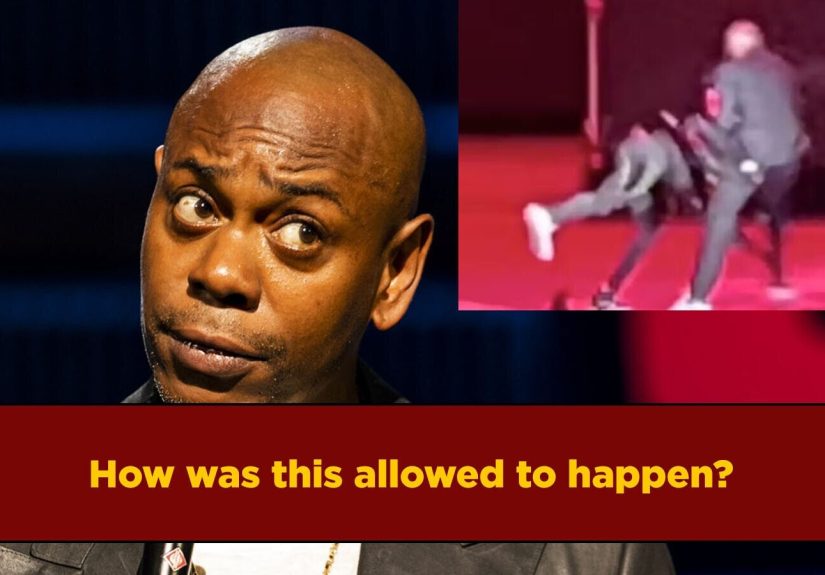
Stand-up comedy is supposed to be dangerous in the metaphorical sense. A joke bombs. A crowd turns chilly. Somebody in row G decides they, personally, are the guardian of public taste and folds their arms like a disapproving theater gargoyle. What it is not supposed to be is full-contact theater. Yet that is exactly what audiences saw when Dave Chappelle was attacked onstage during a performance at the Hollywood Bowl in Los Angeles.
The moment was shocking, surreal, and honestly a little too on-brand for an era where live entertainment sometimes feels one bad impulse away from becoming a viral crime scene. The attack instantly raised a question bigger than celebrity gossip or late-night punchlines: where was the security? If a performer can be rushed on a major stage at a high-profile event, at a legendary venue, while thousands are watching, what does that say about crowd control, screening procedures, and performer protection?
This is not just a story about Dave Chappelle. It is a story about modern live events, the illusion of safety, and the awkward truth that “security presence” is not the same thing as “security effectiveness.” You can have guards, bag checks, policies, and still end up with chaos if the system breaks at the exact wrong second.
What Happened at the Hollywood Bowl?
During Chappelle’s set at the Hollywood Bowl as part of Netflix’s Netflix Is a Joke festival, a man rushed the stage and tackled the comedian. Video clips spread quickly online, showing the attacker making contact with Chappelle before security and others swarmed in. Chappelle was able to continue after the incident, and the evening famously took a turn from alarming to absurd when Chris Rock joined the post-attack moment with a line referencing the Will Smith Oscars slap. In other words, America somehow managed to turn a terrifying security failure into a pop-culture mashup before the lights were fully up.
Authorities later identified the suspect as Isaiah Lee. Reports said he was carrying a replica handgun that concealed a knife blade, which immediately deepened the seriousness of the incident. That detail matters because it changes the conversation from “a fan jumped onstage” to “a potentially armed individual made it past venue security and reached a performer.” That is not a minor breach. That is the kind of phrase that keeps venue managers awake at 3 a.m., staring at the ceiling and rethinking every staffing plan they ever approved.
The Real Question: Was Security Missing, Late, or Just Overwhelmed?
On paper, security was there. Witnesses and video footage showed security personnel and others reacting quickly after the tackle. The problem is that reactive security is like locking the front door after the raccoon has already eaten the cereal. It may help eventually, but it does not solve the most important problem: how did the attacker get that far in the first place?
That is why the question “Where was the security?” is really shorthand for three more precise questions:
1. Was the suspect adequately screened at entry?
The reported presence of a replica gun with a knife blade raised immediate concerns about screening failures. Large venues typically prohibit weapons and other dangerous items. If such an object entered the venue, there are only a few possibilities: the screening process missed it, the screening process was unevenly applied, or the object was disguised well enough to evade detection. None of those options are comforting.
2. Were there enough barriers between audience and performer?
Live comedy often has a more intimate stage setup than an arena concert or major sporting event. That can be great for laughs and terrible for risk management. If an audience member can cross the gap, get past any front-of-stage controls, and physically reach the talent, then the protective perimeter was not strong enough. Security is not just about people in black shirts wearing earpieces and serious expressions. It is about layers: distance, barriers, monitoring, and response time.
3. Did security react fast enough to warning signs?
Some witness reporting suggested the suspect’s behavior may have been alarming before the attack itself. If true, that is perhaps the most frustrating detail of all. Security failures are one thing. Missed warning signs are another. Good event security does not merely wait for a tackle to happen; it watches for movement patterns, strange behavior, abrupt approaches, and boundary-testing before the crisis becomes a headline.
Hollywood Bowl Security Policies vs. What Actually Happened
The Hollywood Bowl has rules. Most major venues do. Bags are subject to search. Prohibited items exist. Weapons are not welcome, and neither are many other items that could disrupt an event. Those rules sound reassuring when printed on a website. They sound much less reassuring when a man still reaches a comedian onstage carrying a weapon-like object.
This gap between policy and performance is the entire issue. A venue can have excellent written policies and still fail operationally on the ground. Security is only as strong as the least alert screener, the least visible aisle monitor, the least prepared supervisor, or the least protected stage route.
And that is what makes this incident so unsettling for performers and audiences alike. It suggests that visible security theater may have existed, but the practical security chain did not hold. The result was a terrifying few seconds that exposed the venue’s weak spot in public.
Why This Attack Felt Bigger Than One Bad Night
Chappelle’s onstage attack landed in a cultural moment already primed for anxiety about live events. Just weeks earlier, the Oscars had produced one of the most infamous onstage confrontations in entertainment history when Will Smith slapped Chris Rock. That incident happened under completely different circumstances, but it contributed to the same broader public feeling: stages no longer seem as protected as they once did.
Comedy, in particular, has become a uniquely tense space. Comedians deal in provocation. They poke at politics, identity, class, religion, race, gender, celebrities, and whatever else the culture is currently arguing about at top volume. Most audiences understand the deal. Some do not. The danger is not that jokes are controversial; controversial jokes have always existed. The danger is that a tiny number of people now seem to feel entitled to turn offense into physical action.
That makes security at comedy shows more complicated than simple ticket-scanning. Venues and promoters now have to account for heightened emotional intensity, social-media-fueled outrage, and the possibility that one unstable person sees a public stage as an invitation rather than a boundary.
So, Where Was the Security?
The most honest answer is this: security was present, but the security plan still failed.
That distinction matters. It is easy to imagine a total absence of guards, but that is not what happened. The failure was more subtle and therefore more alarming. Security existed in enough quantity to respond after the assault, but not in the right configuration to prevent the assault. In risk-management terms, this looks less like “nobody was there” and more like “the protective system had a hole big enough for one determined person to exploit.”
For the public, the visual memory is simple: a man rushed the stage. For security professionals, the nightmare is more detailed. It means the threat crossed multiple checkpoints: entry, audience placement, front-of-stage movement, and final access to the performer. That is not one mistake. That is a sequence of failures compressed into seconds.
What Better Security Might Have Looked Like
Hindsight is undefeated, of course, but this incident still offers a useful blueprint for improvement. If venues want to avoid another “How did this happen?” moment, they need more than generic security language. They need specific layers that match modern risks.
Stronger screening at entry
Bag checks and metal detection only work when they are thorough, consistent, and backed by trained staff who understand concealment tactics. Replica items, disguised blades, and hybrid objects create challenges that casual screening can miss.
More aggressive front-of-stage monitoring
The most likely route to a performer is almost always obvious: the area directly in front of the stage. That zone should be watched with special attention, especially during high-profile performances and emotionally charged events.
Physical separation without ruining the show
No venue wants to make a comedy set feel like a presidential motorcade, but subtle barriers, stage design, and tactical staff placement can slow or stop an attacker without making the audience feel like they are attending a hostage negotiation.
Behavior-based intervention
The best security often looks boring because it acts early. Someone acting erratically, jumping barriers, fixating on the stage, ignoring instructions, or moving in suspicious ways should be intercepted before they become a viral clip and a legal case.
The Legal and Public Fallout
After the attack, the legal process added another layer of public debate. Early reporting referenced felony assault allegations tied to the weapon, but prosecutors later declined to pursue felony charges and the case moved into misdemeanor territory. That shift sparked its own conversation about how the justice system classifies public-stage attacks and whether current legal frameworks feel proportionate when a high-profile performer is physically targeted.
Meanwhile, the incident did what modern incidents always do: it became content. News coverage, social clips, hot takes, late-night jokes, moral arguments, and security analysis all bloomed at once. The danger with that kind of rapid cultural processing is that the spectacle can overshadow the lesson. Beneath the memes and celebrity chatter was a simple fact: a performer was attacked onstage at a major American venue. That should never become normal entertainment background noise.
What This Means for Comedians, Concerts, and Live Events
For performers, the Chappelle attack was a chilling reminder that the stage is no longer automatically sacred space. For venues, it was a warning that public confidence in event security can evaporate in one clip. For audiences, it was a lesson in how thin the line can be between an ordinary night out and a dangerous incident.
Comedy clubs, amphitheaters, theaters, and festivals may all need to rethink the balance between access and protection. Audiences like intimacy. Artists like connection. Promoters like smooth entry and low friction. Unfortunately, attackers also like low friction.
That means the future of live entertainment will likely involve tighter screening, more attentive floor teams, quicker intervention thresholds, and stronger coordination between venue staff, private security, and law enforcement. Not because every audience member is a threat, but because one audience member is enough.
Final Verdict: Security Was There, but Safety Was Not
So where was the security when Dave Chappelle was attacked onstage?
It was at the venue. It was in the building. It was visible enough to clean up the disaster. But it was not positioned, prepared, or proactive enough to stop the disaster before it reached center stage.
That is the uncomfortable truth. This was not a total absence of protection. It was a failure of execution. And in live entertainment, execution is everything. Fans do not buy tickets to watch a security breakdown. Artists do not step under the lights expecting to perform inside a stress test for venue policy.
The Chappelle incident should be remembered for more than the viral footage and celebrity reaction. It should be remembered as a serious warning to every venue that still thinks a few guards, a bag check, and a printed list of prohibited items are enough. Security is not a brochure. It is a system. And on that night, the system blinked.
Extended Reflections: Experiences and Lessons Related to the Chappelle Attack
Anyone who has spent time at live events knows the strange split-screen feeling that can happen in a crowd. On one side, there is excitement, noise, music, anticipation, and that communal buzz that makes live entertainment worth leaving the house for. On the other, there is always a quiet bargain being made: the audience trusts the venue to keep things under control. Most people never consciously think about that bargain. They just assume someone else has thought through the exits, the screening, the front-of-stage risk, and the possibility that one person in the crowd might decide the rules do not apply to them.
That is why the Dave Chappelle attack hit such a nerve. It reminded people of a shared vulnerability they would rather not think about. You can be at a famous venue, attending a premium event, surrounded by staff, cameras, and thousands of other people, and still watch order vanish in a few seconds. It is the sort of incident that changes how performers scan the room, how fans choose seats, and how promoters talk in back offices after midnight.
There is also something uniquely unsettling about violence interrupting comedy. Concerts can feel chaotic by nature. Sporting events are built on aggression. But comedy depends on timing, vulnerability, and a loose social contract between performer and audience. The comic talks; the crowd listens, laughs, groans, maybe heckles a little, but the exchange remains mostly symbolic. When someone turns that exchange physical, it feels like a category error, like bringing a battering ram to a chess match.
Many people have had smaller versions of this experience in everyday life. A tense moment in a theater. A disruptive person on public transit. An event where staff seemed present but not especially alert. The details differ, but the emotional memory is familiar: the instant you realize that the people responsible for order may be a step behind the problem. Once that confidence breaks, everything feels different. The room is the same, but it no longer feels safe in the same way.
The lesson from Chappelle’s night at the Hollywood Bowl is bigger than one comedian or one attacker. It is about preparation, awareness, and the difference between looking secure and being secure. It is also a reminder that recovery should not be mistaken for prevention. Yes, the attacker was eventually subdued. Yes, the show continued. Yes, the moment got absorbed into the churn of entertainment culture. But none of that erases the central failure.
In the end, the most memorable events are not always the ones that go perfectly. Sometimes they are the ones that expose a hidden weakness everybody assumed had already been solved. And once people have seen that weakness, they do not forget it easily.