Table of Contents >> Show >> Hide
- Who Was Jens Risom?
- The History of the Jens Risom Lounge Chair
- Design Features That Make the Chair Iconic
- Materials and Construction
- Dimensions and Fit: Will It Work in Your Space?
- Why the Jens Risom Lounge Chair Still Looks Modern
- How to Style a Jens Risom Lounge Chair
- Indoor vs. Outdoor Versions
- Is the Jens Risom Lounge Chair Comfortable?
- Buying Tips: What to Look For
- Experience Notes: Living With a Jens Risom Lounge Chair
- Conclusion
The Jens Risom Lounge Chair is one of those rare furniture pieces that manages to look relaxed, intelligent, and quietly expensive without shouting across the room. It does not need chrome gymnastics, oversized cushions, or a “look at me” silhouette. Instead, it wins people over with wood, webbing, proportion, and the kind of honest design that makes you wonder why more chairs are not this straightforward.
Designed in the early 1940s as part of Jens Risom’s pioneering work for Knoll, the chair helped bring Scandinavian modern design into American homes, offices, lounges, and public spaces. Its woven seat and back, slim wood frame, and gently angled posture gave modern furniture a warmer personality. This was not the icy, untouchable version of modernism. This was modernism with a cup of coffee, a good book, and perhaps a slightly judgmental cat nearby.
Today, the Risom Lounge Chair remains a favorite among collectors, interior designers, architects, and homeowners who want a classic mid-century modern lounge chair that still feels useful. It is beautiful, yes, but it is also practical. It fits small spaces, works in larger rooms, and has enough visual lightness to avoid turning a living area into a furniture showroom. That balance is exactly why the chair continues to matter.
Who Was Jens Risom?
Jens Risom was a Danish-American furniture designer born in Copenhagen in 1916. He studied in Denmark during a period when Scandinavian design was developing its now-famous reputation for simplicity, craft, function, and human comfort. His training exposed him to the disciplined ideas of Danish modernism: furniture should serve people, materials should be respected, and beauty should not require unnecessary decoration.
Risom moved to the United States before World War II and eventually crossed paths with Hans Knoll. Their collaboration became one of the most important early chapters in American modern furniture. Before Knoll became a giant name in design, Risom helped shape its first original furniture collection. In simple terms, if Knoll was the stage, Risom helped write the opening act.
What makes Risom especially interesting is that he did not merely import Scandinavian design into the U.S. He adapted it. His work had the warmth and restraint of Danish furniture, but it also responded to American manufacturing, American interiors, and the realities of wartime material shortages. The result was furniture that felt refined but not fragile, modern but not cold, and elegant without behaving like it needed its own security guard.
The History of the Jens Risom Lounge Chair
The Jens Risom Lounge Chair grew out of the early Knoll 600 Series, a collection developed during the 1940s when materials were limited because of World War II. Instead of treating scarcity as a design disaster, Risom treated it as a creative challenge. Wood frames and woven webbing became the essential ingredients. The original concept used simple wooden structures and available strapping materials, including surplus webbing associated with parachute production.
This practical solution became an aesthetic signature. The exposed frame, the basket-like woven seat, and the angled back created a chair that looked light but felt purposeful. It was not a padded throne. It was a clean, flexible, easygoing lounge chair built around the body’s natural need to lean, rest, and stay supported.
The chair’s role in design history is larger than its physical footprint. It helped introduce a softer Scandinavian language to American modernism. At a time when much modern furniture was experimenting with steel, glass, and industrial forms, Risom’s chair proved that modern design could be warm, tactile, and inviting. It showed that a lounge chair could be minimal without becoming severe.
Design Features That Make the Chair Iconic
1. A Wood Frame That Feels Honest
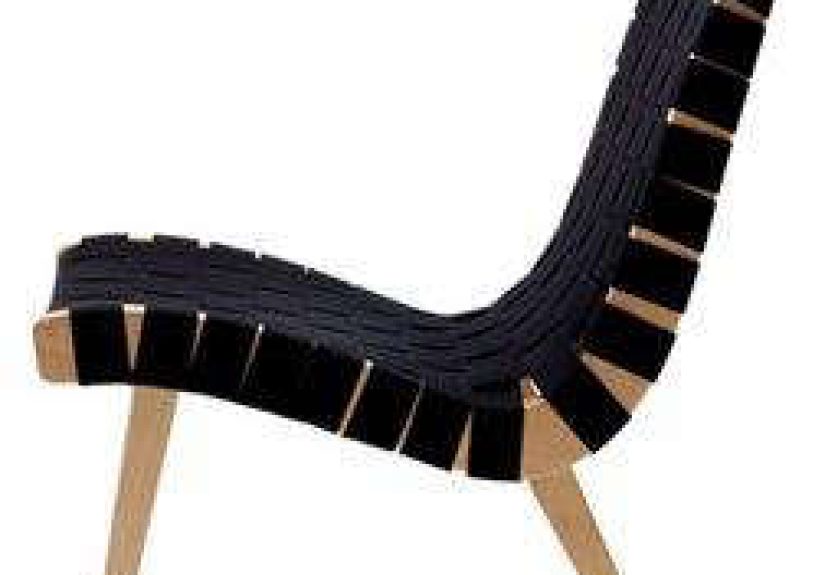
The frame is one of the chair’s greatest strengths. Modern versions are commonly made with maple or walnut, depending on the configuration and finish. The structure is slim, but it is not weak. Its lines are clean, the legs are angled with quiet confidence, and the whole form seems to say, “I know exactly what I am doing.”
Unlike heavily upholstered lounge chairs, the Risom chair does not hide its construction. You can see how it works. The frame carries the seat, the webbing creates support, and the proportions do the rest. That visual honesty is a major reason the chair still appeals to design lovers. It looks built, not styled into existence by a committee with too many mood boards.
2. Woven Webbing With Real Character
The woven webbing is the chair’s visual trademark. It gives the piece texture, rhythm, and a bit of graphic punch. The straps cross over each other in a basket-weave pattern, creating a seat and back that flex slightly while maintaining support.
This webbing does more than look good in photos. It changes how the chair feels. Instead of sinking into a cushion, you rest on a structured surface with a gentle give. That makes the chair feel light and responsive. It is especially appealing for people who want lounge seating that supports posture rather than swallowing them whole like a sofa with commitment issues.
3. A Low, Relaxed Lounge Profile
The Risom Lounge Chair has a low seat height and a laid-back angle. It invites you to sit down, lean back, and stay awhile. But it is not so low that getting up feels like a dramatic athletic event. This is important. A beautiful chair that requires a rescue team after every sit is not actually good design.
The armless version has a particularly compact footprint, making it useful in apartments, reading corners, bedrooms, and studio spaces. The armchair version adds width and presence while still keeping the same calm, open feel. Both versions preserve the essence of the design: light, warm, functional, and unmistakably mid-century modern.
Materials and Construction
Modern Risom Lounge Chairs are typically associated with hardwood frames and heavy-duty woven straps. The indoor version often features maple or walnut with natural cotton webbing. Some retailers and configurations offer multiple webbing colors, allowing the chair to shift from understated to playful without losing its identity.
The construction is one of the reasons this chair has survived changing trends. Mortise-and-tenon joinery, durable hardwood, and tightly woven straps create a piece that feels crafted rather than disposable. This matters in a market filled with furniture that looks good online and then begins emotionally unraveling after three months of real life.
There is also an outdoor version of the Risom Lounge Chair, reimagined with solid teak and performance webbing such as Sunbrella. That version keeps the original design spirit while adapting it for patios, decks, and covered outdoor spaces. Teak will naturally weather over time, developing a silvery patina if left exposed. In other words, it ages gracefully, which is more than most of us can say after one summer in direct sun.
Dimensions and Fit: Will It Work in Your Space?
The armless Risom Lounge Chair is compact compared with many modern lounge chairs. Common listed dimensions are approximately 30.25 inches high, 20 inches wide, and 27.5 inches deep, with a seat height of about 16 inches. The armchair version is wider, often around 23.75 inches wide, while maintaining a similar height and depth.
These proportions make the chair especially friendly to smaller spaces. It can sit beside a sofa without visually bullying it. It can anchor a reading nook without turning the corner into a furniture traffic jam. It can also work in pairs, especially with a small side table or ottoman between them.
For larger rooms, the trick is to avoid isolating the chair too far from other furniture. Because the design is visually light, it works best when connected to a conversational arrangement. Place it near a sofa, across from another lounge chair, or beside a low table. Give it breathing room, but do not exile it to the lonely corner where forgotten accent chairs go to question their purpose.
Why the Jens Risom Lounge Chair Still Looks Modern
The secret is restraint. The Jens Risom Lounge Chair does not rely on trend-driven details. There are no exaggerated curves, novelty legs, oversized tufting, or dramatic hardware. Its beauty comes from proportion, material, and clarity. That is why it works in so many interiors: mid-century modern, Scandinavian, Japandi, transitional, contemporary, rustic-modern, and even eclectic rooms where every object seems to have its own passport.
Its webbing adds pattern without feeling busy. Its wood frame adds warmth without feeling heavy. Its silhouette is recognizable without being loud. These qualities make it unusually adaptable. Put it in a white-walled modern apartment and it feels crisp. Place it in a warm living room with bookshelves and vintage rugs and it feels soulful. Use it in an office lounge and it says, “We have taste,” without requiring a motivational quote painted on the wall.
How to Style a Jens Risom Lounge Chair
Pair It With a Simple Side Table
A small wood, marble, or metal side table works beautifully next to the chair. Because the chair is visually open, avoid a bulky table that blocks the frame. A round table softens the geometry, while a square or rectangular table reinforces the clean mid-century look.
Add Texture, Not Clutter
The webbing already brings texture, so you do not need to pile on too much. A small lumbar pillow can add comfort and color, but choose one that does not hide the woven seat and back. The webbing is the star. Do not cover it like it owes you money.
Use It as a Reading Chair
The chair’s slightly reclined posture makes it ideal for reading. Add a floor lamp, a low bookcase, and a small table for coffee or tea. The result feels intentional, relaxed, and smart. It is the kind of setup that makes people assume you read hardcover books, even if the book currently open is mostly decorative.
Create a Pair for Conversation
Two Risom Lounge Chairs facing a sofa can create an elegant conversation area. Because the chairs are not visually bulky, they keep the room open. This is particularly helpful in smaller living rooms where two overstuffed lounge chairs would make the space feel like a furniture storage unit with throw pillows.
Indoor vs. Outdoor Versions
The indoor Risom Lounge Chair is the classic choice for living rooms, bedrooms, offices, libraries, and hospitality spaces. It emphasizes hardwood and cotton webbing, giving it a softer, more interior-focused feel. It looks best in climate-controlled spaces where the natural materials can remain protected.
The outdoor version adapts the form with teak and performance webbing. It is better suited for patios, covered porches, poolside areas, and garden seating. While it keeps the recognizable Risom silhouette, it has a slightly more casual personality. If the indoor version is a well-dressed architect, the outdoor version is the same architect on vacation, still stylish but wearing sunglasses.
Is the Jens Risom Lounge Chair Comfortable?
Comfort depends on what you expect from a lounge chair. If you want a giant cushion cloud, this is not that chair. The Risom Lounge Chair offers structured comfort. It supports the body through tensioned webbing and a relaxed angle rather than thick foam. The seat has give, but it also has firmness.
That makes it a strong choice for reading, conversation, and casual lounging. It may not be the chair you choose for a three-hour nap after Thanksgiving dinner, but it is excellent for everyday sitting. It is comfortable in a grown-up way: supportive, elegant, and unlikely to trap you until someone brings snacks.
Buying Tips: What to Look For
If you are buying a new Risom Lounge Chair, look for authenticity markers from Knoll or authorized retailers. Official versions may include details such as a designer signature or brand stamp depending on the model and source. Buying from reputable sellers helps ensure correct proportions, materials, construction, warranty coverage, and long-term value.
If you are shopping vintage, inspect the frame, joints, webbing, finish, and any repairs. Original or early Risom pieces can be collectible, but condition matters. Loose joints, replaced webbing, cracks, and uneven refinishing can affect both value and usability. A little patina can be charming. A chair that wobbles like it has heard bad news is another story.
Also think carefully about color. Black or dark webbing feels graphic and modern. Flax, khaki, or natural tones feel warmer and more relaxed. Red, navy, green, or ochre can add personality. The best choice depends on whether you want the chair to blend into the room or become a tasteful focal point.
Experience Notes: Living With a Jens Risom Lounge Chair
Spending time with a Jens Risom Lounge Chair reveals why it has lasted so long. At first glance, you notice the silhouette: low, slim, and neatly angled. After a few days, though, you start appreciating the small things. The chair does not dominate the room. It lets light pass through the frame and webbing, which makes even a compact area feel less crowded. In a small apartment, that visual lightness is not just pretty; it is practical.
One of the best experiences is using it as a morning chair. Place it near a window with a side table and it becomes the perfect landing spot for coffee, emails, or a few pages of a book before the day begins. The seat encourages a relaxed but alert posture. You are comfortable, but you are not melting into the furniture. That makes it a great chair for people who like to read, think, sketch, or have a slow conversation.
The chair also has a surprising ability to mix with different furniture. In a room with a modern sofa, it adds warmth. In a room with vintage pieces, it feels historically at home. In a minimalist space, it adds texture without chaos. In a colorful room, the woven straps create a calm grid that keeps things grounded. It is the rare accent chair that can be both interesting and polite.
Another real-world advantage is how easy it is to move. Many lounge chairs are beautiful until you need to vacuum, rearrange, or carry them across the room. The Risom Lounge Chair is comparatively light, especially in the armless version. That means it can shift from living room seating to bedroom accent chair to guest chair without requiring a formal moving strategy.
There are a few practical considerations. The woven seat does not feel like a plush cushion, so people who prefer sink-in softness may want to add a small pillow or choose a different lounge style. The open webbing also means the chair looks best when kept clean and uncluttered. Tossing a large blanket over it hides the very detail that makes it special. If you must add a throw, drape it casually over one side rather than burying the design.
Over time, the chair becomes less of a statement piece and more of a dependable companion. It is the chair people notice, then use, then ask about. It has enough history to satisfy design enthusiasts and enough comfort to satisfy ordinary humans who simply want a good place to sit. That combination is harder to find than it should be.
Conclusion
The Jens Risom Lounge Chair remains a landmark of American mid-century modern furniture because it solves design problems with grace. It is lightweight but durable, simple but distinctive, historic but still useful. Its wood frame and woven webbing tell a story of wartime ingenuity, Scandinavian restraint, and American manufacturing ambition. More importantly, it still works in real rooms today.
For anyone seeking a classic lounge chair that does not feel overdesigned, the Risom chair is a strong choice. It brings warmth, texture, and design credibility without turning your living room into a museum display. It is proof that good furniture does not need to shout. Sometimes it just needs to sit beautifully, support you properly, and quietly make every other chair in the room a little nervous.