Table of Contents >> Show >> Hide
- The Robot Fire That Made the Risk Impossible to Ignore
- Why a “Busted” Battery Can Become So Dangerous
- Why Bigger Battery Packs Raise the Stakes
- The Warning Signs People Ignore Until They Really, Really Shouldn’t
- What To Do if a Battery Looks Damaged
- Safer Charging Habits That Actually Matter
- Why Firefighters and Regulators Care So Much
- The Bigger Lesson: This Is Not a Robot Problem
- Experiences That Show How Real This Risk Feels
- Conclusion
Modern life runs on rechargeable batteries. Your phone has one. Your laptop has one. Your power bank has one. Your e-bike probably has a battery pack big enough to make your old Game Boy feel personally attacked. Most of the time, lithium-ion batteries are quiet little miracles. They pack a huge amount of energy into a small space, recharge quickly, and let us carry serious computing power in our pockets. But when one fails, the situation can go from “annoying low-battery alert” to “why is my gadget auditioning for a disaster movie?” in a hurry.
That is exactly why the story of a flaming rescue robot stuck with so many people. It was dramatic, yes, but it also made something crystal clear: a busted battery is not just a dead battery. It can be a fire risk, a smoke hazard, a property-damage machine, and in the wrong setting, a real threat to life and safety. The robot looked extreme, but the lesson is surprisingly ordinary. A failing battery in a lab robot, power bank, e-bike, phone, or tool may differ in size, yet the underlying danger is often the same.
This is the bigger story behind that scorched machine. It is not only about one robot catching fire. It is about why damaged lithium-ion batteries can fail so violently, what warning signs matter, how everyday charging habits can raise or lower your risk, and why one dramatic incident says a lot about the devices sitting in our homes right now.
The Robot Fire That Made the Risk Impossible to Ignore
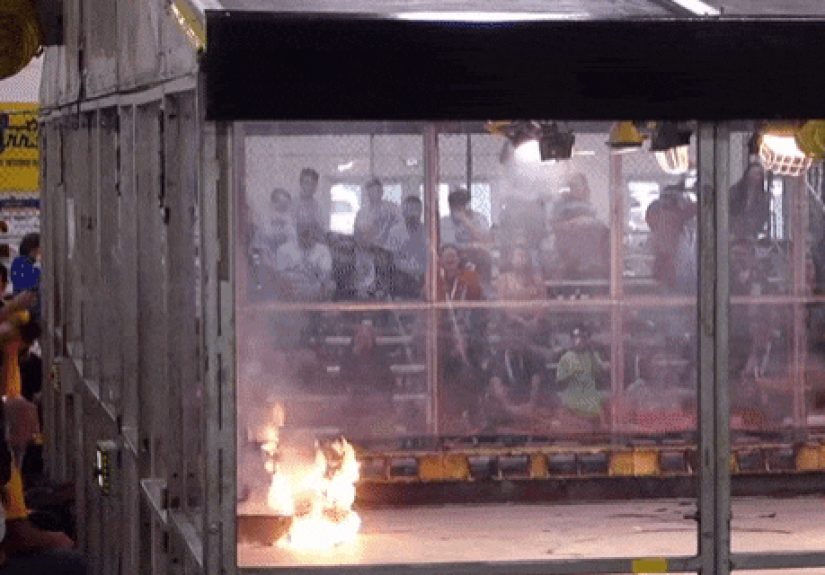
The robot at the center of this cautionary tale was not a toy. It was a rescue machine designed for dangerous environments, the kind of bot meant to go where humans would rather not volunteer. During charging, its lithium-ion battery pack failed and the robot burst into flames. That image landed so hard because it turned a technical issue into something instantly understandable: when a battery goes bad, the danger is not theoretical. It is heat, smoke, flame, panic, and a room full of people wishing they had not just stepped out for lunch.
What made the incident even more striking was scale. A battery in a phone is one thing. A battery pack made of many cells is another. Larger battery systems store far more energy, and when that energy is released all at once, the result can be much more destructive. In the robot’s case, the fire highlighted a simple truth engineers already know and consumers are learning fast: battery problems become more serious as battery packs become more powerful, more complex, and more common.
Still, the real takeaway is not that robots are scary. The takeaway is that the same chemistry powering advanced machines also powers the gear people toss on a couch, leave in a hallway, or plug in overnight next to a pile of laundry. The flaming robot was dramatic enough to grab attention, but the underlying warning applies to everyday life.
Why a “Busted” Battery Can Become So Dangerous
Lithium-ion batteries are popular because they store a lot of energy in a compact package. That is the superpower. It is also the problem. When a battery is damaged, defective, overcharged, overheated, or paired with the wrong charger, it can enter a chain reaction known as thermal runaway. In plain English, that means the battery starts heating itself faster than it can cool down. Then things escalate. Quickly.
Inside a lithium-ion battery are tightly packed components, flammable electrolyte, and delicate separators that keep the positive and negative sides from touching in the wrong way. If that internal balance is disrupted, the battery can short circuit, vent gas, swell, smoke, or ignite. It is less “oops” and more “tiny chemical rebellion.”
Common triggers include:
- Physical damage: Drops, crushing, punctures, and impact can injure the cell even if the outside looks only mildly beat up.
- Heat exposure: Leaving a device in a hot car, near a heater, or in direct sun can stress the battery.
- Overcharging or incompatible chargers: Cheap or incorrect charging gear can create the kind of electrical conditions batteries hate.
- Water intrusion or contamination: Moisture and debris can create failure points in packs and wiring.
- Manufacturing defects: Sometimes the problem starts before the customer even opens the box.
That last point matters. Battery failures are not always caused by obvious misuse. Sometimes a battery pack is poorly made. Sometimes quality control slips. Sometimes internal defects remain hidden until charging, storage, or normal use exposes them. That is one reason recalls involving power banks, e-bikes, and other devices keep making headlines.
Why Bigger Battery Packs Raise the Stakes
The rescue robot incident showed something that also applies to e-bikes, scooters, backup batteries, power tools, and electric vehicles: more cells mean more stored energy. More stored energy means a bigger event if things go wrong. A damaged phone battery is serious. A damaged battery pack with dozens of cells can be a completely different beast.
This is one reason battery fires tied to e-bikes and large portable charging devices have drawn so much attention in recent years. When a battery pack fails, fire can spread from cell to cell. That propagation can make the event hotter, longer, and more difficult to manage than the average small appliance fire. It is not just the flame. It is the speed, the smoke, and the way the failure can keep re-energizing itself.
Recent recalls and warnings make the point painfully well. Some major power-bank recalls have involved reports of overheating, fires, explosions, burns, and property damage. Certain e-bike batteries have also been linked to fires even while not actively being ridden. None of this means every rechargeable device is a menace waiting for dramatic music. It does mean battery safety is not a niche topic for engineers anymore. It is a consumer issue, a home-safety issue, and, increasingly, a public-policy issue.
The Warning Signs People Ignore Until They Really, Really Shouldn’t
Batteries rarely send a polite calendar invitation before failing. But they do often drop hints. The trouble is that people are busy, optimistic, and weirdly willing to trust a device that already looks like it lost a fight.
Here are the warning signs that deserve instant respect:
- Swelling or bulging: If a battery or device looks puffed up, stop using it.
- Unusual heat: Warm is one thing. Too hot to touch comfortably is another.
- Strange odors: A chemical smell is never your battery “expressing itself.”
- Hissing, popping, or crackling: Electronics should not sound like breakfast.
- Smoke or vapor: At that point, the battery has moved from suspicious to emergency.
- Case separation or visible damage: Cracks, dents, leaking, or exposed wiring all matter.
People often keep charging a device because it still “kind of works.” That is exactly the trap. A failing battery can function right up until the moment it absolutely does not. And when it fails, it may fail fast.
What To Do if a Battery Looks Damaged
If a battery appears swollen, overheated, leaking, or otherwise damaged, stop using it immediately. Do not keep charging it to “see what happens.” Science already knows what can happen, and the answer is flames. Unplug the device if it is safe to do so. Move it away from anything combustible only if you can do that without putting yourself at risk. If it is smoking or burning, get people out and call emergency services.
Do not puncture the battery. Do not squeeze it back into shape like you are fixing a lumpy pillow. Do not toss it in household trash or curbside recycling. Damaged lithium-ion batteries need special handling and disposal because they can ignite during transport or waste processing. That old power bank you were about to chuck in the junk drawer like a retired remote control? Not the same thing.
For larger battery systems, especially in e-bikes, scooters, and vehicles, official guidance is even more cautious. If a battery may be damaged by crash, flood, or heavy impact, it should be treated as a serious risk. In some cases, experts advise keeping damaged battery-powered vehicles away from structures because of the potential for delayed fire.
Safer Charging Habits That Actually Matter
Battery safety advice can sound boring right up until the part where your kitchen smells like burned plastic. Fortunately, the basics are not complicated.
Smarter charging rules:
- Use the battery and charger designed for the device or approved by the manufacturer.
- Charge on a hard, flat, nonflammable surface.
- Keep charging devices away from beds, couches, pillows, curtains, and paper clutter.
- Stop charging once the battery is full.
- Do not charge damaged batteries.
- Avoid extreme heat and freezing temperatures during charging.
- Do not leave charging devices blocking exits or escape routes.
Those steps may sound almost too simple, but that is what makes them useful. Many dangerous battery incidents are not caused by exotic lab failures. They come from ordinary shortcuts: using the wrong charger, leaving devices plugged in overnight on soft furniture, buying sketchy replacement batteries, or ignoring obvious damage because replacing a battery feels annoying. Annoying is better than on fire.
Why Firefighters and Regulators Care So Much
Lithium-ion battery fires do not always behave like traditional fires. Firefighters increasingly train for the fact that these batteries can burn hot, reignite, and propagate from one cell to another. In some situations, cooling the battery with water is a key tactic to slow or stop that chain reaction. That does not mean consumers should play firefighter in the living room. It means the problem is specialized enough that public safety agencies have had to adapt.
Regulators have also grown more active. Consumer agencies have issued warnings, hosted safety forums, and pushed for better standards around e-bikes, micromobility devices, chargers, and battery packs. Testing and certification standards, including those aimed at full electrical systems and battery-charger combinations, matter because the danger is not only in the battery cell itself. It can also be in the wiring, charger compatibility, enclosure design, and long-term use conditions.
That is another reason the flaming robot story matters. It reminds people that battery safety is not solved by simply saying, “Well, the battery looked fine yesterday.” Good design, quality manufacturing, correct charging, and proper disposal all matter because batteries are doing a hard job in a tiny space. When everything works, they are brilliant. When one layer of safety fails, the consequences can be intense.
The Bigger Lesson: This Is Not a Robot Problem
It is tempting to look at a rescue robot on fire and think, “Wow, that is some next-level engineering drama. Glad that has nothing to do with me.” Nice thought. Unfortunately, no. The bigger lesson is that the same battery chemistry sits in products used by students, commuters, parents, travelers, gamers, contractors, delivery workers, and anyone else who enjoys electricity doing useful things.
Your everyday devices may be smaller than a robot, but they are part of the same larger battery world. Power banks live in backpacks. E-bikes charge in apartments. Laptops sit on beds. Spare batteries get tossed in drawers with coins, cables, and general chaos. People buy third-party chargers online because the listing has five stars and a suspiciously enthusiastic headline. The point is not to panic. The point is to stop treating battery safety like optional fine print.
The flaming robot is memorable because it strips away the illusion that a failed battery is just a dead gadget. No. A failed battery can become a heat source, an ignition source, a smoke event, and a hazard multiplier. The robot merely had the decency to demonstrate that in a way nobody could ignore.
Experiences That Show How Real This Risk Feels
One reason stories like the flaming robot spread so quickly is that they connect with experiences people already recognize. You may not have a rescue robot in your garage, but you probably know the uneasy feeling of touching a device that is much hotter than it should be. Maybe it is a phone that suddenly feels like a pocket toaster. Maybe it is a power bank that gets weirdly warm on a desk. Maybe it is an older laptop with a trackpad that no longer sits flat because the battery underneath has started to swell. Most people do not immediately think, “This could turn into a fire.” They think, “Huh, that is odd,” and then continue about their day. That quiet underreaction is part of the problem.
Apartment residents feel the issue differently. In a small space, one failing battery is not just one person’s problem. A battery fire can fill a room with smoke fast, threaten escape routes, and put neighbors at risk. People who ride e-bikes or scooters often experience the issue as a tradeoff between convenience and caution. Charging overnight is easy. Charging near the door feels practical. Buying a cheaper replacement battery can seem harmless. But those small decisions add up, especially in buildings where one incident can affect many lives at once.
Travelers know the risk in another way. Airports and airlines pay close attention to battery incidents because a smoking device in a cabin is not something anyone wants to troubleshoot at 30,000 feet. Plenty of travelers have had that moment of panic when a phone, vape, camera battery, or power bank starts acting strange in a bag. Suddenly, the battery is no longer a convenience. It is a tiny wildcard with terrible timing.
Repair techs and electronics enthusiasts often describe battery failures with a mix of respect and dread. They have seen devices come in with bent housings, bloated battery packs, or chargers that look like they were designed by a committee of raccoons. They know that “still turns on” is not the same as “still safe.” Firefighters and first responders carry a different perspective entirely. For them, the problem is not abstract chemistry. It is a fast-moving event with heat, smoke, toxic gases, and the possibility of reignition.
And then there is the emotional side. Battery fires feel especially unsettling because the devices involved are so ordinary. We trust them. We hold them near our faces. We charge them while we sleep. We leave them next to couches, curtains, backpacks, and children’s rooms. A flaming robot is dramatic, sure, but what it really exposes is how much faith we place in rechargeable tech every single day. The experience many people share is not direct fire exposure. It is the realization that a familiar device can become dangerous with surprisingly little warning. That is why this story sticks. It takes a risk hidden inside routine life and makes it impossible to shrug off.
Conclusion
The burning robot is unforgettable, but the lesson is refreshingly simple: a damaged lithium-ion battery is not a minor inconvenience. It is a safety issue. Whether the battery lives inside a rescue robot, power bank, laptop, e-bike, or car, the chemistry does not care whether the device is expensive, popular, or parked innocently on your kitchen counter. If the battery is damaged, defective, overheated, or charged the wrong way, the risk rises fast.
The good news is that practical habits still matter. Use the right charger. Watch for swelling and heat. Stop using damaged devices. Charge on safe surfaces. Dispose of bad batteries correctly. In other words, do not wait for your gadget to make national news before taking it seriously. The robot already did the dramatic part for everyone.